Sep, 25, 2026
A road inside an industrial park has no grid connection, yet the site needs 12 hours of reliable lighting every night. That is the real starting point when someone begins looking for solar street LED lights. The fixture you choose has to survive the local winter, the worst-case night length, and the occasional cloudy week. It also has to deliver a measurable amount of light on the road surface. The first question to answer is not about LED wattage. It is about how many hours of usable light the site requires and how many hours of direct sunlight the panel will receive in the worst month.
Solar street LED lights work as a single energy system. The photovoltaic panel converts daylight into electricity, the charge controller stores it in a battery, and the LED fixture releases it after sunset. If any of these parts is undersized, the whole system fails to meet the specification. A 100W LED lamp with a small panel will simply dim on cloudy days. A large panel with a small battery will waste energy that cannot be stored. This is why the complete system should be selected together, not as separate components.
If you have never specified a solar lighting project before, a short introduction to solar lighting will help you understand the basics. The key point is that the panel, battery, and controller were designed to work as one unit, and they should be quoted as one unit.
Content
Four components determine the actual performance of a solar street light. The solar panel must convert weak winter sunlight efficiently. The battery must hold enough capacity for long nights and survive many charge cycles. The charge controller must extract as much power as possible from the panel. And the LED fixture must direct the light to the road surface instead of scattering it into the sky.
Battery life is often the most overlooked cost factor in a solar street light. A quality LiFePO4 battery is rated for a number of charge and discharge cycles before its capacity drops below an acceptable level. The line chart below shows the typical capacity retention across cycles for a lithium battery used in outdoor solar lighting.
The graph shows that after 500 cycles, a quality LiFePO4 cell keeps roughly 95% of its original capacity. After 1000 cycles, capacity falls to around 88%, which is still acceptable in most installations. By 2000 cycles, the remaining capacity is near 78%, and the battery may need attention depending on the required lighting hours. For a ten-year service life, budget for a battery replacement somewhere around the seventh year under normal operating conditions. Selecting a battery rated for 2000 cycles at 80% capacity is more economical than accepting a cheaper cell that fades to 65% by cycle 1500. The replacement labor and downtime on a remote site usually cost more than the difference in the initial price.
Solar street LED light specifications look similar from one supplier to the next, but the real values matter more than the labels. Always compare the full system rather than the lamp wattage alone. The table below gives a practical baseline for what to expect in each quality tier.
| Specification | Entry level | Mid range | High end |
|---|---|---|---|
| Solar panel power | 60-80W | 100-150W | 180-300W |
| Battery capacity | 20-40Ah | 60-80Ah | 100-150Ah |
| LED luminous flux | 3000-6000 lm | 8000-12000 lm | 14000-20000 lm |
| Protection rating | IP65 | IP65 | IP66 |
| Working temperature | -10 to 50 C | -15 to 55 C | -20 to 60 C |
| Warranty on fixture | 2 years | 3 years | 5 years |
These ranges are a framework, not an absolute standard. They help you check whether a quotation is internally consistent. A high-end fixture with a 300W panel, a 150Ah battery, and an IP66 rating should produce a much higher luminous flux than a 60W entry model. If the listed lumen output looks too high for the panel size, ask for a photometric report. Inconsistent numbers are a warning sign.
The luminous flux range also shows what the fixture is designed to do at different mounting heights. The horizontal bar chart below compares the typical light output of outdoor lighting categories.
The chart compares four outdoor lighting categories. Garden bollard lights produce between 300 and 800 lumens, which is enough for decorative low-level illumination along paths and planters. Footpath lights reach 500 to 1200 lumens, making them a good fit for pedestrian walkways and park trails. Standard street lights deliver 3000 to 6000 lumens, the common range for community roads at four to six meter mounting heights. High-output solar street lights can reach 8000 to 15000 lumens, which supports actual road lighting at eight to ten meter heights. Matching the fixture category to the mounting height and road width is essential. A garden bollard cannot replace a street light, and a high-output street light is overkill on a narrow garden path.
The two main configurations for solar street LED lights are all-in-one and split design. An all-in-one unit contains the panel, battery, controller, and LED fixture in one housing. A split design separates the solar panel from the light head, which allows a larger panel to be mounted at a different angle or in a different position.
The radar chart below compares the two approaches across five practical criteria.
All-in-one units install faster and look cleaner on the pole, which is why they are popular in residential communities and park roads. The compact housing does limit panel size and battery volume, and heat dissipation can be tighter inside a closed case. Split systems place the panel where it receives the best sunlight, so they suit sites with shading from trees or buildings. The trade-off is greater installation labor and a more visible panel on the pole. In coastal areas with high wind loads, both designs need proper wind resistance testing beyond a generic IP rating.
For a project manager, the deciding factor is usually the site itself. If a road runs through trees, a split system lets the panel face the sun above the canopy. If the site is remote and installation labor is expensive, an all-in-one unit reduces the work time significantly. Some manufacturers also offer vertical solar street lights that fit on the pole without a separate bracket. That is a useful middle option for narrow poles or clean facade lines.
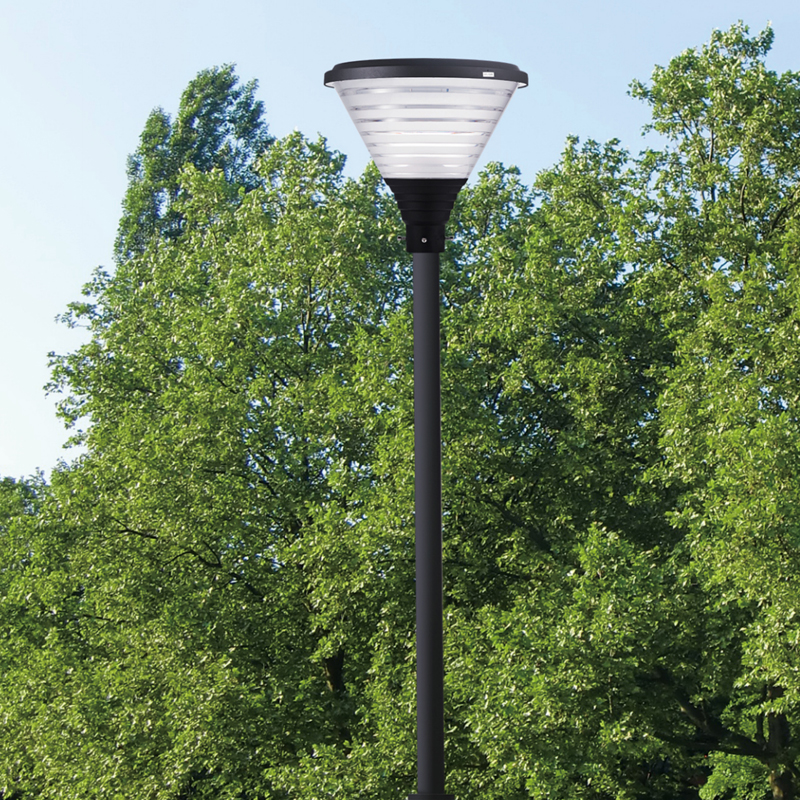 All-in-One Integrated Solar LED Street Light with Aluminum HousingThis compact all-in-one unit combines a monocrystalline solar panel and LED module in a die-cast aluminum body, reducing installation time on remote sites. With IP65/IK08 ratings and optional AC input, it offers flexible power options and reliable outdoor performance.View Product →
A compact all-in-one layout is a practical choice when you want fast installation and a neat appearance. Yangming Lighting offers an integrated solar panel model with an aluminum housing that fits this profile.
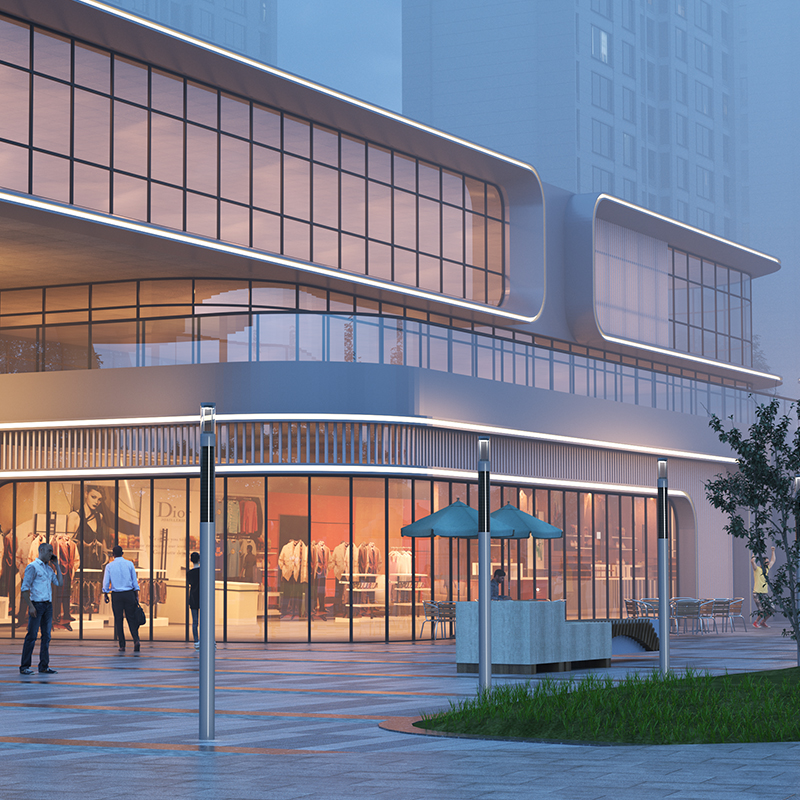 Vertical Solar Street Light for Pole-Mounted InstallationsDesigned for split-system sites requiring vertical panel orientation, this high-efficiency solar light features an IP66/IK08 aluminum housing and LiFePO4 battery. Its angled panel maximizes sunlight capture on narrow poles or specific directional needs.View Product →
For a split-style site that needs a vertical panel mount, Yangming Lighting also provides a dedicated vertical solar mast light. This option is helpful when the pole surface is narrow or the panel must face sunlight from a specific direction.
The specification is only half of the decision. The other half is whether the factory can deliver what the specification promises. A reliable solar street LED light manufacturer should provide a photometric report, a battery cycle life test result, and a clear explanation of how the charge controller protects the system. If a supplier cannot produce those documents, the quoted specification has no evidence behind it.
You should also ask about delivery timelines and product customization. Solar street lights often require specific arm lengths, color temperatures, or smart control interfaces. A manufacturer with its own workshop is more likely to accept those changes than a trading company. The bar chart below shows how demand for solar street lighting is distributed across application segments.
The chart shows the share of demand by application segment. Municipal roads represent the largest segment at around 35% of the market. Industrial parks account for about 25%, followed by residential communities at 20%. Parks and pathways contribute roughly 15%, and remote or rural areas make up the remaining 5%. Municipal projects usually require higher luminous flux and longer warranties, so they are the segment with the strictest technical requirements. Industrial sites often need larger battery capacity because the lights run for more hours each night. Rural and remote areas rely on simple, maintenance-friendly designs that can operate without frequent checks.
When you evaluate a supplier, check the material and protection details as well. Die-cast aluminum housings, tempered glass covers, and corrosion-resistant screws are signs that a product can survive years outdoors. The manufacturer behind this guide uses aluminum alloy housings on its solar street light models and offers smart control options such as NEMA sockets. If you want to verify their production background, you can read more on the company page.
Solar street LED lights are a long-term investment. The lowest quotation is rarely the lowest total cost when battery replacement and maintenance are counted over a decade. Start by defining the actual lighting requirement, then work backwards to the panel and battery size. Ask for the photometric data and the battery cycle life. And choose a supplier who can support you from the drawing stage to delivery.
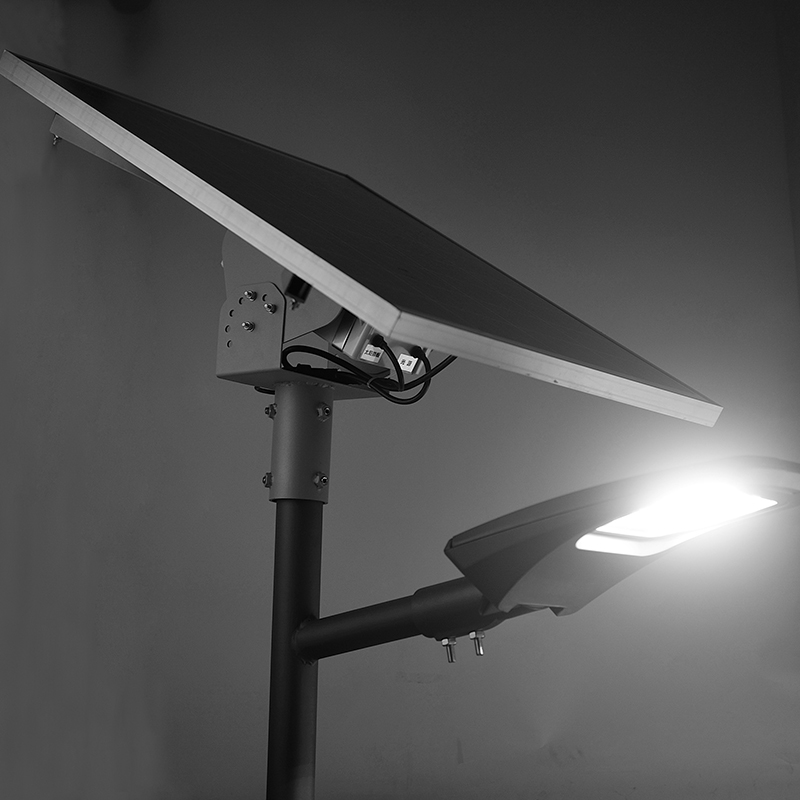 Smart Control Solar Street Light for Municipal ProjectsFeaturing an intelligent control system with DALI/0-10V dimming and remote monitoring options, this solar street light suits municipal roads and parks. Its durable construction and vendor support from design to delivery make it a cost-effective long-term investment.View Product →
Yangming Lighting has produced outdoor street lighting and solar lighting products since 2001, with its own factory and warehouse in Ningbo, China. The company offers a solar street light model with a smart control system for projects that need centralized management. If you have a road or park project in mind, contact the team with your site conditions and required lighting hours, and they can help you select a configuration that matches the actual daytime energy available.
Related Products
 Private Industrial Park, Liangnong Town, Yuyao City, Ningbo City, Zhejiang Province, China
 +86-13486062091
 +86-574-2222 2345
 +86-574-2267 2345
 info@ym-lighting.com


 English
 中文简体
中文简体