
 English
 中文简体
中文简体
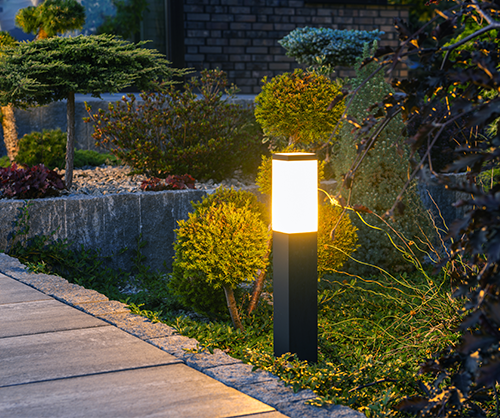

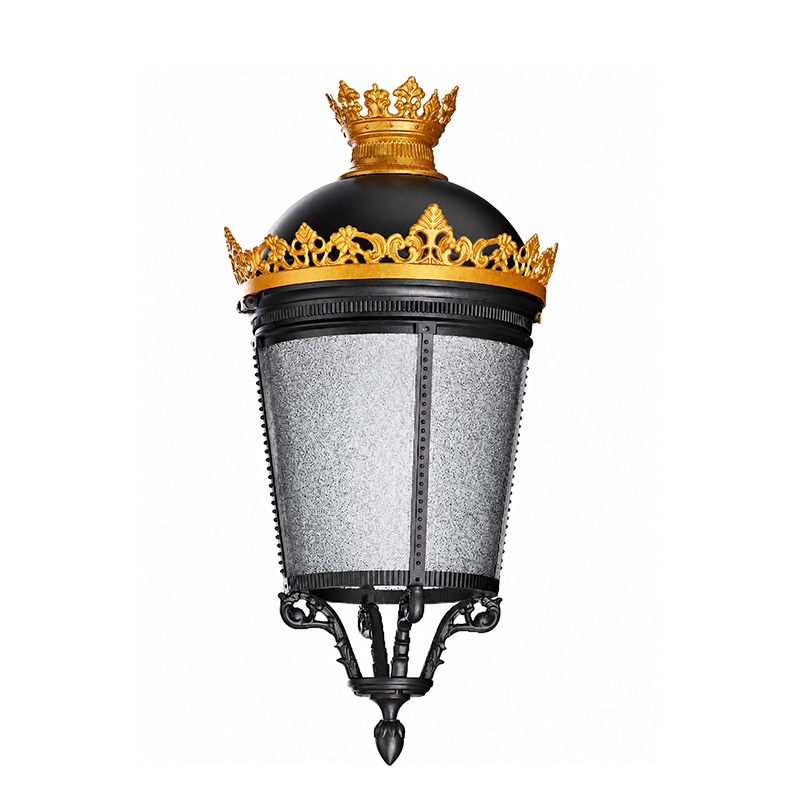
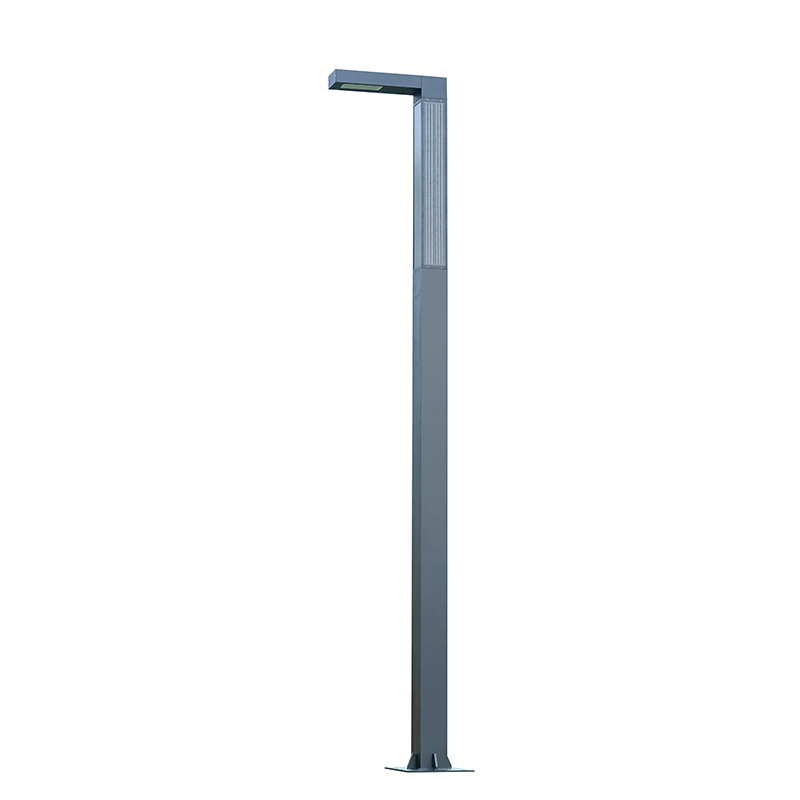
When a landscape architect or municipal engineer opens a lighting package and sees a note that says "dark sky compliant," the immediate question is usually practical: does this fixture actually meet ...
READ MORE
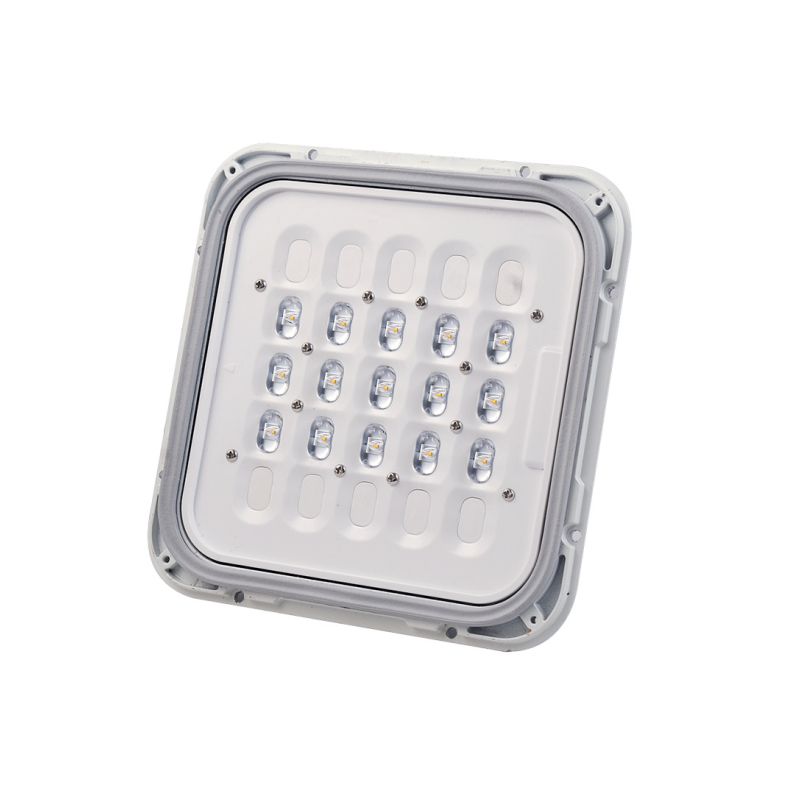
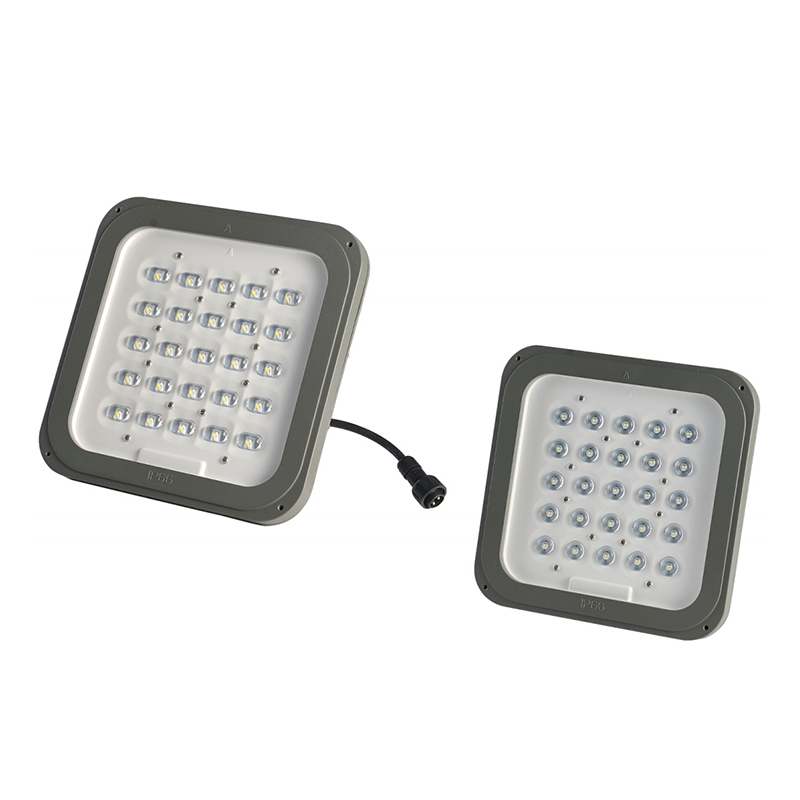
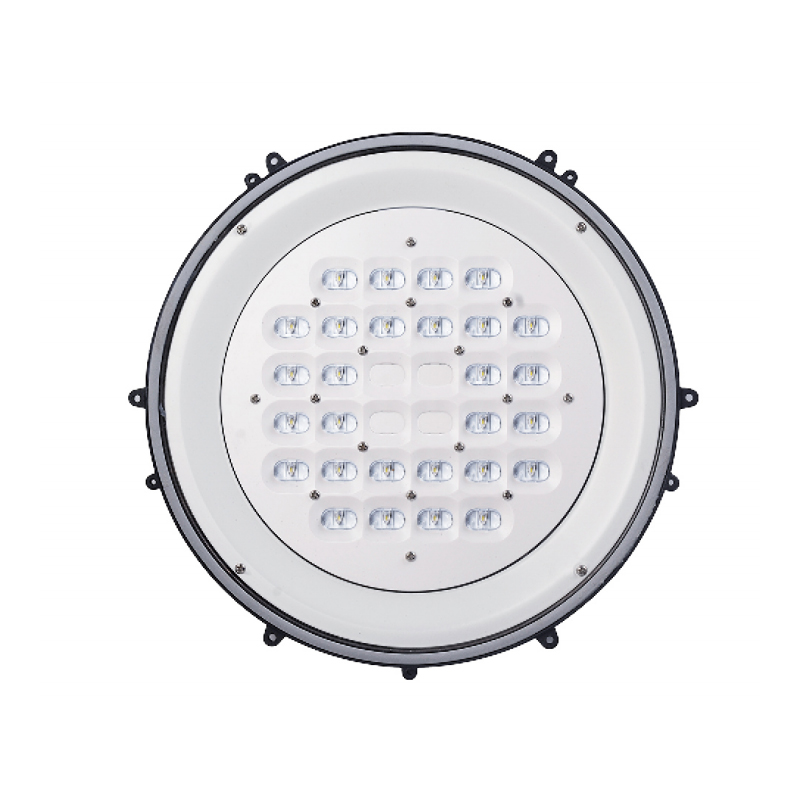
The LED module series serves as the core light-emitting component for various LED fixtures, widely used in the assembly, maintenance, and replacement of courtyard lights, street lights, wall lights, advertising light boxes, and decorative lighting.
The products utilize high-quality LED chips, featuring core performance attributes such as high luminous efficacy, low lumen depreciation, and high stability, ensuring uniform light output and excellent color consistency.
A core highlight is the strong versatility, supporting multiple voltage specifications and sizes to flexibly adapt to different lighting products; installation is convenient, using SMD or plug-in designs for easy mass assembly and subsequent replacement; the modules possess excellent heat dissipation performance, effectively extending their service life; select products support customization services, allowing parameters such as beam angle, light color, and power to be adjusted according to customer needs to meet diverse production requirements.




When a landscape architect or municipal engineer opens a lighting package and sees a note that says "dark sky compliant," the immediate question is usually practical: does this fixture actually meet ...
READ MOREMost commercial LED outdoor lighting failures have nothing to do with the LED chip. A row of bollards along a coastal hotel car park can look perfect on handover day and still end up with cloudy lens...
READ MOREA specifier sends the same request for 200 roadway luminaires to three suppliers and receives three different fixtures, all described as cobra heads. One clamps onto the existing 2-3/8 inch tenon. On...
READ MOREA 14 unit townhouse complex left its rear service alley unlit for years, and the same three doors were forced open twice in one winter. The manager expected a quote for one large floodlight. The site...
READ MOREA road inside an industrial park has no grid connection, yet the site needs 12 hours of reliable lighting every night. That is the real starting point when someone begins looking for solar street LED...
READ MOREAn LED module is a self-contained light-emitting assembly comprising one or more LED chips mounted on a printed circuit board (PCB), combined with electrical connections, thermal management materials, and in many designs an optical lens or diffuser. It functions as the core light-emitting component within a finished luminaire — the replaceable, upgradeable engine that determines the luminaire's light output, efficiency, color quality, and service life.
LED modules are widely used across assembly, maintenance, and replacement applications in courtyard lights, street lights, wall lights, advertising light boxes, and decorative lighting. Their standardized formats and plug-and-play connection designs allow lighting manufacturers to build complete luminaires efficiently around a proven light source platform — and allow end users to replace a degraded or failed module without scrapping the entire luminaire housing, significantly reducing maintenance cost and material waste over the installation's lifetime.
Understanding the internal operation of an LED module clarifies why component quality and thermal management are the two most critical factors governing long-term performance.
Each LED chip within the module contains a semiconductor junction that emits photons when forward-biased electrical current passes through it — a process called electroluminescence. Unlike incandescent sources that generate light as a byproduct of thermal energy, LED chips convert electrical energy directly into light, achieving luminous efficacies of 130–200 lm/W at the chip level in high-quality products. The wavelength of emitted light — and therefore the color appearance — is determined by the semiconductor material composition. White light is produced by combining a blue LED chip with a phosphor conversion layer that downconverts a portion of the blue emission to produce the full visible spectrum.
LED chips are soldered to a metal-core printed circuit board (MCPCB) or a standard FR4 PCB with copper trace layers. The MCPCB — typically using an aluminium base — provides a low-resistance thermal path from the LED junction to the module's mounting surface and then to the luminaire's heat sink. Maintaining LED junction temperature below 85°C is the single most important factor in achieving full rated lifespan; every 10°C increase in junction temperature above this threshold roughly halves the LED's useful service life. High-quality module designs minimize thermal resistance at every interface — chip-to-board, board-to-housing — to keep junction temperatures well within safe limits even at maximum rated power.
LED modules are manufactured in two primary assembly formats suited to different manufacturing and maintenance contexts. SMD (Surface-Mount Device) modules are soldered directly to the PCB during factory assembly — a process suited to high-volume automated production with consistent soldering quality and compact board layouts. Plug-in modules use connector interfaces that allow the module to be inserted and removed without soldering tools — ideal for field replacement and maintenance applications where the luminaire body remains mounted and the module alone is exchanged. Many outdoor lighting products combine both formats: SMD LED chips within the module body, and a plug-in connector interface between the module and the luminaire driver.
LED module datasheets contain a range of technical parameters that directly predict real-world performance. Understanding what each parameter represents — and what values are acceptable for different applications — is essential for making informed procurement decisions.
| Parameter | Definition | Recommended Minimum |
|---|---|---|
| Luminous efficacy (lm/W) | Light output per watt of electrical input | ≥ 130 lm/W |
| Color Rendering Index (CRI) | Accuracy of color reproduction vs. natural light | CRI ≥ 70 (road); ≥ 80 (decorative / retail) |
| L70 lifespan (hours) | Hours to 70% of initial lumen output | ≥ 50,000 hours |
| Color temperature (CCT) | Warm/cool appearance measured in Kelvin | 2,700–6,500 K (application dependent) |
| Color consistency (SDCM) | Variation in color between units (MacAdam ellipses) | ≤ 3 SDCM (≤ 5 SDCM acceptable) |
| Thermal resistance (°C/W) | Junction-to-board thermal resistance | < 5°C/W |
| Operating temperature range | Ambient temperature limits for rated performance | -40°C to +85°C |
The performance advantages of well-specified LED modules extend across the entire value chain — from the luminaire manufacturer's production efficiency through to the end user's energy bills and maintenance schedule.
LED modules at the current state of technology routinely achieve module-level efficacies of 150–180 lm/W, translating to luminaire-level efficacies of 120–160 lm/W after optical and driver losses. This represents a 70–80% reduction in energy consumption versus the high-pressure sodium or metal halide modules they replace in street and area lighting — a saving that compounds over the module's 50,000+ hour service life into a decisive economic and environmental advantage.
Lumen depreciation — the gradual reduction in light output as the module ages — is a critical quality differentiator between LED modules. High-quality modules using binned, premium LED chips exhibit lumen depreciation rates of less than 3% per 10,000 operating hours, maintaining output above 80% of initial values at 50,000 hours (L80 ≥ 50,000 h). Lower-quality modules using off-spec chips may degrade to 70% output within 20,000–30,000 hours, requiring earlier replacement and reducing the economic case for the LED investment.
In applications such as street lighting, facade illumination, and advertising light boxes where large numbers of modules are installed in proximity, color consistency between units is visually critical. Quality LED modules are binned to ≤ 3 SDCM (Standard Deviation of Color Matching) — a tolerance so tight that the color difference between adjacent modules is imperceptible to the human eye. Modules outside this tolerance produce visible warm/cool variations across a luminaire array that are immediately noticeable to building occupants, residents, and passersby.
LED modules are manufactured across a wide range of input voltage specifications — typically covering 12V DC, 24V DC, and direct mains AC (100–277V) — and in physical sizes ranging from compact 30 mm square modules for bollard and step lights through to 300 mm linear arrays for street and area lighting. This breadth of specification allows a single module product family to be adapted across an entire range of luminaire formats, reducing the number of unique component SKUs that lighting manufacturers need to manage while maintaining design flexibility across their product portfolio.
Plug-in LED module designs allow luminaire assembly at the factory to proceed without specialized soldering equipment — technicians connect the module to the driver harness via a keyed connector in seconds. In field maintenance contexts, the same plug-in design enables a failed or degraded module to be replaced by a maintenance technician in under 5 minutes per luminaire without electrical tools, reducing both labor time and traffic management costs for road-mounted luminaires compared to the complete luminaire replacement that non-modular products require.
The versatility of the LED module format makes it the preferred light source platform for an exceptionally broad range of luminaire types. The following applications represent the most significant use cases in outdoor and commercial lighting.
Street lighting LED modules must combine high flux output — typically 5,000–20,000 lm per module — with Type II or Type III asymmetric optical distributions that direct light across the road carriageway while controlling upward light waste. Modules for road applications are specified with CRI ≥ 70 as a minimum, with CRI ≥ 80 increasingly mandated for pedestrian-priority zones where accurate facial and hazard recognition is a safety requirement. Surge protection of ≥ 10 kV integrated within the module or its driver is essential given the lightning exposure of elevated pole-mounted installations.
Courtyard light modules operate at lower wattages — typically 5–30 W — but with demanding color quality requirements. CRI ≥ 80, tight SDCM binning, and warm color temperatures of 2,700–3,000 K are the standard specification for residential garden and courtyard luminaires where the accurate rendering of plant foliage, natural stone, and timber creates the atmospheric quality that differentiates premium landscape lighting from functional area illumination. Post-top and bollard formats require compact, circular or square module geometries that integrate within the luminaire's opal diffuser assembly without visible LED hotspots.
Wall-mounted luminaires for building facades, entrance illumination, and architectural grazing effects use LED modules with carefully engineered asymmetric beam angles — typically 10°×60° or 15°×90° elliptical distributions — that project light along the wall surface rather than outward into the space. High CRI (≥ 80) is important in these applications to reveal the texture and color of facade materials accurately. DALI-2 dimming compatibility allows facade lighting intensity to be varied as part of a building's nighttime visual identity management, and scheduled dimming after midnight reduces energy consumption and light pollution.
Advertising and retail signage light boxes require LED modules with exceptionally tight color consistency (≤ 3 SDCM) and high, stable lumen output across a large illuminated area. Color uniformity across the full face of a backlit sign is the primary visual quality metric for this application — visible color banding or brightness gradients from inconsistent modules destroy the professional appearance of the advertisement. Modules for light box applications are typically specified in 12V or 24V DC strip or matrix formats that allow easy tiling across the full backlit area, with outputs calculated to achieve the target face luminance (commonly 1,000–3,000 cd/m² for outdoor advertising displays).
One of the most commercially significant advantages of the LED module format is the scope for customization that it provides to luminaire manufacturers and OEM/ODM program participants. Unlike sealed, non-configurable light sources, LED modules can be specified with a wide range of adjustable parameters that allow the light source to be optimized for each specific luminaire design and application requirement.
Secondary optical lenses — snap-on or adhesive-bonded over the LED array — are available in a range from 10° spot to 120° wide flood, with elliptical, square, linear, and bat-wing distributions available for specific photometric requirements. Custom lens tooling for unique distribution profiles is feasible at volumes of 5,000 units or more. For luminaire manufacturers developing products for specific road classes or architectural applications, a customized beam angle distribution can mean the difference between compliance and non-compliance with the applicable illuminance standard — making this one of the highest-value customization options available.
Standard module color temperatures of 2,700 K, 3,000 K, 4,000 K, 5,000 K, and 6,500 K are available across most product families. Custom CCT values — such as 2,400 K for ultra-warm hospitality applications or 5,700 K for industrial inspection lighting — can be specified through phosphor selection at the chip level for volume orders. Similarly, high-CRI variants (CRI ≥ 90, R9 > 50) using extended-spectrum phosphor formulations are available for retail, museum, and medical facility applications where color fidelity is paramount.
Module wattage can be adjusted within the thermal capacity of the PCB substrate by configuring the number of LED chips in series/parallel strings and the operating current set point. This allows a single physical module format to be offered at multiple power levels — for example, 20 W, 30 W, and 40 W variants — from the same tooling, providing luminaire manufacturers with a scalable light source platform across their product range without the cost of multiple module designs.
Of all the factors that determine LED module service life, thermal management is the most decisive. The relationship between junction temperature and lifespan is not linear but exponential — small increases in operating temperature produce disproportionately large reductions in useful life. A module operating with a junction temperature of 75°C will last significantly longer than an equivalent module running at 95°C, even if all other factors are identical.
Heat generated at the LED junction must travel through a series of thermal interfaces before reaching the ambient air: junction → solder joint → PCB copper layer → PCB dielectric layer → aluminium base → thermal interface material → luminaire heat sink → ambient air. Each interface has a thermal resistance value measured in °C/W. The sum of these resistances determines the junction temperature at a given power input. Quality module designs minimize resistance at each interface through high-conductivity MCPCB substrates (thermal conductivity ≥ 2 W/m·K), optimized copper pour geometry, and controlled solder joint profiles that minimize voids at the chip-to-board interface.
An LED module cannot achieve its rated lifespan unless it is mounted in a luminaire with a heat sink adequately sized for the module's power dissipation. A commonly used design guideline is that the heat sink should be capable of maintaining the module mounting surface temperature below 60°C at maximum rated power in a 25°C ambient. Modules supplied for OEM luminaire manufacturing should include thermal resistance data (R_th junction-to-case) to allow luminaire designers to verify that their heat sink design is adequate before production.
With hundreds of LED module products available at widely varying price and quality levels, a structured evaluation framework prevents the costly consequences of specifying substandard components that fail prematurely or perform below expectation in the field.
The LED module is the light-emitting component — it contains the LED chips, PCB, and optical elements that produce light. The LED driver is the power supply unit that converts mains AC voltage to the regulated constant-current DC output required by the module. In integrated luminaires, both components are housed within the same fitting; in modular designs, they are separate units that can be replaced independently. Driver failure and LED module degradation are the two most common causes of luminaire end-of-life, and separating them allows the failed component to be replaced at a fraction of the cost of replacing the complete luminaire.
Standard LED modules require a constant-current driver and cannot be connected directly to mains AC supply — the unregulated voltage would immediately destroy the LED chips. However, AC-input LED modules that incorporate an integrated miniature driver circuit within the module body are available and can be connected directly to 100–277V AC mains. These integrated-driver modules offer a simpler system architecture at the cost of slightly reduced overall efficiency and the inability to replace driver and module independently — a trade-off that makes them more suitable for lower-criticality applications than for high-usage outdoor infrastructure.
Compatibility between a replacement module and an existing luminaire depends on four factors: physical dimensions (the module must fit within the optical chamber), electrical compatibility (the module's forward voltage and current must match the driver output), thermal interface (the module's mounting surface must mate correctly with the existing heat sink), and optical interface (the module's light distribution must be compatible with the existing reflector or diffuser geometry). When replacing modules in an existing luminaire, the safest approach is to source a like-for-like replacement from the original luminaire manufacturer or a module that has been specifically validated as a compatible replacement for that luminaire model.
Color shift — a change in the perceived color appearance of the light output as the module ages — is primarily caused by degradation of the phosphor conversion layer applied over the blue LED chip. High operating temperatures accelerate phosphor degradation, producing a progressive shift toward a bluer or yellower appearance depending on the specific degradation mechanism. Maintaining junction temperature below 85°C through adequate thermal management is the most effective strategy for minimizing color shift over the module's service life. Secondary causes include lens yellowing due to UV exposure and solder joint degradation — both of which are managed through material selection in quality module designs.
 Private Industrial Park, Liangnong Town, Yuyao City, Ningbo City, Zhejiang Province, China
 +86-13486062091
 +86-574-2222 2345
 +86-574-2267 2345
 info@ym-lighting.com
