May, 08, 2026
LED garden lights offer a decisive combination of advantages over traditional halogen, incandescent, and fluorescent outdoor lighting: up to 80–90% lower energy consumption, service lives of 25,000–50,000 hours, superior colour rendering that makes plants and landscapes look their best at night, IP66 or higher waterproof protection for all-weather reliability, and design versatility that serves both decoration and illumination simultaneously. For courtyards, villa gardens, and residential landscapes where aesthetics and long-term value both matter, LED technology is the clear choice — eliminating the frequent bulb replacements, high running costs, and poor light quality that characterise older outdoor lighting systems.
Content
Energy efficiency is the most immediately quantifiable advantage of LED garden lights. LED technology converts a far higher proportion of electrical energy into visible light compared to older light sources, meaning less electricity is wasted as heat and more is delivered as useful illumination.
The efficiency comparison across common garden lighting technologies illustrates the scale of the advantage:
| Light Source | Typical Efficacy (lm/W) | Wattage for 800 lm Output | Annual Energy Cost (8hr/night) |
|---|---|---|---|
| Incandescent | 10–15 lm/W | ~60 W | ~£8.76 |
| Halogen | 15–25 lm/W | ~40 W | ~£5.84 |
| Compact fluorescent | 45–65 lm/W | ~15 W | ~£2.19 |
| LED garden light | 80–150 lm/W | ~8 W | ~£1.17 |
For a garden with ten pathway and feature lights running eight hours per night, switching from incandescent to LED lighting reduces the annual electricity cost for those lights from approximately £87.60 to £11.70 — a saving that accumulates substantially over the 25,000+ hour LED lifespan without any further action required.
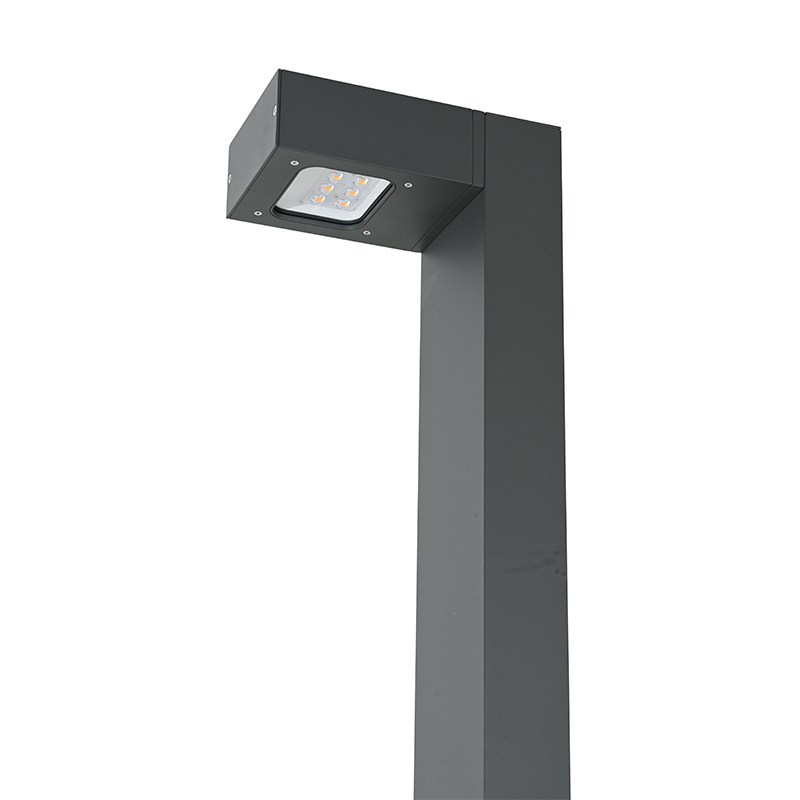
One of the most practical advantages of LED garden lights — particularly relevant for outdoor fixtures that are difficult to access or require a professional electrician to change — is their dramatically longer service life compared to traditional light sources.
Beyond the headline lifespan, high-quality LED garden lights maintain stable light output throughout their operating life. Unlike other technologies that fail abruptly, LEDs undergo gradual lumen depreciation — professional-grade LED garden lights are rated to maintain 70% of initial lumen output (L70) at their rated hour count, providing predictable, consistent garden illumination for years before any noticeable reduction in brightness occurs.
Colour rendering index (CRI) measures how accurately a light source reproduces the natural colours of objects compared to daylight. For garden lighting — where the colours of plants, flowers, stone, timber, and water features are central to the visual experience — CRI is a specification that profoundly affects whether a garden looks beautiful or flat and unnatural at night.
High-quality LED garden lights using premium LED chip packages achieve CRI values of Ra 80 or above, with best-in-class products reaching Ra 90–95. At these levels, the warm amber tones of sandstone paths, the rich greens of lawn and foliage, and the vivid colours of garden flowers are rendered with accuracy and depth that low-CRI light sources simply cannot achieve.
By comparison, low-pressure sodium lamps — historically common in street and area lighting — have a CRI of approximately 20, rendering everything in a monochrome yellow-orange tone that entirely eliminates colour discrimination. Even compact fluorescent garden lights rarely exceed CRI Ra 82. High-CRI LED garden lights represent a genuine qualitative improvement in nighttime colour fidelity that transforms the visual character of outdoor spaces after dark.
Garden lights operate in one of the most demanding environments for any electrical fitting — exposed to rain, frost, morning dew, UV radiation, temperature cycling, dust, and potentially garden chemicals and irrigation spray. The IP (Ingress Protection) rating is the internationally standardised measure of how well a fitting resists water and solid particle entry.
Premium LED garden lights specified at IP66 are fully dust-tight (first digit: 6) and protected against powerful water jets from any direction (second digit: 6) — a significantly higher level of protection than the IP44 rating that represents the minimum acceptable standard for exposed outdoor use. An IP66 fitting can withstand direct hosepipe cleaning and heavy driving rain from any angle without water entering the housing or the electrical components.
The combination of IP66 protection with high-quality material construction — corrosion-resistant aluminium alloy housings, stainless steel fasteners, and tempered glass or UV-stabilised polycarbonate lenses — enables LED garden lights to operate reliably in coastal salt air, freezing winter temperatures, and high-humidity tropical climates alike without degradation of performance or appearance.
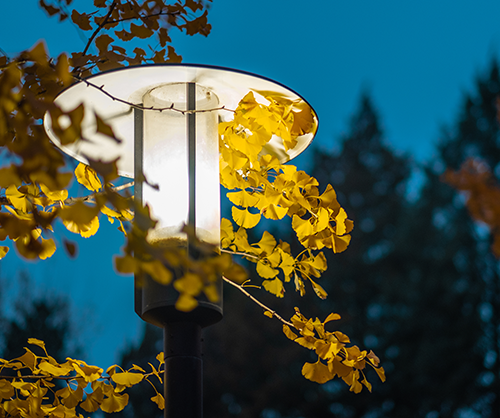
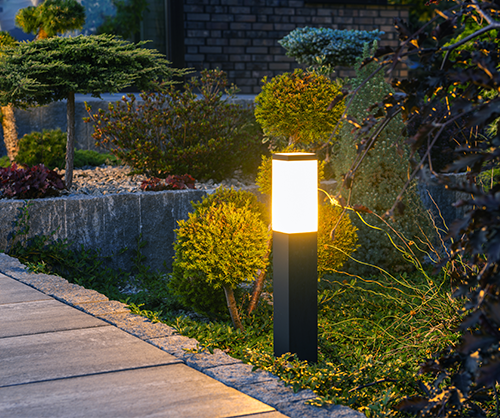
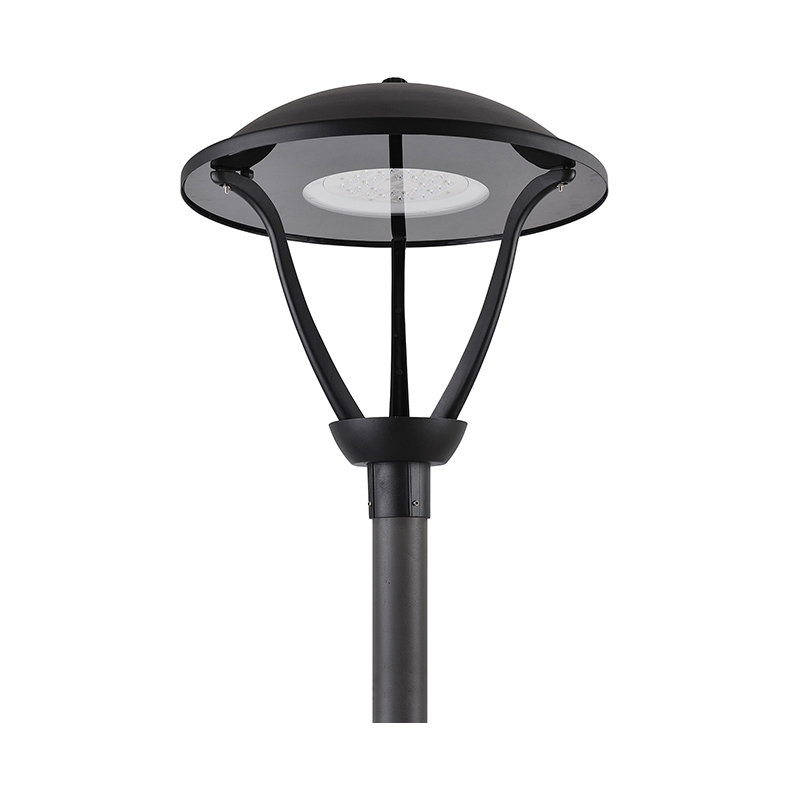
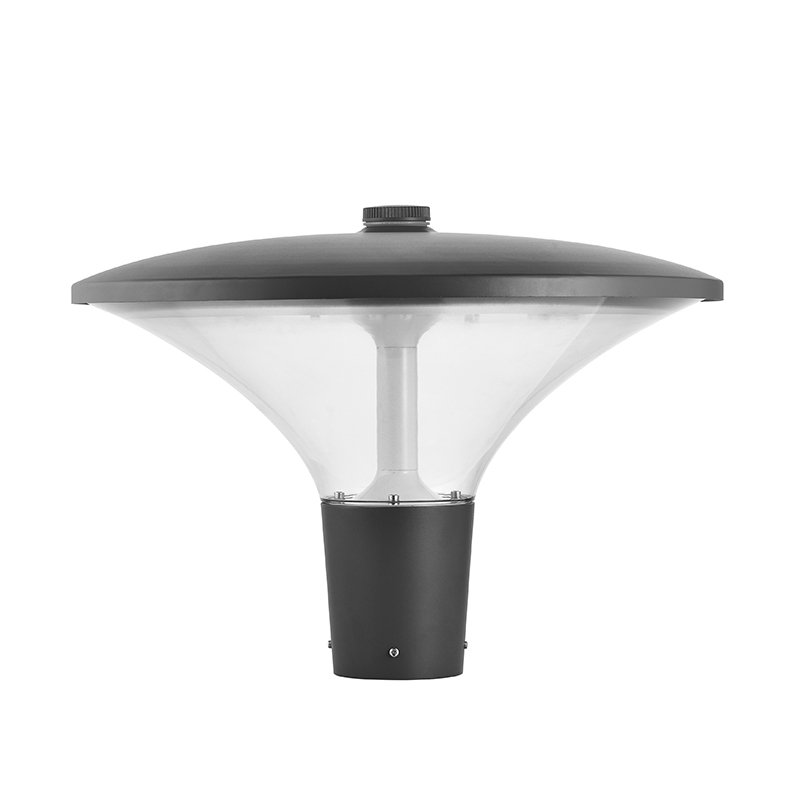
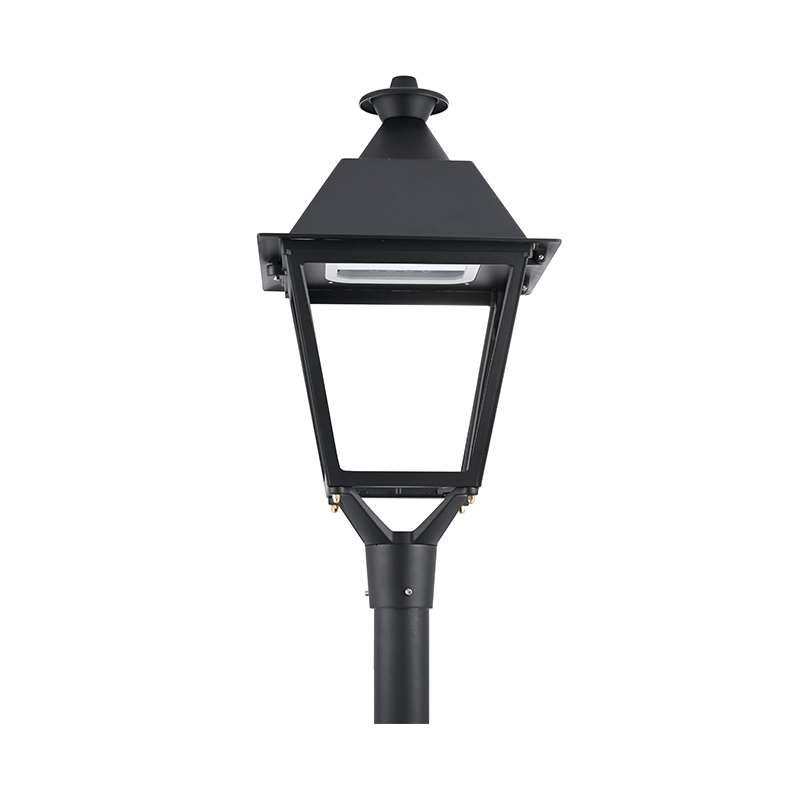
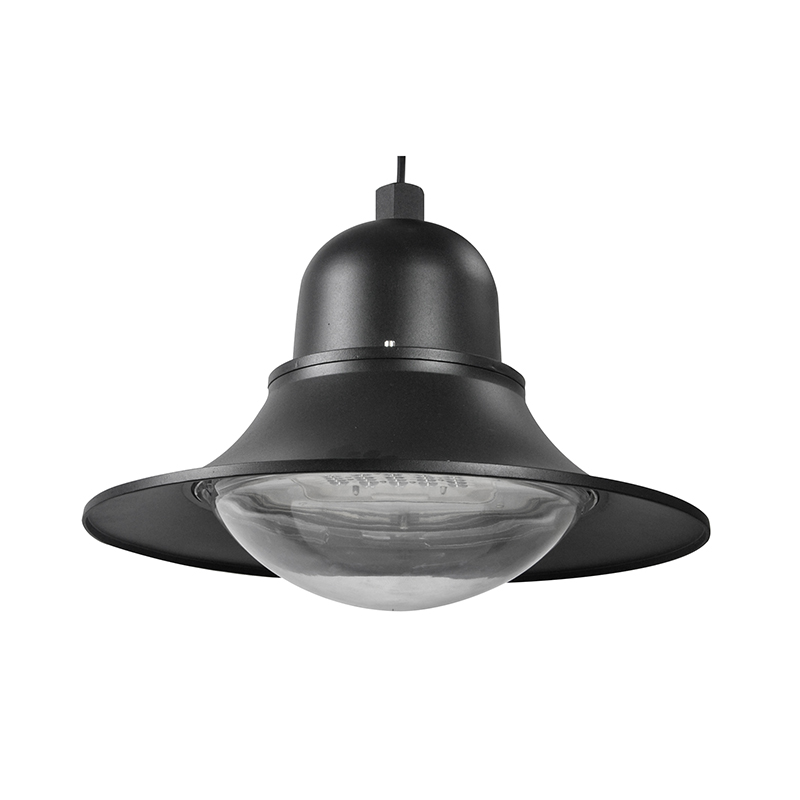
A defining advantage of the best LED garden light ranges — particularly those designed for courtyards, villa gardens, and residential landscapes — is their integration of aesthetic appeal with functional performance. These lights serve two equally important purposes simultaneously: they illuminate pathways, steps, and features for safe nighttime use, and they serve as designed elements of the garden's visual composition during both day and night.
High-quality LED garden light series are available in styles ranging from European vintage lanterns and classical post lights to clean modern minimalist forms, allowing homeowners and landscape designers to select fixtures that complement or enhance the architectural character of the property. The same fitting that casts a functional pool of light on a stone pathway becomes a sculpted element within the garden composition — visible as an object of design quality during the day and as a source of warm, layered light at night.
This dual-function philosophy — decoration plus illumination — is reflected in how quality LED garden lights use warm colour temperatures (typically 2,700K–3,000K) and directional optics to create layered light and shadow effects that add depth, warmth, and visual interest to outdoor spaces. Rather than simply flooding an area with uniform light, well-designed LED garden lighting creates the kind of atmospheric nighttime environment that increases the perceived value and liveability of a residential property.
The performance and longevity of an LED garden light depends not only on the LED chip itself but critically on the quality of the LED driver — the electronic component that converts mains AC voltage into the precise DC current required by the LED. An inferior driver is the most common cause of LED fitting failure, producing flickering, premature lumen depreciation, and early mortality of the LED chip even when the chip itself is of high quality.
Quality LED garden light ranges specify drivers from proven manufacturers, selecting components that provide:
LED garden lights offer meaningful environmental benefits compared to the technologies they replace — benefits that extend beyond simple energy saving to encompass the full lifecycle of the product.
LED technology is inherently compatible with smart lighting control in a way that incandescent, halogen, and fluorescent sources cannot match. This opens a range of convenience, energy-saving, and aesthetic benefits for residential garden lighting:
| Advantage | LED Garden Light | Halogen / Incandescent | Compact Fluorescent |
|---|---|---|---|
| Energy efficiency | 80–150 lm/W | 10–25 lm/W | 45–65 lm/W |
| Rated lifespan | 25,000–50,000 hours | 1,000–4,000 hours | 6,000–10,000 hours |
| Colour rendering (CRI) | Ra 80–95 | Ra 95–100 | Ra 75–85 |
| Waterproof rating | IP65–IP68 available | Limited (IP44–IP54) | Limited (IP44–IP54) |
| Cold weather start | Instant full brightness | Instant full brightness | Slow warm-up, dim at low temps |
| Hazardous substances | None | None | Mercury (requires specialist disposal) |
| Smart control / dimming | Full compatibility | Basic dimming only | Limited / not recommended |
Related Products
 Private Industrial Park, Liangnong Town, Yuyao City, Ningbo City, Zhejiang Province, China
 +86-13486062091
 +86-574-2222 2345
 +86-574-2267 2345
 info@ym-lighting.com


 English
 中文简体
中文简体