May, 15, 2026
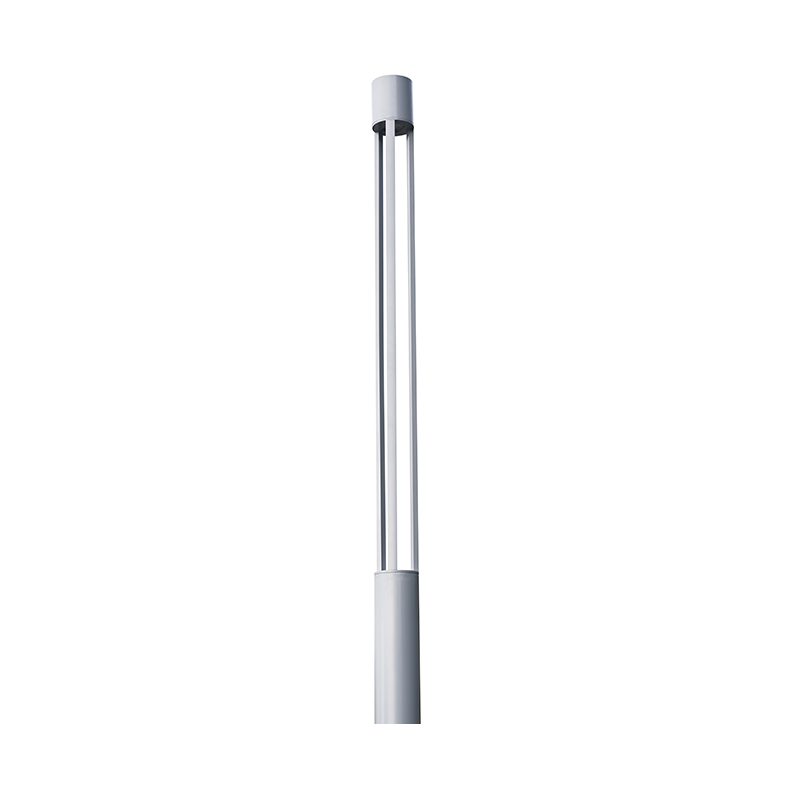
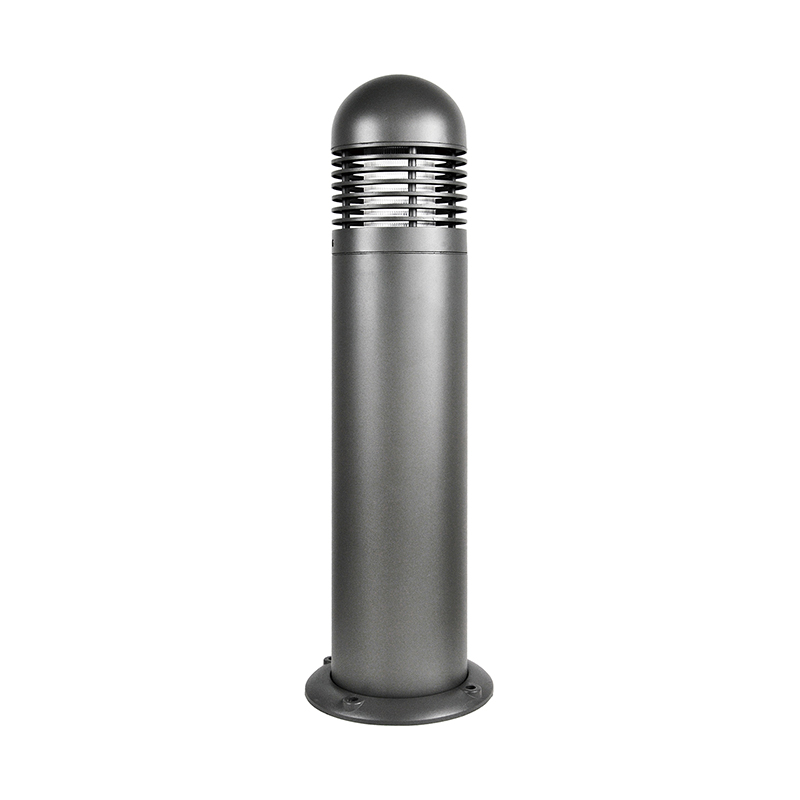
A bollard light is a short, self-contained outdoor luminaire mounted on a vertical post that stands between 600 mm and 1,200 mm (approximately 2 to 4 feet) above ground level, designed to illuminate pathways, driveways, garden borders, plazas, and pedestrian areas at a low, human-scale mounting height. Unlike tall streetlights that flood broad areas from above, bollard lights direct illumination downward and outward at close range, creating a layered lighting effect that guides pedestrians, defines space boundaries, and adds ambient visual interest to landscape and architectural settings—all without producing the glare associated with high-mounted luminaires.
Bollard lights serve both functional and decorative purposes simultaneously. Functionally, they mark pathways and hazards and provide enough illumination for safe foot traffic after dark. Decoratively, they contribute to the visual character of a space during both day and night, functioning as design elements even when switched off. Modern LED bollard lights typically combine these roles with high energy efficiency, long service life, and sophisticated control options including dimming and smart system integration.
Content
A bollard light consists of several integrated structural and optical components, each serving a defined function. Understanding how these components work together clarifies what distinguishes a quality bollard light from a basic one.
The post is the structural spine of the bollard light, housing the electrical wiring and in many designs containing the driver electronics. The most common material for quality outdoor bollard lights is die-cast aluminium—particularly alloys such as 6063-T5—which combines low weight, high corrosion resistance, and the ability to form complex shapes with smooth surface finish through the die-casting process. Die-cast aluminium bollard posts are structurally rigid, do not rust, and accept surface coatings well. Steel posts are used in some heavy-duty or architectural applications for greater impact resistance, while composite or fibreglass posts are occasionally specified where electrical insulation or coastal corrosion resistance is the overriding priority.
The optical head at the top of the bollard contains the light source and optics that determine the distribution, colour, and intensity of the emitted light. In contemporary bollard lights, the light source is almost universally LED—either a discrete LED array or a COB (Chip-on-Board) module that concentrates multiple LED chips in a single compact package. LEDs offer service lives of 50,000 hours or more, eliminating lamp replacement maintenance for many years, and achieve luminous efficacies of 100 to 160 lumens per watt that far exceed the halogen and compact fluorescent sources they replaced.
The optical head design determines whether the bollard produces a narrow downward beam (for pathway marking), a wide 360-degree distribution (for general area ambience), or a directional side-emitting pattern (for illuminating adjacent planting or architecture). Many bollard designs use a translucent or diffusing lens or shade to soften the light output and prevent direct glare from the LED source.
Bollard lights are installed using one of two main base configurations:
The LED driver converts the incoming mains AC supply to the regulated DC voltage required by the LED module. In quality bollard lights, the driver is housed within the sealed bollard body and is matched in rated lifetime to the LED module—typically 50,000 hours at rated conditions. Advanced bollard lights incorporate DALI (Digital Addressable Lighting Interface) or other dimming protocols in the driver, allowing the light level to be programmed or adjusted remotely through a building management system or smart lighting controller.
Bollard lights are deployed across a wide range of outdoor settings, each taking advantage of the low mounting height, directional light control, and landscape-compatible scale that distinguishes bollards from other outdoor luminaire types.
The most fundamental application of bollard lights is defining and illuminating pedestrian pathways. Bollards placed at regular intervals along a path—typically every 4 to 8 metres depending on the light output and required illuminance level—provide enough light for safe walking without creating the light pollution or glare associated with taller luminaires. The low mounting height keeps light close to the walking surface, which is exactly where it is needed for detecting path edges, steps, and surface irregularities. This makes bollards the lighting choice of choice for park paths, campus walkways, hotel and resort grounds, and residential estate driveway lighting.
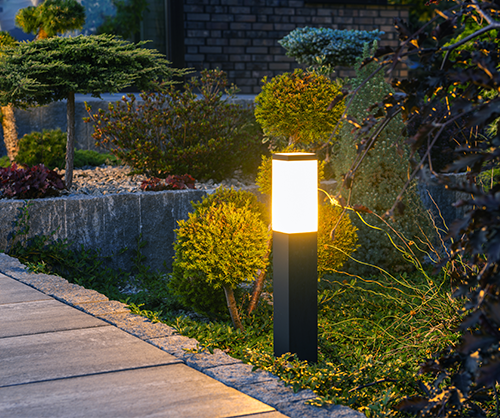
In garden and landscape settings, bollard lights contribute to the nighttime visual composition of the space, highlighting planting areas, water features, and architectural elements. Rather than simply illuminating the ground, landscape-focused bollard lights may emit light through side apertures, perforated panels, or translucent sections that create patterns or gradients of light that interact with adjacent planting. The daytime appearance of the bollard itself—its material, colour, and form—is an equally important consideration in landscape lighting design, where the luminaire must complement the garden aesthetic even when not illuminated.
Urban designers use bollard lights in plazas, squares, and pedestrianised streets to create human-scale lighting environments that complement the architectural character of the space. In these applications, bollards typically work as part of a layered lighting scheme alongside taller amenity poles and building-mounted luminaires—the bollards providing the low-level intimate illumination that makes a plaza feel comfortable and inviting at night, while the taller luminaires ensure sufficient overall illuminance for safety and security.
Bollard lights at car park perimeters and along driveway edges serve a dual function: illuminating the surface for safe vehicle and pedestrian movement, and physically delineating the boundary between vehicle zones and pedestrian or planted areas. In these settings, impact resistance is an important specification criterion—bollards in car parks are occasionally struck by vehicle bumpers, requiring robust construction to avoid damage and the safety hazard of a broken luminaire. Impact ratings such as IK08 (withstanding a 5-joule impact) or IK10 (withstanding a 20-joule impact) are relevant specifications for these exposed locations.
In residential settings, bollard lights illuminate driveways and entrance paths, enhancing security by eliminating dark zones near the property entrance and improving the aesthetic appearance of the property at night. Low-wattage LED bollard lights in domestic applications typically consume 3 to 15 watts, making the operating cost negligible even when left on for extended periods, while providing sufficient illuminance for safe path navigation and key-finding at the front door.
The height of a bollard light is one of its most visible and impactful specification choices, determining both the physical scale of the luminaire in its setting and the area of ground it can effectively illuminate from a single mounting point.
| Height Range | Typical Application | Illumination Radius | Recommended Spacing |
|---|---|---|---|
| 400–600 mm | Garden borders, low planting zones, step edges | 1.0–1.5 m | 3–5 m |
| 600–1,000 mm | Residential paths, park walkways, garden lighting | 1.5–3.0 m | 4–8 m |
| 1,000–1,200 mm | Commercial plazas, public pedestrian areas | 2.0–4.0 m | 6–12 m |
| 1,200–1,500 mm | Urban streetscapes, wide plazas, campus grounds | 3.0–5.0 m | 8–15 m |
The 600 mm to 1,000 mm range is the most widely specified height bracket for bollard lights across residential, hospitality, and commercial landscape applications, offering a useful balance between visual prominence, illumination coverage, and scale compatibility with planting and pedestrian zones. Heights below 600 mm begin to be obscured by vegetation; heights above 1,200 mm start to approach the scale of low pathway poles and may exceed the traditional definition of a bollard light in some classification systems.
Bollard lights are permanently installed outdoors and must withstand rain, dust, humidity, temperature cycling, and occasional physical impact throughout their service life. Two international rating systems quantify this weather and impact resistance: the IP (Ingress Protection) rating and the IK (Impact Protection) rating.
The IP rating (defined in IEC 60529) consists of two digits: the first indicates protection against solid particles (dust), the second against water. For bollard lights, the minimum acceptable rating is typically IP54 (dust-protected, splash-resistant from all directions), though IP65 (completely dust-tight, protected against water jets from any direction) is the more widely specified standard for quality outdoor bollard lights. IP65 ensures reliable operation in heavy rain, pressure washing of surrounding paved areas, and humid environments without water ingress degrading the electrical components over time.
For bollard lights installed in locations subject to flooding, near water features, or in coastal environments with salt spray and high humidity, IP66 or IP67 ratings provide additional protection through resistance to powerful water jets and temporary submersion respectively.
The IK rating (defined in IEC 62262) quantifies resistance to mechanical impact from the environment. The scale runs from IK00 (no protection) to IK10 (highest protection). For bollard lights in public areas and car parks:
Two LED optical characteristics—colour temperature (CCT) and colour rendering index (CRI)—significantly affect the visual experience of a bollard-lit space and should be specified deliberately rather than accepted as defaults.
Colour temperature, measured in Kelvin, describes the warmth or coolness of white light. The range available in quality LED bollard lights typically spans from 2,200K to 6,500K:
CRI measures how accurately a light source renders the colours of objects compared to natural daylight, on a scale from 0 to 100. For bollard lights illuminating gardens, planting, and architectural elements where colour appearance matters, a CRI of 80 or above is the minimum recommended specification. CRI 90+ is specified for premium landscape lighting where the accurate colour rendering of planting, paving, and building materials is a key design objective. Low-CRI light (below 70) makes colours appear washed out or distorted, reducing the visual quality of the space regardless of the illuminance level.
Modern LED bollard lights increasingly support intelligent control systems that reduce energy consumption, extend equipment life, and enable dynamic lighting effects that enhance the user experience of a space at different times of night.
DALI (Digital Addressable Lighting Interface) is the standard protocol for intelligent lighting control in commercial and public outdoor installations. A DALI-compatible bollard light can be individually addressed by the control system, allowing its light level to be programmed independently from other luminaires on the same circuit. This enables zone-based dimming strategies—for example, reducing bollard light levels on low-traffic paths after midnight while maintaining full output on main pedestrian routes—that can reduce energy consumption by 30 to 60% compared to continuous full-output operation. DALI also enables automatic fault reporting, allowing the management system to identify which specific bollard has failed without manual inspection of each unit.
Some bollard light models incorporate PIR (Passive Infrared) or microwave motion sensors that detect approaching pedestrians and increase the light level from a standby dim setting (typically 20 to 30% of full output) to full brightness as a person approaches. After the pedestrian passes beyond the sensor range, the light returns to standby after a preset delay. This functionality is particularly suited to low-traffic paths and residential driveways where continuous full-output operation wastes energy but complete darkness would compromise safety.
Simpler control approaches use photocells (daylight sensors) to automatically switch bollard lights on at dusk and off at dawn, or programmable time switches that activate and deactivate lighting at preset times. These are standard in residential and small commercial installations where the investment in DALI infrastructure is not warranted. Photocell control ensures the lights respond to actual ambient light conditions rather than a fixed schedule, preventing unnecessary operation during bright overcast days and ensuring reliable activation on winter evenings.
Selecting the appropriate bollard light requires balancing functional performance requirements with aesthetic preferences and budget constraints. The following questions form a practical specification framework:
Consulting the manufacturer's photometric data (IES files) during the design stage enables accurate spacing calculation to achieve the required illuminance levels and uniformity ratios across the pathway or area to be lit—avoiding the common outcome of either over-specified, overly bright bollards placed too close together, or under-specified bollards leaving dark gaps between mounting points.
Related Products
 Private Industrial Park, Liangnong Town, Yuyao City, Ningbo City, Zhejiang Province, China
 +86-13486062091
 +86-574-2222 2345
 +86-574-2267 2345
 info@ym-lighting.com


 English
 中文简体
中文简体