Sep, 18, 2026
Walk behind almost any warehouse, school, or retail building at night and you will see wall pack fixtures at work: sealed metal housings mounted eight to sixteen feet up, throwing controlled light across doors, docks, and walkways. If you are replacing aging metal halide units or specifying lighting for a new perimeter, the short answer comes first. Choose a die-cast aluminum LED wall pack sized in lumens rather than watts, match the cutoff style to the mounting height and any light trespass rules on site, and insist on an IP65 or IP66 rating with a photocell or smart control interface wherever the project justifies it. The rest of this guide covers fixture types, applications, the numbers worth comparing, and the points to confirm with a manufacturer before you sign a purchase order.
Content
An LED wall pack is an outdoor fixture mounted flush against a vertical wall to deliver bright, directional light for safety, security, and task visibility around a building. The housing is normally die-cast aluminum with a powder coated finish, sealed behind a polycarbonate or tempered glass lens with gaskets that earn the fixture its IP65 or IP66 rating. Inside, an LED board and driver replace the lamp, ballast, and socket arrangement of older HID packs, which removes the most common failure points and cuts weight noticeably.
Wall packs are often confused with flood lights, and the difference is worth keeping straight. A flood light throws a wide beam from a pole, an eave, or a ground position, while a wall pack is built to wash a controlled distribution down and outward from the wall itself, lighting the perimeter without blasting neighboring windows. For a broader view of the planning logic, we explain why wall lighting is installed in the first place in a dedicated article.
Catalogs sort wall packs into a handful of families, and knowing them speeds up selection considerably:
Form factor matters as much as the electrical data. A compact cube shape sits neatly beside doorways and service entrances, while a rectangular body spreads light along long walls, loading docks, and drive aisles. Architectural wall lights with softer distributions suit facades, courtyards, and high end residential projects where the fixture itself is part of the appearance. As a manufacturer of outdoor wall lighting, we produce both utility style and architectural formats in die-cast aluminum with IP65 level sealing, so a single project can mix types without mixing quality standards.
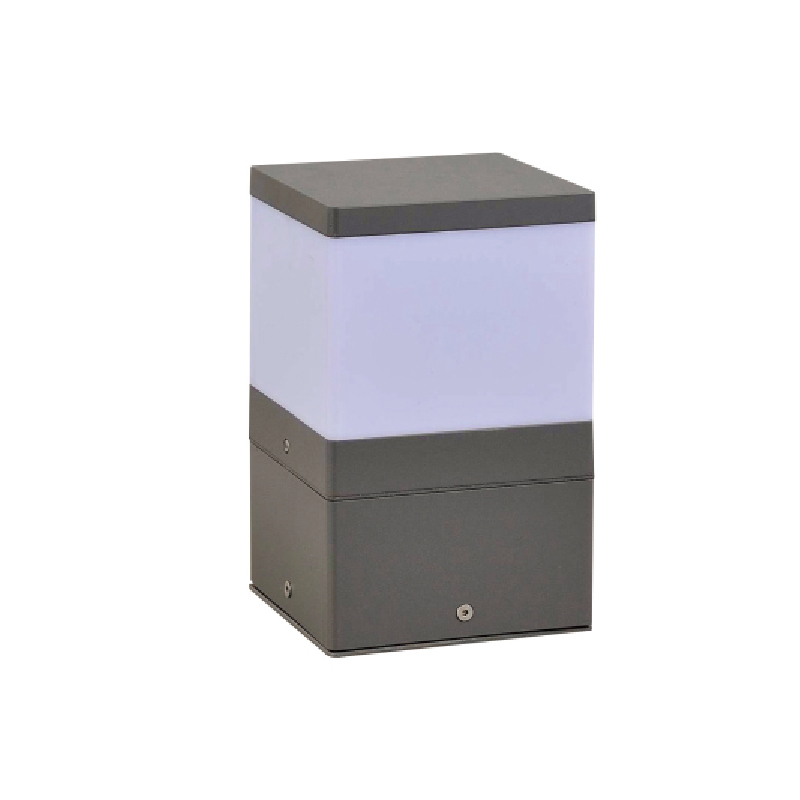 YM-6607 Rectangular Aluminum LED Wall LightThe YM-6607 is a simply designed rectangular LED wall light, specifically designed for outdoor wall lighting. Suitable for courtyards, villa exteriors, and commercial ...View Product →
 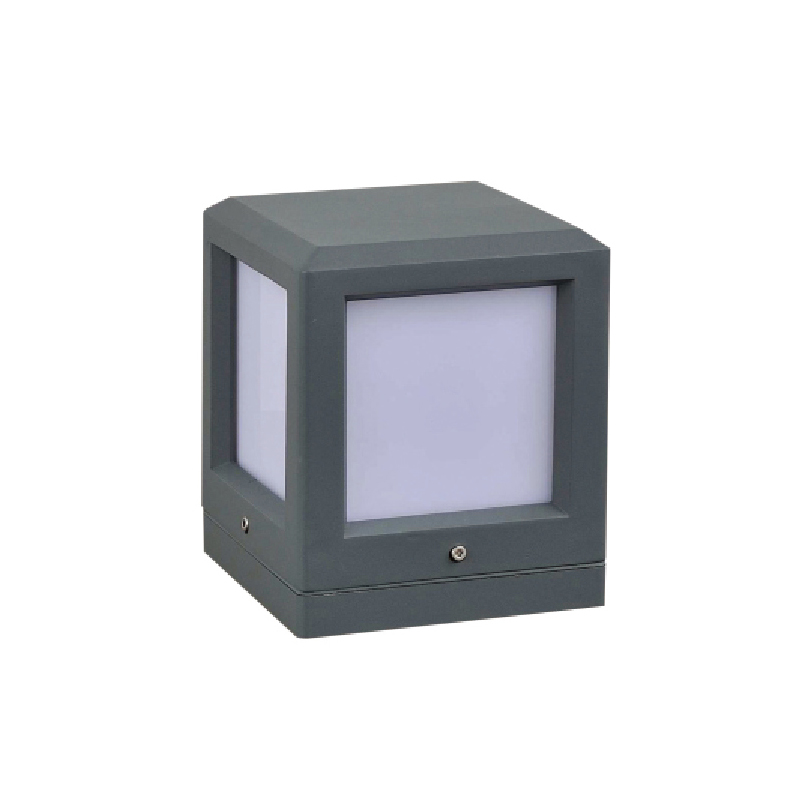 YM-6605 Cube Classic Outdoor Led Wall LightThe YM-6605 is an outdoor LED wall light featuring a classic cubic design with a simple and modern aesthetic and clean lines. The fixture offers high color rendering a...View Product →
Applications cluster around the building envelope:
On residential and hospitality projects, the same aluminum construction and sealing discipline appear in more decorative wall mounted formats.
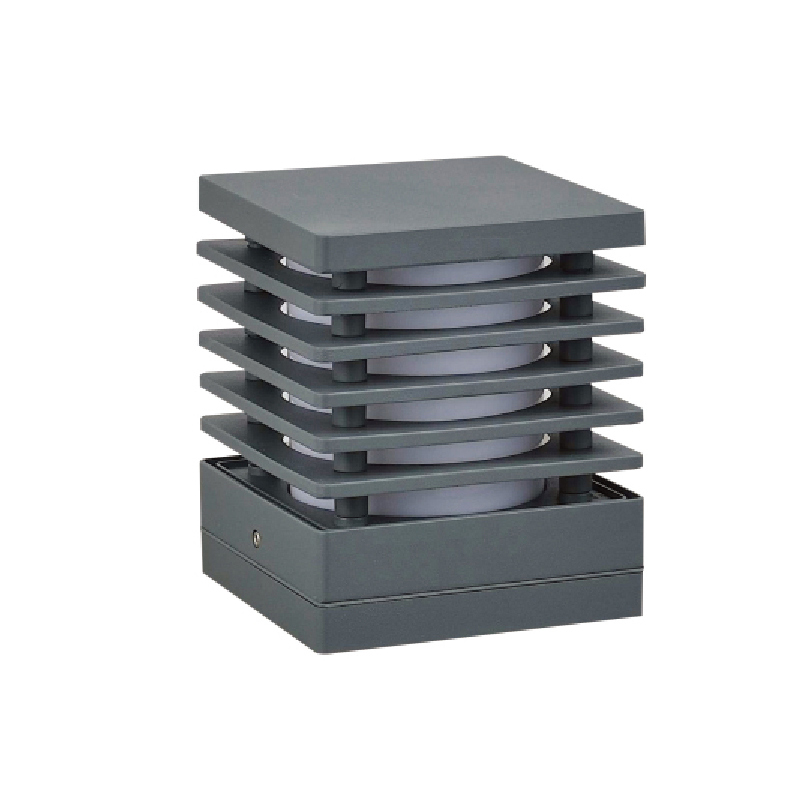 YM-6606 Popular LED Wall Lighting Outdoor LightsThe YM-6606 outdoor wall light is a practical product that combines classic design with modern lighting technology. Its minimalist design blends seamlessly into variou...View Product →
Quotes diverge quietly at the specification level, so put the checkpoints below on your comparison sheet before requesting prices.
| Specification | Typical range or option | Why it matters |
|---|---|---|
| Lumen output | 3,000 to 16,000 lm | Size by lumens, not watts, because lumens decide the light on the wall and the ground |
| Efficacy | 120 to 150 lm/W | Higher efficacy delivers the same brightness for less energy every burning hour |
| Color temperature | 3000 K, 4000 K, 5000 K | Warmer tones suit residential facades, cooler tones suit security and work zones |
| Ingress protection | IP65 or IP66 | Sealed against dust and water jets for year round outdoor exposure |
| Rated life | L70 of 50,000 hours or more | Indicates when output falls to 70 percent and maintenance planning becomes relevant |
| Voltage | 100 to 277 V AC | Confirm grid compatibility and driver range before ordering for export markets |
| Controls | Photocell, 0 to 10 V dimming, NEMA or Zhaga socket | Enables dusk to dawn operation, dimming scenes, and future smart control upgrades |
The chart shows the typical initial lumen output you can expect from common LED wall pack wattage classes when efficacy sits near 130 lumens per watt. Exact numbers vary with optics and driver quality, but the ratio between classes is what matters for planning. A 26 watt unit around 3,400 lumens suits a single doorway or a short walkway, while an 80 watt unit near 10,400 lumens covers loading docks and wider aprons. Sizing by lumens instead of watts also protects you when comparing quotes, because two fixtures with the same wattage can differ by 20 percent or more in output. Always ask suppliers for the photometric file so the claimed lumens translate into predictable light levels on the wall and the ground.
The retrofit argument for LED rests on two curves: what each fixture costs to run every year, and how each light source holds its output over time.
The column chart translates wattage into money using a common benchmark: 3,600 burning hours per year and an electricity price of 0.14 USD per kilowatt-hour. A legacy 175 watt metal halide pack with its ballast losses draws roughly 205 watts and costs about 103 USD a year to run. A 100 watt high pressure sodium unit lands near 58 USD, while a 45 watt LED pack with no ballast drops to about 23 USD. Across a twenty fixture perimeter, that gap compounds into thousands of dollars annually before maintenance is even counted. This is the core reason energy audits so often put wall packs near the top of the retrofit list.
The line chart tracks how each light source holds its output over 50,000 hours of operation. The LED curve declines gradually and stays near 85 percent of initial lumens at the end of the period, which is why reputable models carry an L70 rating well beyond that point. The metal halide curve collapses early, losing roughly half its light within the first 20,000 hours, so a lamp that still draws full power delivers a visibly dim wall. High pressure sodium holds its output better than metal halide but still finishes at 80 percent while burning its full wattage, and its poor color rendering remains a security drawback. For a perimeter application that difference is not cosmetic, because lighting is sized for a minimum brightness that an aging HID pack can no longer deliver.
Energy is only one part of a procurement decision, so the radar view below scores a current LED wall pack against a legacy metal halide pack on six attributes that buyers weigh in tenders.
The radar chart condenses the comparison into six attributes scored out of ten, based on typical commercial grade products in each family. The LED polygon stays in the outer ring on efficiency, service life, weather sealing, and maintenance intervals, reflecting sealed housings, long life drivers, and no lamp changes. Control readiness also favors LED, since photocells, 0 to 10 V dimming, and NEMA or Zhaga sockets are standard options on current models. The legacy HID shape holds its ground only on initial price for very small projects, and it trails badly on color quality and control options. When maintenance labor, lamp stock, and energy are priced honestly, the area between the two polygons is the budget you recover over the first years of operation.
Most wall packs mount over a standard junction box or directly onto a wired opening with a mounting gasket, and adjustable brackets cover walls that are not perfectly plumb. Mounting height typically falls between 8 and 16 feet, and a practical spacing rule is two to two and a half times the mounting height for continuous coverage along a wall. On metal buildings, confirm backing or reinforcement first, because thin gauge cladding cannot safely carry the fixture and its bracket. Finally, seal every penetration with rated sealant, since a fixture is only as weatherproof as its weakest gasket.
Before issuing a purchase order, ask for the photometric test report, the IP test evidence behind the IP65 or IP66 claim, driver specifications, and warranty terms in writing. If your project needs custom wattage, a specific color temperature, special optics, or a NEMA or Zhaga socket for future smart controls, confirm early that the factory can configure and document these options, because adding them after production is rarely practical. Our team supports customized outdoor wall lighting for overseas projects, and you can send drawings and photometric targets through the contact page for a direct quotation. Suppliers who answer these questions quickly before the order usually keep answering them after shipment.
LED wall pack fixtures reward buyers who compare the right numbers. Size by lumens, verify the cutoff class and IP rating, read the lumen maintenance curve rather than the wattage label, and lock down control interfaces before ordering. Do that, and the fixture on the wall will still be doing its job, at a fraction of the running cost, long after a metal halide pack would have faded into a dark patch on the facade.
Related Products
 Private Industrial Park, Liangnong Town, Yuyao City, Ningbo City, Zhejiang Province, China
 +86-13486062091
 +86-574-2222 2345
 +86-574-2267 2345
 info@ym-lighting.com


 English
 中文简体
中文简体