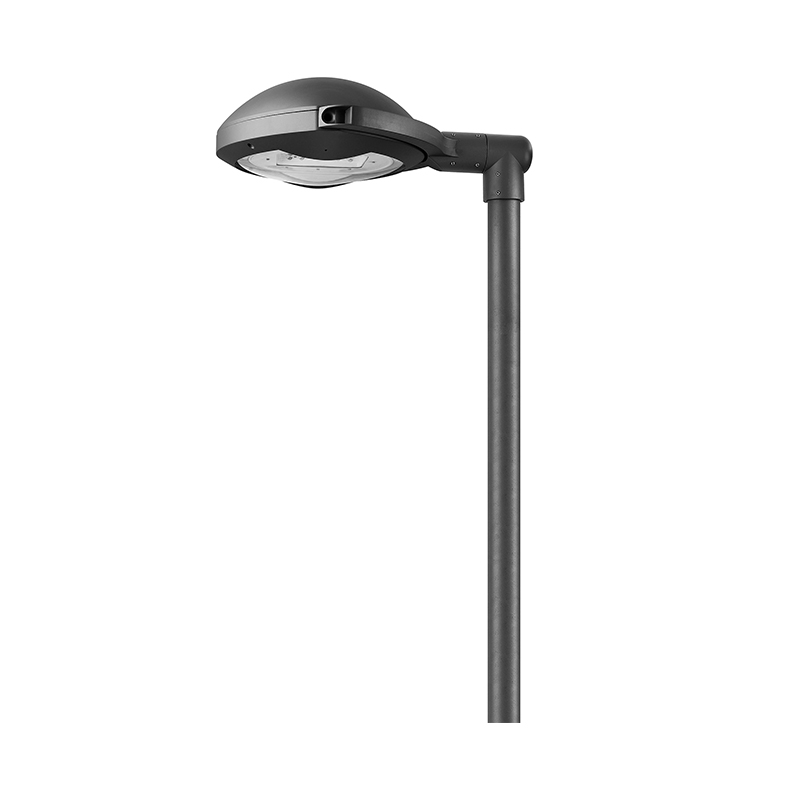
Nov, 05, 2026
Two quotes for the same 4 m garden bollard land on your desk. One sheet says 150 lm/W, the other says 105 lm/W, and the cheaper unit is the one with the bigger number. Before you approve either, it helps to know that the first figure was probably taken at the LED package, while the second describes the finished fitting after the diffuser, the driver and the heat path have each taken their share. Lumens per watt is the most useful number in an outdoor lighting specification, and also the one most often misread.
Content
Luminous efficacy is light output divided by electrical input: lumens divided by watts. Nothing more complicated than that. The confusion starts because the same label gets used at three different points in the chain from chip to pole.
At the package level, a modern LED die can reach 150 to 200 lm/W on a test board held at a fixed junction temperature. That number describes a component, not a product. Once the die is mounted on a metal core board with a lens, it becomes a module, and the figure drops as optical losses creep in. Once that module goes into a die-cast aluminium body with a driver, a gasket and a tempered glass cover, you have a luminaire, and the luminaire figure is the only one your electricity meter will ever see.
The gap between the two is called the light output ratio, and it is normally somewhere between 0.7 and 0.9 for outdoor fittings. A supplier who quotes 150 lm/W for a lantern whose measured luminaire efficacy is 118 lm/W has not necessarily lied, but the spec sheet needs to say which number is which. If you are comparing drive currents, optic choices or module layouts, our overview of how an LED module is built explains why the same die can produce very different real world results.
Use the bands below as a screening tool when quotes arrive. A figure far above the band usually means a chip level measurement or a favourable test condition, and a figure far below it usually means an old driver or a heavy diffuser.
| Product type | Typical luminaire efficacy | What usually drives the result |
|---|---|---|
| Bare LED package on a test board | 150 to 200 lm/W | Component only, measured at a controlled junction temperature |
| LED module with lens, sold as a spare part | 110 to 160 lm/W | Lens efficiency and board thermal design, driver excluded |
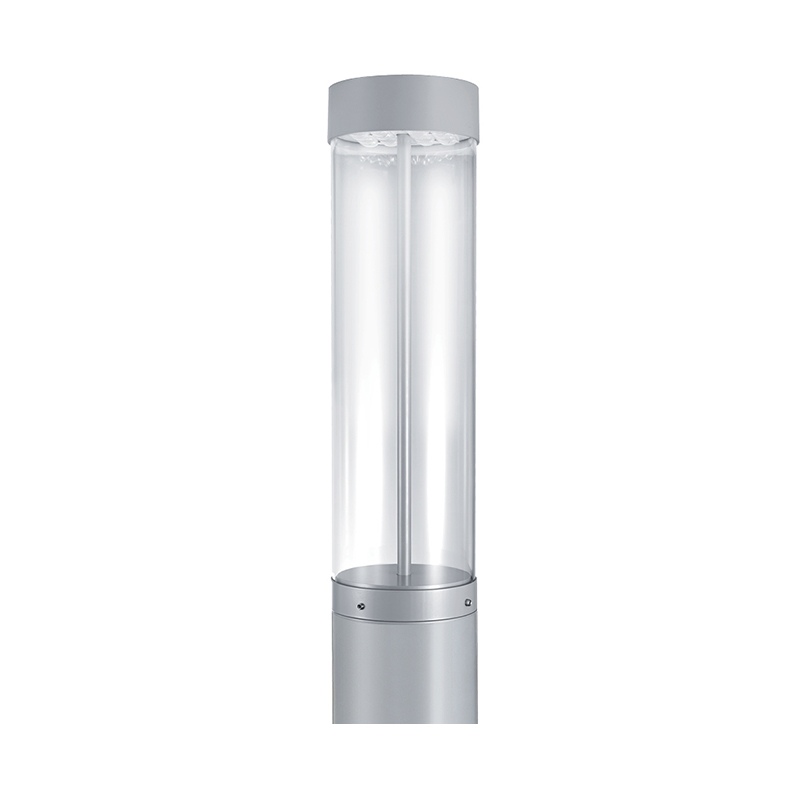
| Decorative garden bollard with opal diffuser | 60 to 95 lm/W | Diffuser transmission and a small heat sink volume |
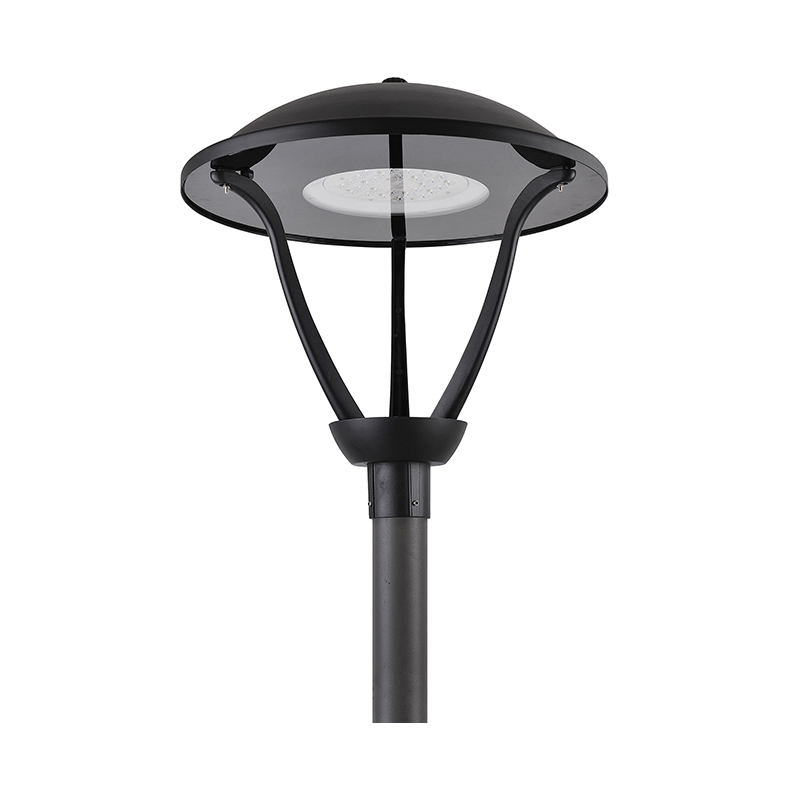
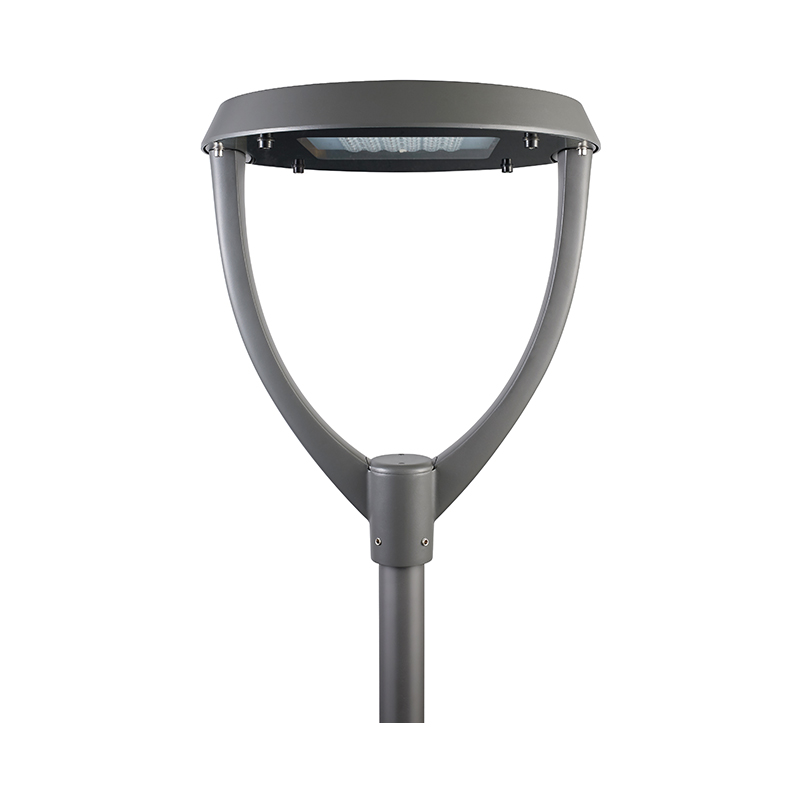
| Post top park or garden lantern | 85 to 125 lm/W | Cover material, reflector shape and internal glare control |
| Road and street lantern with tempered glass | 110 to 150 lm/W | Optic design, thermal path and driver quality |
| Integrated solar street light | 100 to 150 lm/W | Efficacy, panel wattage and battery capacity all compete for space |
Even an honest luminaire figure can disappoint on site. Five factors explain most of the difference.
High efficacy matters most where the light runs long hours, where energy is expensive, or where power is scarce. Street lighting that burns 4,000 hours a year rewards every extra lumen per watt. Solar products reward it twice, because a better lumen per watt figure shrinks both the panel and the battery needed for the same night time output.
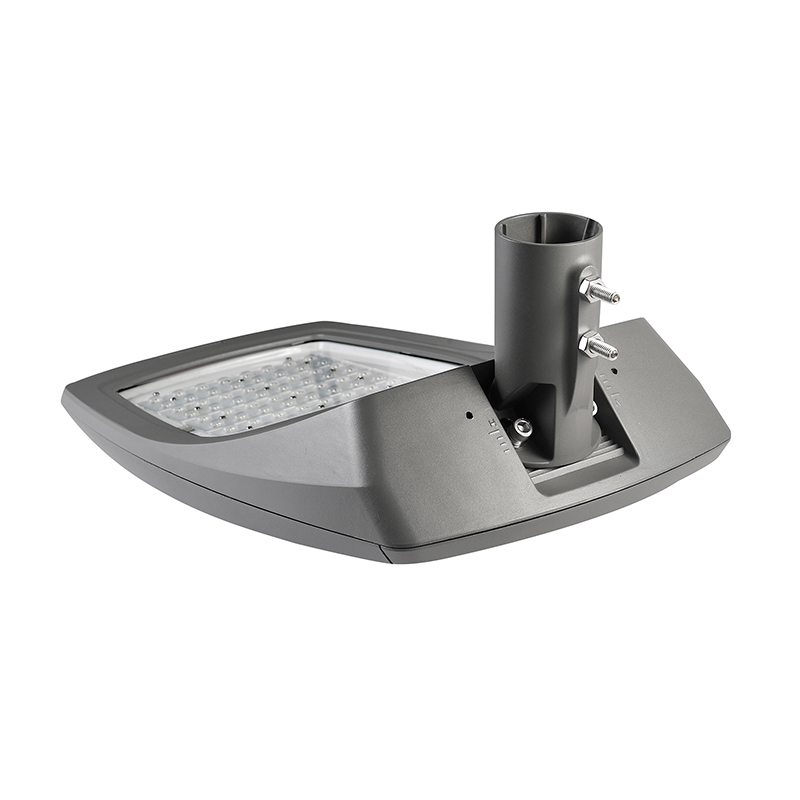 YMLED-6408L High-Brightness LED Street LightDie-cast aluminium street lantern with tempered glass, replaceable LED module and high efficacy for long-hour road lighting.View Product →
Our YMLED6408L shows how the choices fit together: a die-cast aluminium body, a tempered glass cover rather than a plastic diffuser, and a replaceable LED module. Glass and a generous thermal path are exactly the details that keep a street lantern close to its rated figure after five years in service.
 YMLED-6309 High-Power LED Street and Garden LuminaireIP66-rated outdoor luminaire with efficient module and controlled distribution for lower mounting heights, urban roads, parks and walkways.View Product →
For lower mounting heights, the YMLED6309 combines an IP66 rating with an efficient module and a controlled distribution, which is what allows a walkway to be lit at a lower connected load without dark patches between poles.
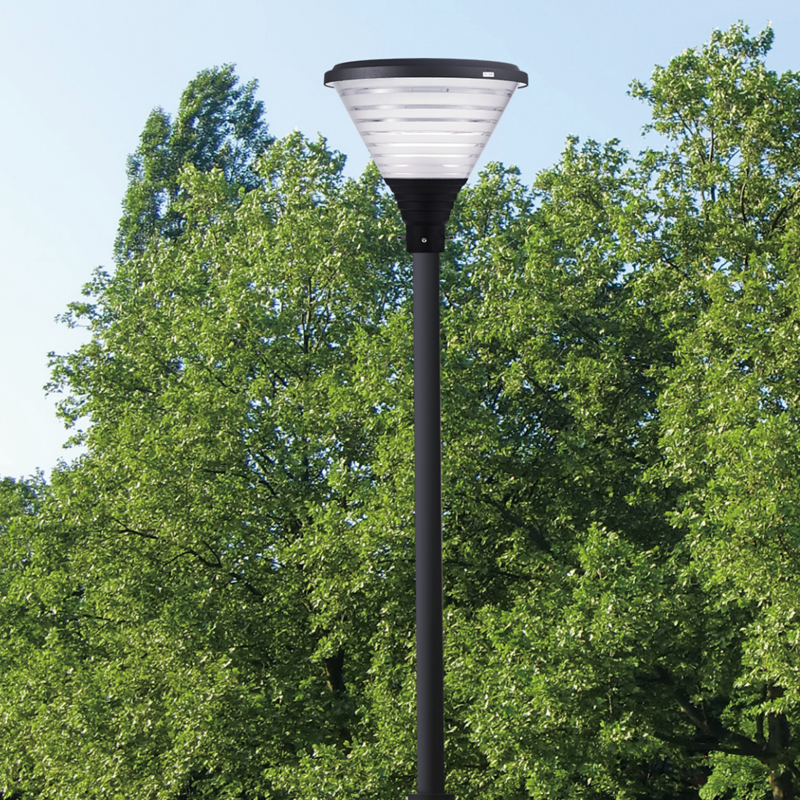 YMLED-6804 Integrated Solar LED Street LightAll-in-one solar street light combining angled panel, die-cast aluminium housing and LED module to reduce panel and battery needs.View Product →
Solar is where efficacy becomes a budget line. The YMLED6804 integrates the panel and the luminaire in one aluminium housing, so every point of efficacy gained in the LED and optic directly reduces the panel area and battery capacity required.
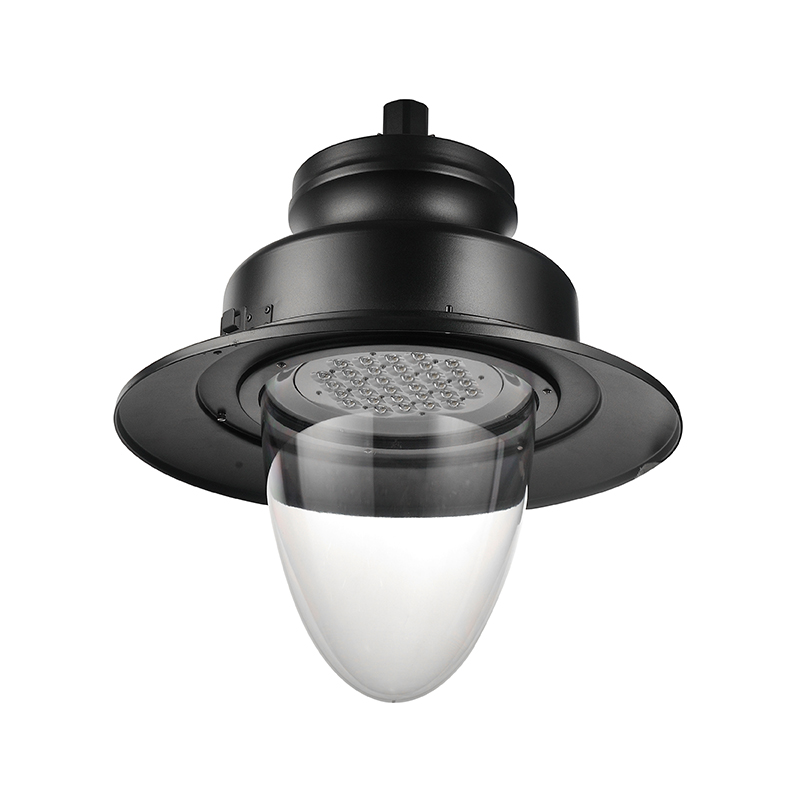
Where efficacy matters less is decorative lighting. A heritage style post top lantern is chosen for its silhouette, its light distribution and its glare control, not for the last five lumens per watt. Insisting on the highest possible figure in these categories often produces a harsher, more concentrated beam that looks worse in a garden or on a plaza.
Seven questions will separate a real specification from marketing copy.
Take a 40 fixture car park scheme lit 8 hours a night, 365 nights a year. A 60 W lantern at the terminals consumes about 175 kWh per fixture annually, or roughly 7,000 kWh across the site. Replace it with a 48 W lantern delivering the same lumens and the site drops to about 5,600 kWh. The saving of around 1,400 kWh is modest at a commercial tariff, but the reason to care is different: the higher efficacy design runs cooler, so the driver and the LED age more slowly, and the same pole spacing can be achieved with less installed load and smaller cable sizing.
For solar schemes the arithmetic is more dramatic. A 20 percent gain in luminaire efficacy allows a 20 percent reduction in stored energy for the same lighting profile, which can be the difference between a battery that survives a cloudy week and one that does not.
The practical rule is simple. Ask for the luminaire figure, ask what conditions produced it, and compare whole systems rather than headline numbers. If you are weighing two designs and want a second opinion on the efficacy, IP rating and thermal details, our team at Yangming Lighting is glad to walk through the calculations with you before the order is placed.
Related Products
 Private Industrial Park, Liangnong Town, Yuyao City, Ningbo City, Zhejiang Province, China
 +86-13486062091
 +86-574-2222 2345
 +86-574-2267 2345
 info@ym-lighting.com


 English
 中文简体