Sep, 17, 2026
Parking lot lighting decisions usually start with a visible problem. A corner of the lot is too dark at night, a pole-mounted fixture is flickering, or the monthly electric bill has become harder to justify. The direct conclusion is that commercial LED parking lot lights solve these issues in one move, but choosing the right fixture requires checking real specifications instead of relying on wattage alone. In this guide, we compare fixture types, mounting options, energy performance, and the practical details that affect installation and maintenance. The goal is to help you define a specification that will perform reliably for years.
Content
Standard residential fixtures are not designed for the demands of a commercial parking area. They lack the wide beam patterns, high lumen output, and rugged enclosures required to illuminate large open spaces evenly. LED area lights made for parking lots are built with higher IP ratings, stronger thermal management, and optics that aim light where it is needed. This reduces dark spots and limits light spill into adjacent properties.
Replacing metal halide lamps is often the fastest way to improve a parking lot. A 100W LED fixture can deliver comparable light to a 400W metal halide while consuming about a quarter of the energy. The horizontal bar chart below shows the estimated annual energy use for one typical fixture in each technology, assuming 12 hours of operation per night.
The chart compares annual electricity consumption for a 100W LED fixture and a 400W metal halide fixture. LED uses roughly 438 kWh per year, while metal halide consumes around 1993 kWh, because the fixture itself has a lower wattage and retains less heat. Over a single year, the difference is about 1555 kWh for one fixture, which translates directly into utility cost savings. The longer the operating schedule, the more meaningful this gap becomes. For a lot with 20 fixtures, the annual energy difference can reach 31,000 kWh, enough to justify a retrofit project before considering maintenance savings.
Once you confirm that LED is the right direction, the next step is comparing specs. Start with luminous flux, measured in lumens, and luminous efficacy, measured in lumens per watt. For a parking lot, you typically need enough light to cover the pavement and obstacles without excessive glare. A fixture that produces 15,000 lumens from 100W is often a practical starting point for a standard pole arrangement.
The bar chart below shows common lumen outputs for different LED power levels in a shoebox style parking lot light.
The output values in the chart are typical for modern commercial LED fixtures with efficient optics. As wattage increases, lumens rise in near proportion, but the exact value depends on driver efficiency, thermal design, and lens material. Choosing a fixture with a higher efficacy can allow a lower wattage for the same illumination level. It is also important to check the IP rating and surge protection level because parking lot fixtures are exposed to rain and voltage spikes. Look for at least IP65, and ideally integrated surge protection of 10kV or more.
To simplify a specification, consider the following criteria as a baseline.
| Parameter | Recommended Value | Why It Matters |
|---|---|---|
| Correlated color temperature | 4000K to 5000K | Bright, neutral white improves visibility without harshness |
| Color rendering index | CRI equal or greater than 70 | Makes vehicles, faces, and objects look identifiable |
| Ingress protection | IP65 or IP66 | Resists rainwater, dust, and routine cleaning |
| Surge protection | 10 kV or higher | Protects the driver during storms and grid fluctuations |
| Operating temperature | -40C to 50C | Ensures stable startup and output in different climates |
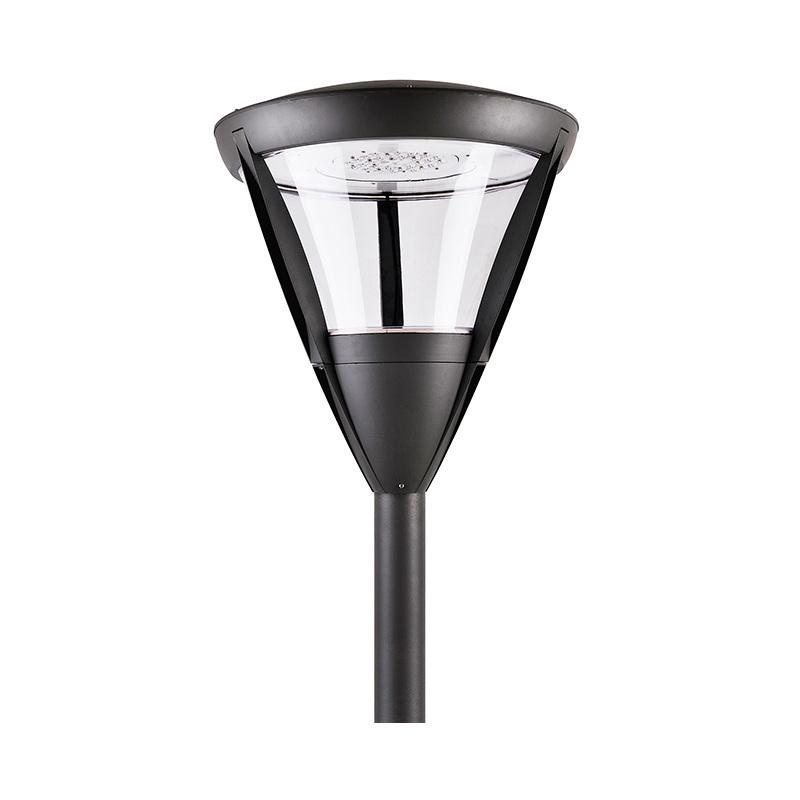
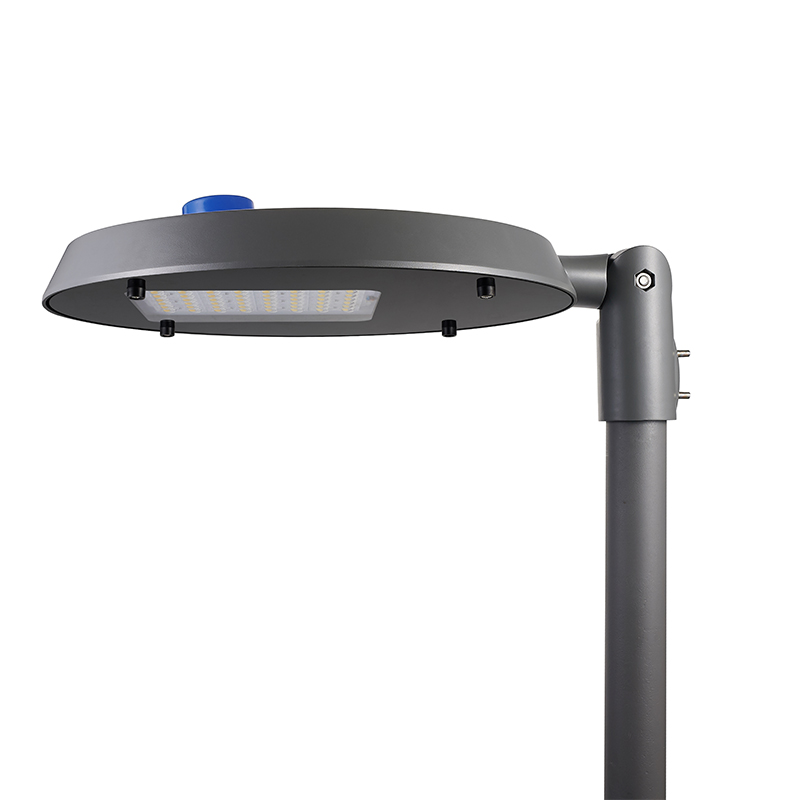
A fixture that meets these targets can handle the thermal cycling of outdoor use and maintain output for thousands of hours. The actual selection also depends on the mounting height and spacing between poles. For example, a 100W post-top fixture might cover a radius of 12 to 15 meters when mounted at 8 meters. Lower mounting heights need narrower distribution to control glare. The IP66 rated road lamp in our outdoor series is built for this kind of exposure and can be specified directly in a parking lot layout.
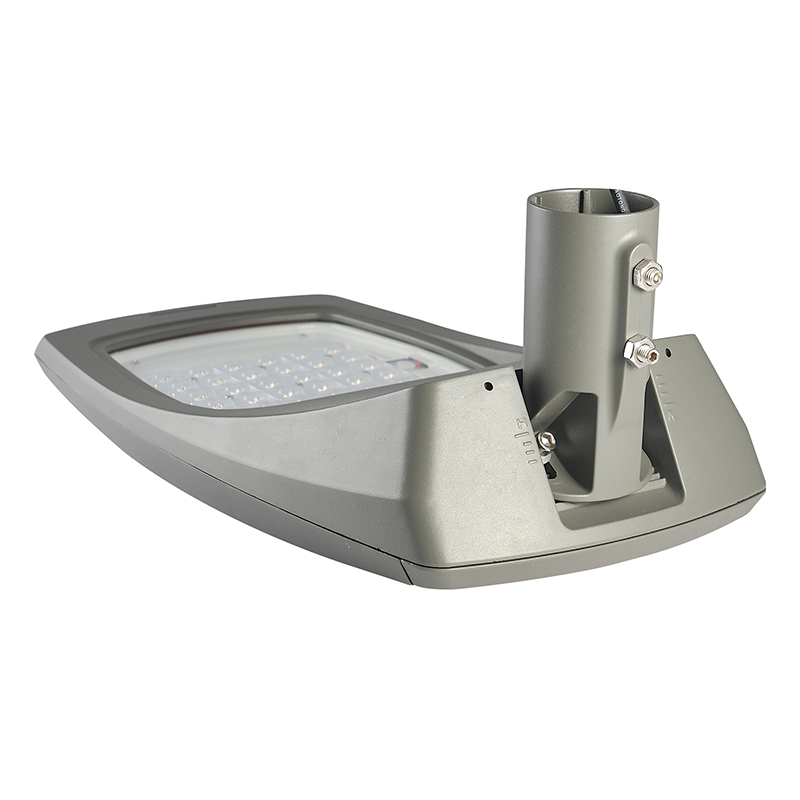 IP66 Rated Aluminum LED Road Lamp for Parking LotsThis die-cast aluminum road lamp offers IP66 protection and long lifespan, suited for parking lot exposure. Its wide voltage input supports diverse grids, making it a reliable choice for lot layouts.View Product →
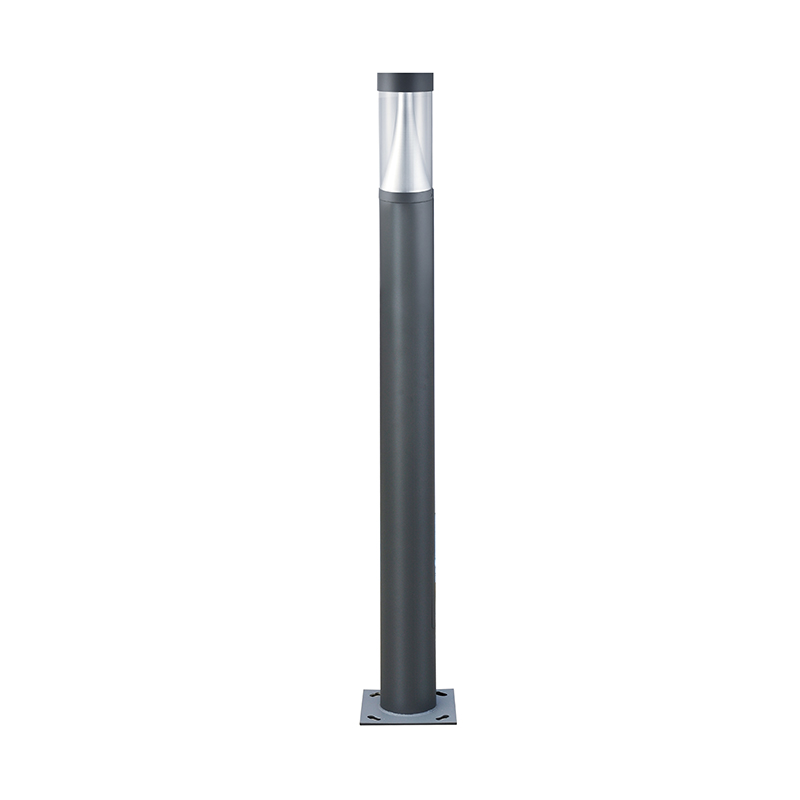
Parking lot lights come in several mechanical configurations, and the physical connection often determines how the optical pattern interacts with the lot. Common styles include horizontal shoebox fixtures on a pole arm, cobra head fixtures on a curved arm, and post-top fixtures that sit directly on top of the pole. Each style has a different beam orientation and maintenance access approach.
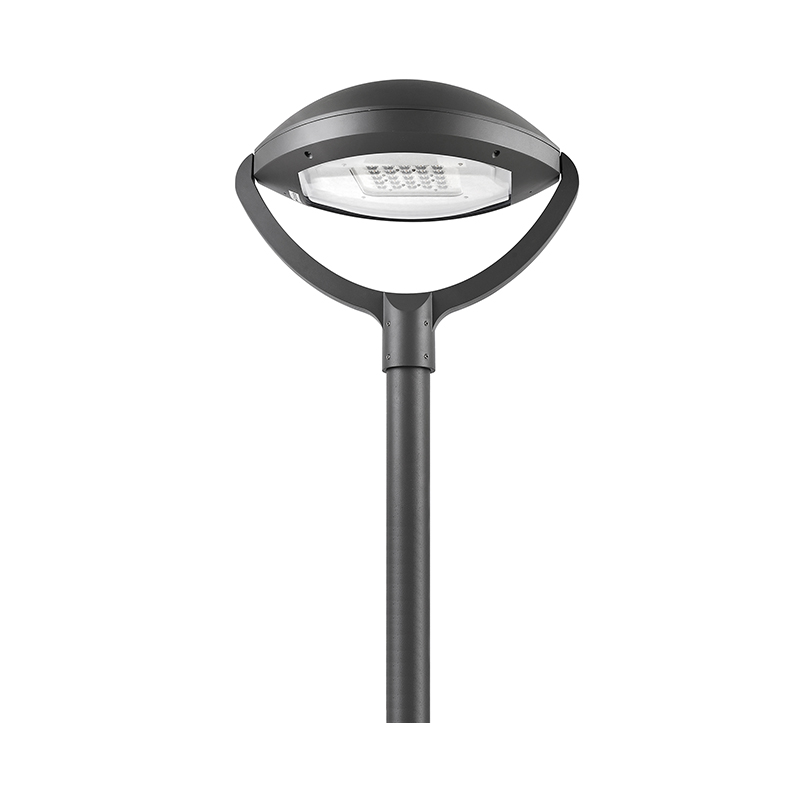
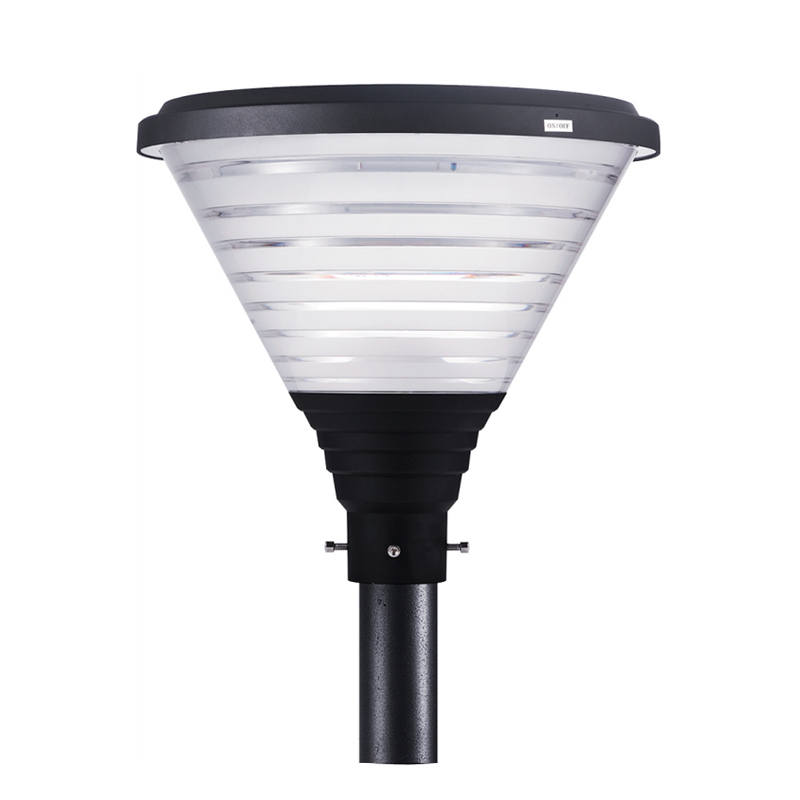
For a rectangular lot, a shoebox style with a Type II or Type III distribution is a common choice because it spreads light toward the parking rows. In a smaller lot or entrance area, a post-top fixture can deliver symmetrical illumination and a cleaner visual appearance. The post-top landscape fixture designed for parking lots in our production line offers a good example of this layout, as it combines a compact housing with a wide optic pattern.
When reviewing a fixture, confirm the optical distribution type and the recommended mounting height. A Type III distribution often works well for perimeter mount locations, while a Type IV pattern is better for wall-mounted or edge installations. If the lot has canopy areas or driveways, use fixtures with cutoff optics to control glare and spill.
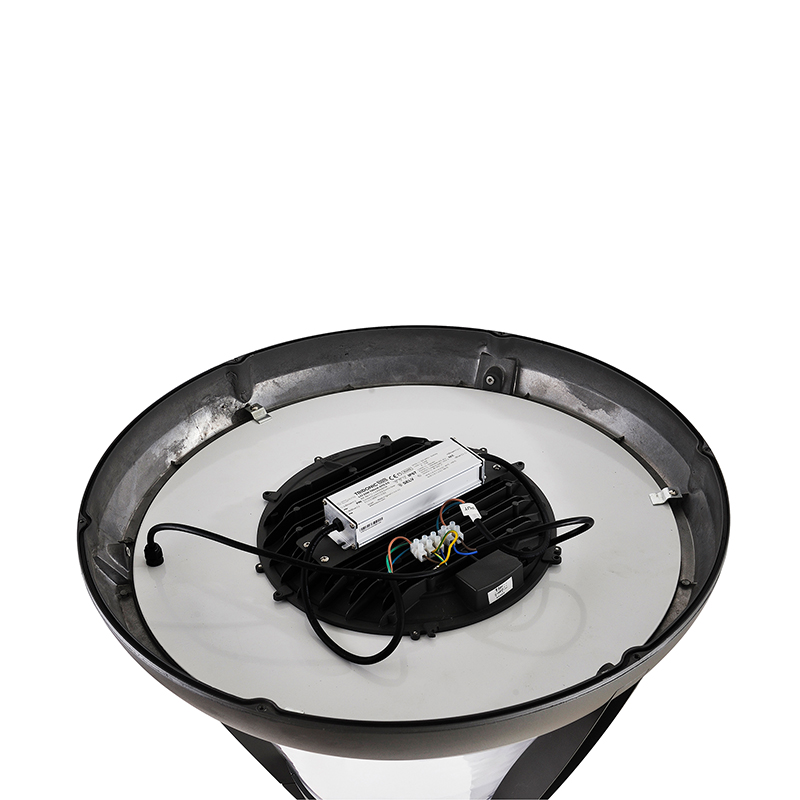 Post-Top LED Landscape Light for Parking LotsDesigned for post-top mounting, this fixture provides broad illumination for parking areas and park roads. Its durable construction and optional dimming features support efficient upgrades and controlled light distribution.View Product →
Retrofitting a parking lot with LED fixtures changes both the operating budget and the maintenance schedule. The larger initial cost is usually recovered within the first two or three years, especially when replacing 400W metal halide units with 100W LEDs. The line chart below traces the cumulative cost of owning one fixture over five years, including purchase price, electricity, and anticipated lamp replacement.
The straight LED line starts at a slightly higher first-year cost and then grows slowly because annual energy and maintenance remain low. The metal halide line begins lower, but energy consumption and the need to replace bulbs and ignitors push it upward quickly. By the end of year two, total cost has crossed, and by year five the metal halide fixture is often more than twice as expensive to operate. This calculation does not include the value of better light quality, fewer night service calls, and reduced liability risk, which further strengthen the case for switching.
Another way to see the difference is by comparing five performance dimensions side by side.
The radar chart compares the relative performance of LED and metal halide across five dimensions: luminous efficacy, lifespan, startup speed, color rendering, and cold tolerance. LED scores much higher in efficacy and lifespan because the chip converts more energy into visible light and wears down slower. Startup speed is another clear advantage since an LED reaches full brightness in less than a second, while metal halide requires warm-up time. The two technologies are closer in color rendering, but modern LED chips still provide adequate CRI for parking lots. Cold tolerance also favors LED, as metal halide lamps can have longer warm-up in low outdoor temperatures. These combined advantages explain why commercial parking lots migrate to LED even when the initial fixture price is higher.
Parking lot lighting is not just about the fixture itself. Controls such as photocells, motion sensors, and dimming schedules help reduce energy use during low-traffic hours. Photocells are the simplest option because they turn the light on at dusk and off at dawn without manual intervention. Motion sensors can dim the fixture to a low level until a pedestrian or vehicle is detected, which is useful for less busy lots.
Certifications matter for projects that need utility rebates or local approval. Look for DLC listed products, CE marking for European projects, and RoHS compliance. IP ratings are not enough by themselves; they describe enclosure protection but not electrical safety. In addition, consider dark-sky friendly optics that keep uplight below 2 percent to limit community light pollution.
Parking lot projects often involve custom pole heights, voltage configurations, or optic patterns. Working directly with a lighting manufacturer can simplify the process because the factory can adapt an existing design rather than requiring a fully customized product. Our facility in Ningbo has its own production line, warehouse, and quality control process, and we welcome customers who want to verify specifications before bulk orders. If your project includes community road connections or perimeter areas, our post-top street light models can match the same visual language as the main lot fixtures.
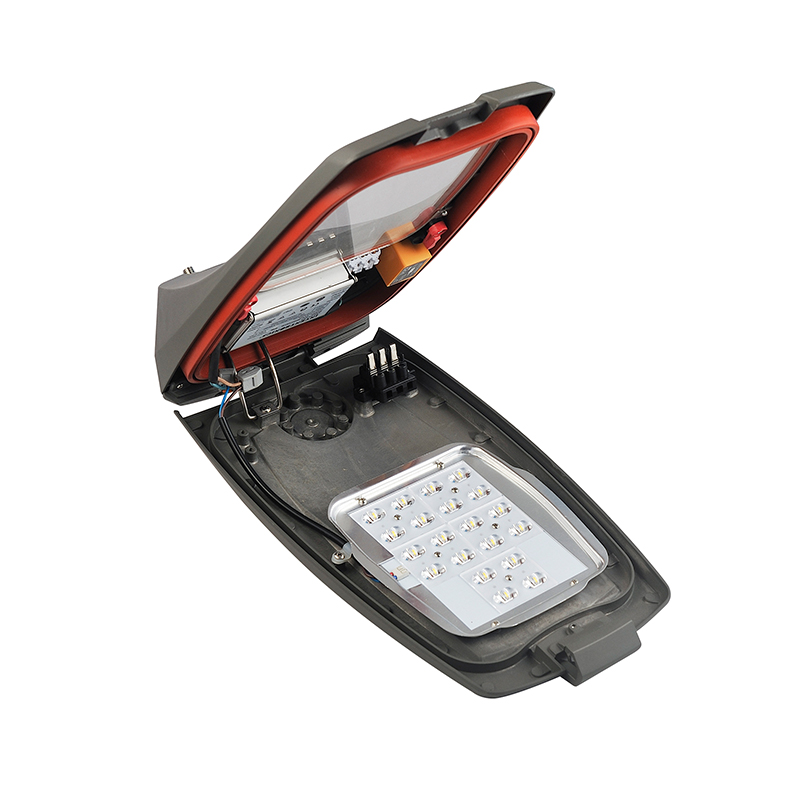 Factory-Supplied LED Post Top Street Light for Community RoadsThis compact post-top street light comes directly from a manufacturer, allowing design adjustments for community road needs. It features IP66 protection and smart control options for integrated lighting projects.View Product →
Before you finalize a specification, ask about fixture samples, photometric files, and custom labeling. The company background page provides more detail about our manufacturing capabilities and export history. For a specific quote or a lighting layout suggestion, our team is available through the contact page as you compare options.
Related Products
 Private Industrial Park, Liangnong Town, Yuyao City, Ningbo City, Zhejiang Province, China
 +86-13486062091
 +86-574-2222 2345
 +86-574-2267 2345
 info@ym-lighting.com


 English
 中文简体
中文简体