Sep, 24, 2026
When a lighting specifier points to a fixture on a pole and says “that mounting,” they are usually describing the tenon mount. It is the short metal stub that slips into the base of the luminaire and transfers the fixture’s weight into the pole. A well-designed tenon mount improves wind resistance, eases installation, and prevents the loosening that makes streetlights swing in storms. This article explains what a tenon mount is, which dimensions and materials matter, and how to apply that knowledge in a real outdoor lighting project.
Content
A tenon mount is a mechanical connection between a light pole and a luminaire. The pole terminates in a round or tapered stub, usually called the tenon, and the fixture has a socket or clamping collar that slides over that stub. A set screw, bolt, or weld-down collar locks the two parts together. The connection is common on streetlights, garden lights, and high-mast fixtures because it allows fast mounting without flanges or bolted base plates.
The tenon itself is often made from galvanized steel, stainless steel, or aluminum alloy. Its outer diameter is matched to the fixture’s mounting collar, while its inner taper, if any, engages a matching sleeve in the luminaire. In North American practice, the term tenon is also used for the adapter that reduces a larger pole tip to a smaller fixture opening. In Europe and Asia, the same part is sometimes called a mounting spigot or pole adapter. The essential function is identical: create a stable, weatherproof joint that keeps the optical axis aimed down the road.
The tenon mount is the only structural link between the pole and the lighting head. If it fails, the fixture can rotate, vibrate, or fall. A correctly designed tenon distributes the weight of the luminaire evenly around the pole axis, so wind loads do not create bending moments inside the fixture housing.
Vibration resistance is especially important for LED fixtures. LEDs have no filament to break, but their drivers and circuit boards can loosen under constant low-frequency vibration from traffic or wind. A tenon with a machined shoulder and stainless steel set screws resists loosening far better than a simple threaded pipe. Additionally, many municipalities now specify tamper-resistant fasteners on tenon mounts, because a loose collar can let the fixture rotate into neighbouring traffic lanes.
For these reasons, the tenon mount is not an aftermarket accessory. It is a core structural component that should be designed together with the pole and the fixture. Yangming Lighting’s story shows how a manufacturer with in-house die-casting and pole production can control the fit from the bracket to the lamp housing.
Tenon diameters follow the outer diameter of the pole tip. The most common sizes for outdoor LED lighting are 60 mm, 76 mm, 89 mm, 114 mm, and 140 mm. Each size has an associated weight capacity, though the actual limit depends on the wall thickness, steel grade, and wind zone.
| Nominal diameter | Typical outer diameter | Common length | Typical fixture weight |
|---|---|---|---|
| 60 mm | 60.3 mm | 180-250 mm | Up to 15 kg |
| 76 mm | 76.1 mm | 200-300 mm | 15-25 kg |
| 89 mm | 88.9 mm | 250-350 mm | 25-35 kg |
| 114 mm | 114.3 mm | 300-400 mm | 35-50 kg |
| 140 mm | 139.7 mm | 300-400 mm | 50-70 kg |
The length of the tenon should be at least 1.5 times the inside depth of the fixture’s mounting collar. If the collar is too shallow, the joint will have less stability under side loads. A longer tenon does not increase strength; it only adds leverage for lateral forces, so matching the manufacturer’s recommended insertion depth is better than choosing an oversized part.
The chart above groups the same five common tenon diameters by the maximum fixture weight usually specified for each size. The values assume a steel pole tip with a wall thickness of at least 3 mm and a wind zone below 180 km/h gust speed. Lighter fixtures allow a smaller diameter, which reduces pole top wind area and lowers material cost. Heavier fixtures force a larger diameter because the set screw must transmit more shear force to the pole wall. In practice, a 76 mm tenon covers the large majority of bollard and streetlight applications between 15 and 25 kg. Projects with architectural decorative heads often choose 89 mm simply to gain a thicker collar and more screw engagement. Always confirm the exact insertion depth with the luminaire manufacturer before ordering spare poles.
Tenon mounts are exposed to rain, road salt, and UV radiation for 20 years or more. The material therefore determines the usable life of the entire pole assembly. Hot-dip galvanized steel is the most common choice because the zinc coating self-heals small scratches and provides cathodic protection at the cut edge. Stainless steel grade 304 is used in coastal or chemically aggressive environments, but it is more expensive and requires careful selection of fastener alloy to avoid galvanic corrosion. Aluminum alloy is popular for decorative garden fixtures because it is lightweight and can be die-cast into complex tapers.
Below is a comparison of typical service lives for common tenon surface treatments, based on outdoor exposure tests in Europe and North America.
This chart compares the expected service life of four common tenon materials and surface treatments. Hot-dip galvanized steel reaches roughly 25 years in moderate atmospheric conditions, while powder-coated aluminum tends to start failing at the edges after 20 years if the coating is nicked. Stainless steel 304 offers the longest life at 30 years but must be cleaned periodically to prevent tea staining in coastal areas. Electro-galvanized steel, which has a much thinner zinc layer, typically lasts only 10 years and is not recommended for pole base components. For a standard highway fixture, the added cost of hot-dip galvanized tenon over electro-galvanized steel is small, yet the service life doubles. Specifiers should also consider the galvanizing standard: EN ISO 1461 gives a minimum zinc thickness of 85 microns for 6 mm steel.
Selection starts with the wind load calculation for the project site. A simplified process has four steps.
The radar chart below compares three mounting approaches: the traditional tenon mount, a slip fitter that slides directly over the pole, and a bolt-on adapter plate.
The radar chart ranks three installation methods on a five-point scale. Tenon mount scores highest on installation ease and maintenance ease because no loose base plate is needed; the fixture simply slides onto the prepared stub. Slip fitter becomes slightly cheaper but loses some vibration resistance because the clamp relies on a larger-surface friction joint. Bolt-on style wins on vibration resistance because of the rigid flange, but it adds material cost and creates more failure points at the fasteners. For most outdoor LED projects, the tenon mount offers the best balance of cost, stability, and long-term maintainability. This is why municipalities and export distributors often standardise on a 76 mm or 89 mm tenon for street and area lighting.
A tenon mount is only as good as its installation. The pole top should be clean, free of burrs, and slightly tapered if the fixture spec requires an interference fit. Apply an anti-seize compound to the tenon before sliding on the fixture to prevent galvanic corrosion between aluminum and steel surfaces. Torque the set screws to the manufacturer’s value, usually between 10 and 20 Nm for an M8 screw, and check the torque again after the first month of service.
Wind load increases with height faster than most people expect. The chart below plots the dynamic wind pressure acting on a typical square LED streetlight as the pole height increases from 6 m to 15 m.
The line chart shows how dynamic wind pressure on a luminaire grows as mounting height increases. At 6 m, the pressure is roughly 0.8 kPa, rising to 1.7 kPa at 15 m. The curve is not linear; between 10 m and 15 m, the pressure increases by about 42 percent, while the height increases by only 50 percent. This means that the same fixture on a 12 m pole can experience more than 50 percent higher lateral force than on an 8 m pole. Engineers use these values to calculate the required tenon diameter and the number of set screws. A common error is to use a single tenon size for all pole heights in a project, which under-specifies the connection for taller poles. The safest practice is to group poles by height and confirm the tenon size for the worst case in each group. Regular torque checks during the first year catch loosening caused by thermal cycling and wind-induced vibration.
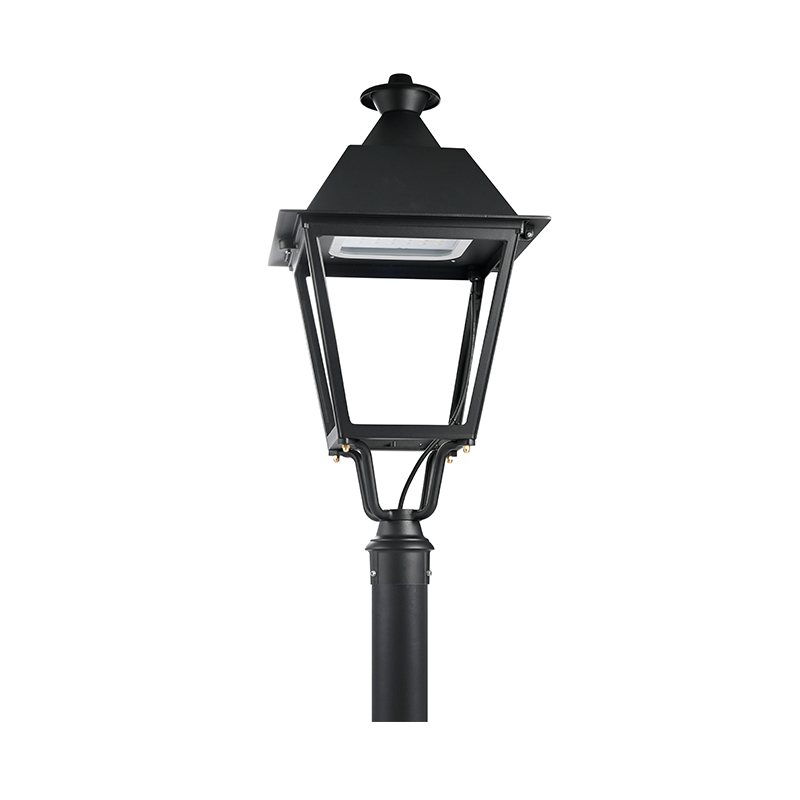
Yangming Lighting designs its outdoor LED fixtures around the standard tenon dimensions used in the international market. The YM-LED 6409 street light, for example, has a die-cast aluminum housing with a mounting collar that accepts a 76 mm or 89 mm tenon, and it comes with a NEMA socket for photocontrol. This makes it a straightforward upgrade for existing poles without replacing the whole bracket.
 YMLED-6409 LED Street Light with NEMA Socket for Smart LightingThis die-cast aluminum fixture accepts 76mm or 89mm tenons and includes a NEMA socket, making it a direct upgrade for existing poles. It offers IP66 protection and supports smart control options.View Product →
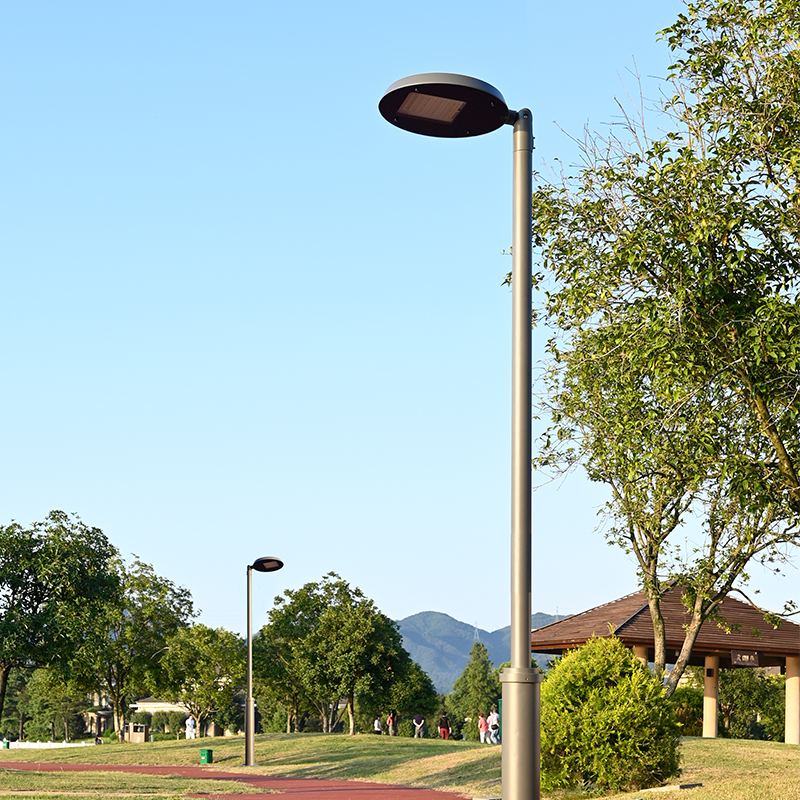
For projects that require a complete structural system, the company also produces hot-dip galvanized round poles with a machined tenon top. The pole and fixture are then guaranteed to share the same tolerances, eliminating fit problems on site. Choosing a pole from the same manufacturer reduces the risk of mismatched dimensions and simplifies warranty claims.
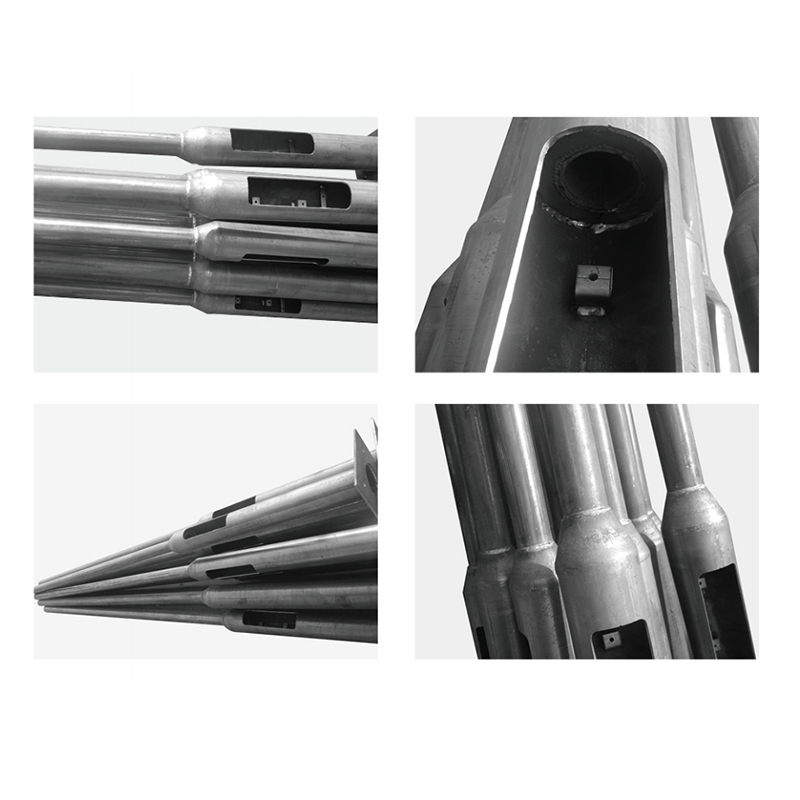 Pola PA Series Hot-Dip Galvanized Round Pole for Street LightingA hot-dip galvanized round pole with machined tenon top, designed to match the company's fixtures. It ensures consistent tolerances, simplifies installation, and supports complete structural systems.View Product →
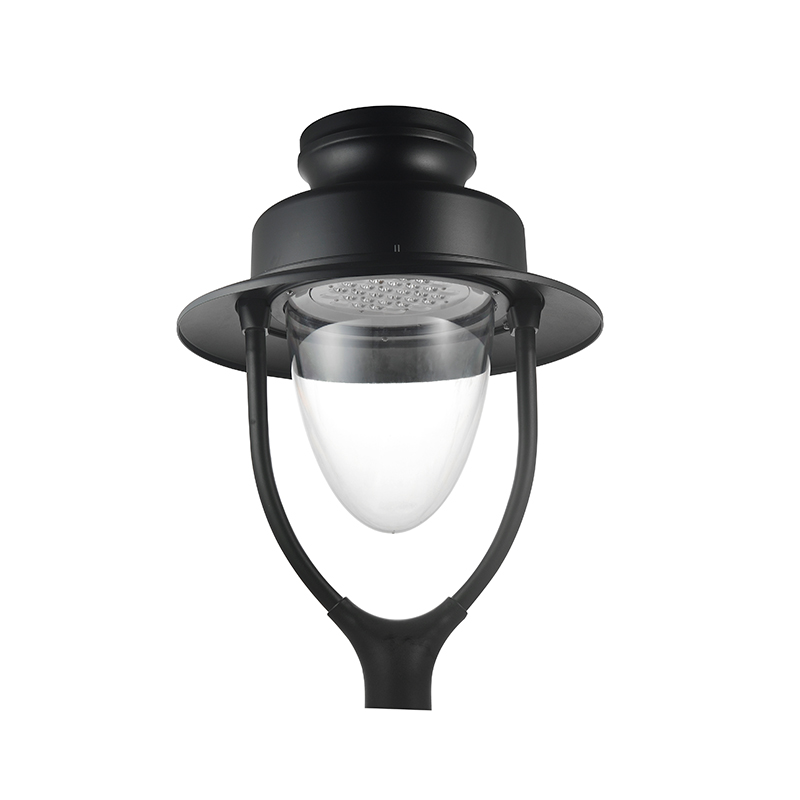
Decorative and architectural projects sometimes need a smaller tenon for bollard or post-top lights. The YM-LED 6408L uses a tempered glass cover and die-cast aluminum housing, and its mounting collar is machined to accept a 60 mm tenon with a 4 mm wall thickness. This allows the same fixture to be mounted on a slim pole or an existing bollard base.
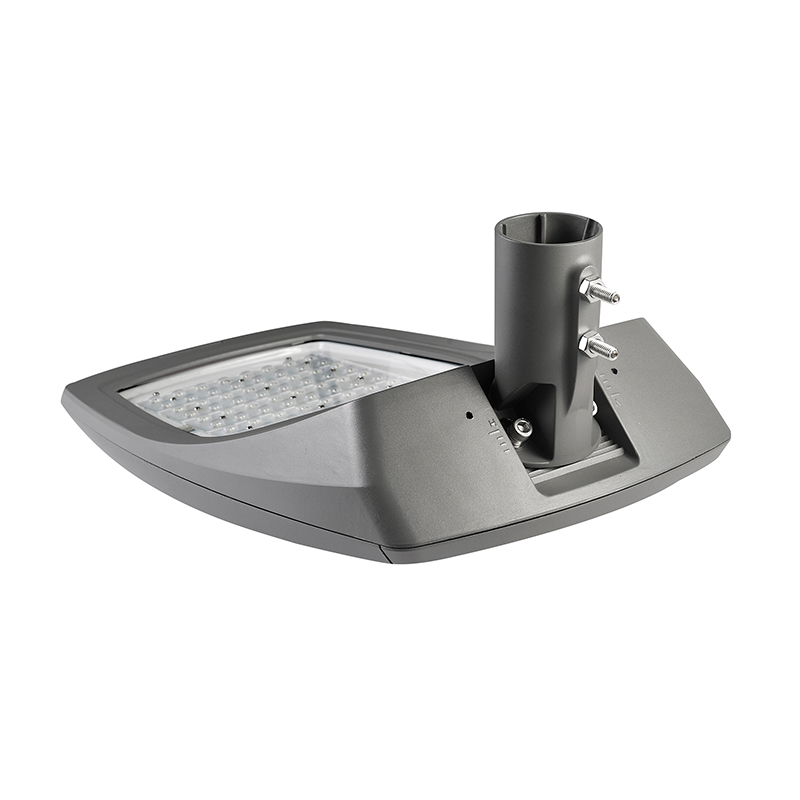 YMLED-6408L LED Street Light with Tempered Glass Cover for Slim PolesThis compact die-cast aluminum fixture has a tempered glass cover and a machined collar for 60mm tenons, suiting bollards or post-top mounts. It provides IP65 protection and reliable performance.View Product →
All Yangming fixtures are factory-tested for IP66 ingress protection, and the tenon area is sealed with a weatherproof gasket before shipment. If you are specifying a tenon size that is not listed, the engineering team can customize the mounting collar and pole adapter. The contact page provides a direct line for requesting drawings and wind load calculations.
Tenon mounts may look like simple metal stubs, but they are the critical interface that keeps modern LED lighting safe, stable, and serviceable. Choosing the correct diameter, material, and installation torque prevents most common outdoor lighting failures. With a solid understanding of tenon dimensions and wind load effects, a specifier can build a reliable lighting system that lasts for decades.
Related Products
 Private Industrial Park, Liangnong Town, Yuyao City, Ningbo City, Zhejiang Province, China
 +86-13486062091
 +86-574-2222 2345
 +86-574-2267 2345
 info@ym-lighting.com


 English
 中文简体
中文简体