Oct, 01, 2026
A 14 unit townhouse complex left its rear service alley unlit for years, and the same three doors were forced open twice in one winter. The manager expected a quote for one large floodlight. The site actually needed a 20W bollard on each side of the alley at 0.8 m, a 50W wall light above the shared gate, and a photocell so nothing depended on a resident remembering a switch.
That is the short answer for anyone comparing the best outdoor lights for security. Placement, beam control and reliability decide whether a fixture deters an intruder or simply blinds a neighbour. Wattage is the last variable to tune, not the first. This guide sets out which fixture types suit which risk areas, which specifications matter at the quotation stage, and where projects most often waste money.
Content
Security lighting does three jobs. It removes the cover of darkness from approach routes, it signals that a property is occupied, and it gives cameras or witnesses usable image quality. A fixture that fails any of those three is decoration.
Doorways need vertical illumination on the door leaf and on the ground directly below it. A wall mounted fixture at 2.0 to 2.5 m, angled down and slightly outward, covers a three to five metre approach. Two smaller fixtures either side of a gate usually outperform one larger unit in the centre, because they reduce the shadow cast by the gate post.
Floodlights and area lights suit open ground. Aim the beam at the perimeter rather than at the building, so anyone approaching is lit from behind. A 4000K fixture delivering 3000 to 5000 lumens is enough for a typical residential driveway, while commercial yards may need 8000 lumens or more, spaced so the poles do not leave dark bands between them.
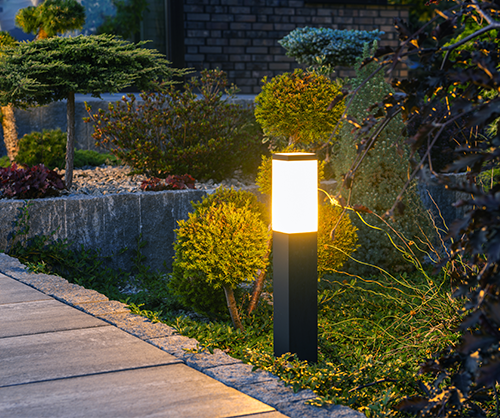
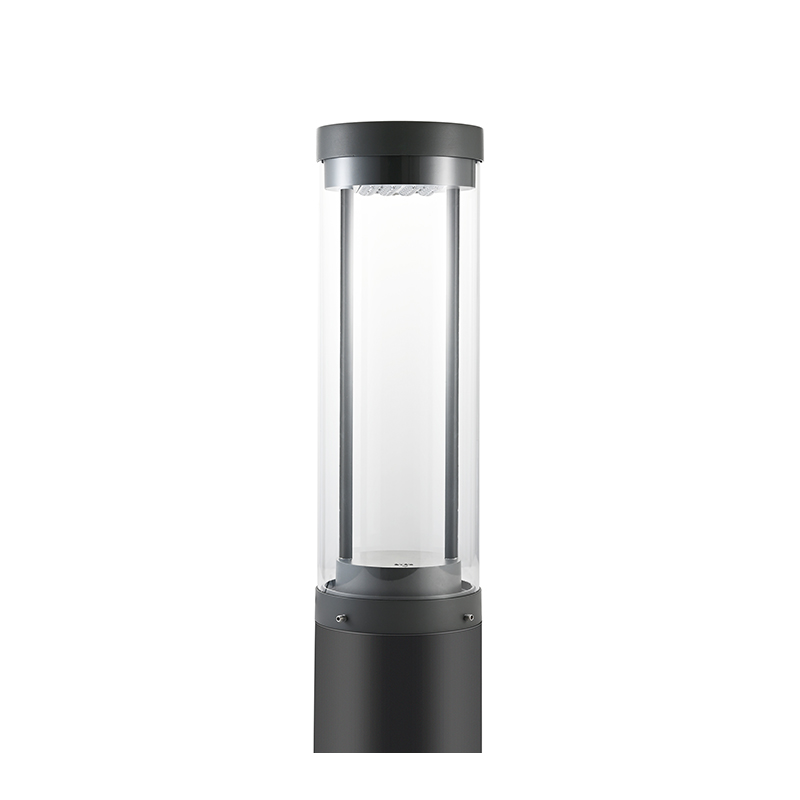
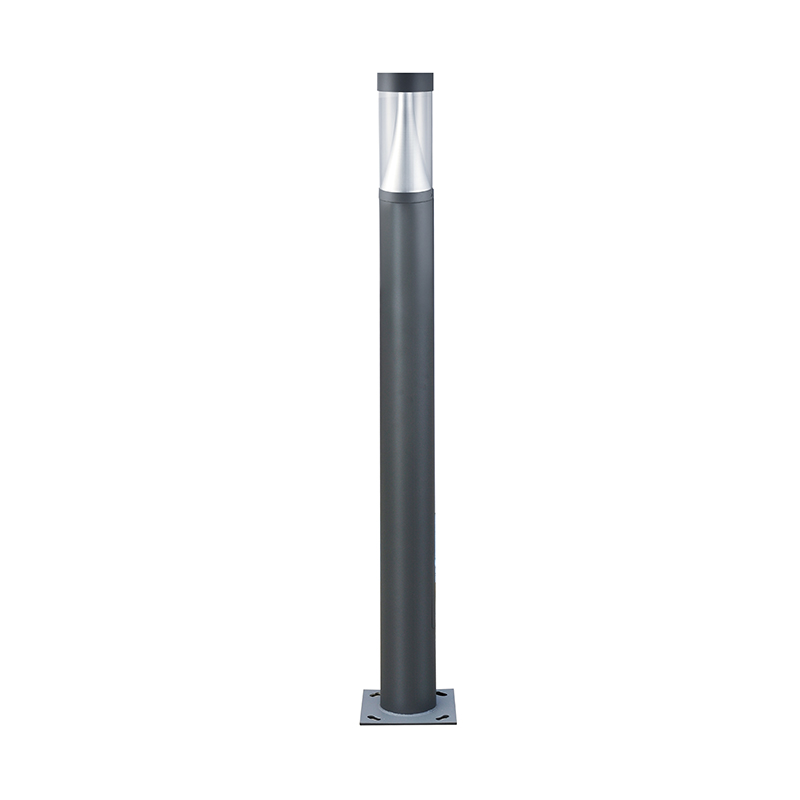
Low level lighting defines a route and makes movement obvious. Bollards at 0.6 to 1.0 m, spaced at roughly two to three times their mounting height, keep a path legible without flooding the whole garden. This is where far too much wattage gets specified. A 10W to 20W bollard with a shielded optic does more for safety than a 50W unit aimed horizontally.
Wall lights wash the building face and outline the boundary of a property. A rectangular aluminium wall light fixed at about 2.2 m and angled slightly downward marks the boundary while keeping light out of the eyes of passers by. On long retaining walls, six to eight metre spacing between fixtures is a practical starting point.
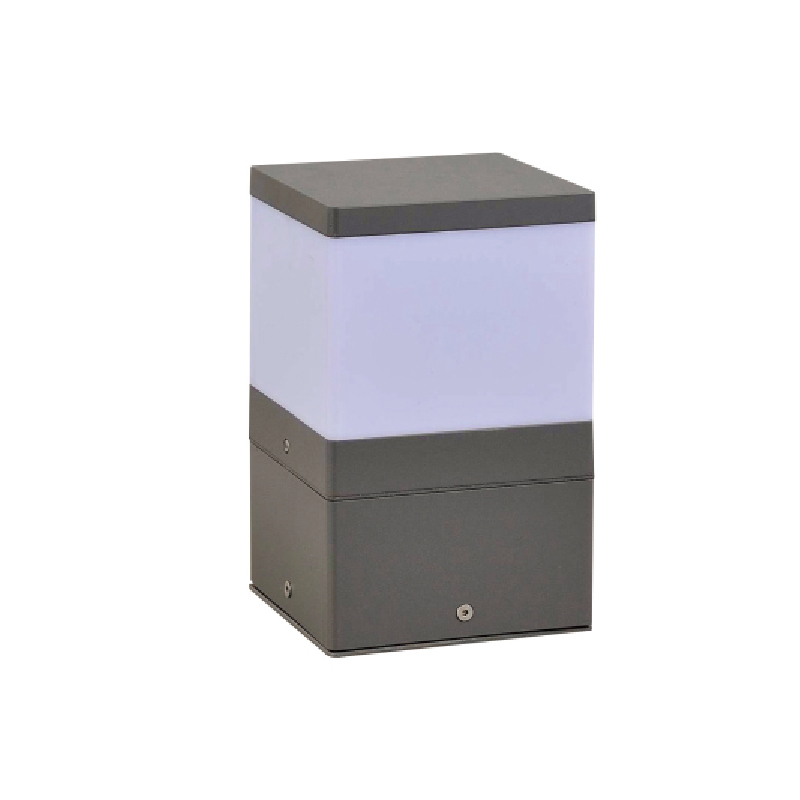 YM-6607 Rectangular Aluminum LED Wall LightThe YM-6607 is a simply designed rectangular LED wall light, specifically designed for outdoor wall lighting. Suitable for courtyards, villa exteriors, and commercial ...View Product →
Four numbers do most of the work at the specification stage: delivered lumens, colour temperature, beam angle and ingress protection. Together they determine whether a fixture is suitable for a site, while the wattage printed on the box tells you almost nothing on its own.
| Parameter | Practical target | Effect on site |
|---|---|---|
| Delivered lumens | 500 to 1500 at a doorway; 3000 to 5000 on a driveway | Too few leaves deep shadow, too many create glare and complaints |
| Colour temperature | 3000K to 4000K | Better facial recognition and less harsh light than 5700K and above |
| Colour rendering | CRI 80 or higher | More reliable identification of clothing and vehicle colours on camera |
| Beam angle | 60 to 90 degrees for floodlights; 360 degrees for bollards | Controls coverage and how much light spills onto neighbouring property |
| Ingress protection | IP65 minimum, IP66 for coastal or storm prone sites | Determines whether water ingress ends the service life early |
| Surge protection | 10 kV rating where the mains supply is overhead | Reduces driver failure after lightning or grid switching |
Efficacy matters commercially as well as technically. Because security lights often run from dusk to dawn, around 4000 hours a year in many regions, a fixture at 130 lumens per watt uses roughly 40 percent less energy than an older unit at 80 lumens per watt for the same light output. Across a 30 pole site that difference appears clearly on an energy report.
A passive infrared sensor at 2.5 m with a 180 degree field covers a normal doorway. For driveways, a 360 degree sensor on a pole or a corner bracket responds earlier and gives whoever is inside more warning. Check two settings before purchase: the detection range at the mounting height you will actually use, and the hold time range, which should allow at least one minute and ideally up to ten minutes on larger sites. False triggering is the most common complaint after installation, and it is usually caused by moving foliage, warm air from a cooling unit, or reflective surfaces. Aiming the sensor away from plants and hard surfaces fixes most cases.
Projects that may later add central management should specify fixtures with standard control interfaces. A NEMA socket or Zhaga socket on top of a street or garden light allows a photocell, a motion sensor or a wireless node to be fitted in the field without replacing the luminaire. It is a small cost at purchase and a large saving at upgrade.
Solar fixtures solve a specific problem: a boundary, lane or car park where trenching a supply cable costs more than the lights themselves. Integrated units with a panel on top of the head, a lithium battery in the pole, and a sensor that drops to a low standby level can run through several overcast days. The trade off is predictability. Battery capacity, panel tilt, shade from trees and low winter sun all reduce output, so a solar design must be sized for the worst month of the year rather than the average.
Where mains power already reaches the site, a hardwired fixture is usually the better long term choice. It delivers full output every night for a decade or more, with only occasional cleaning and a planned driver replacement. Solar remains the right answer for off grid paths, temporary sites, and perimeter runs where a cable trench cannot be justified.
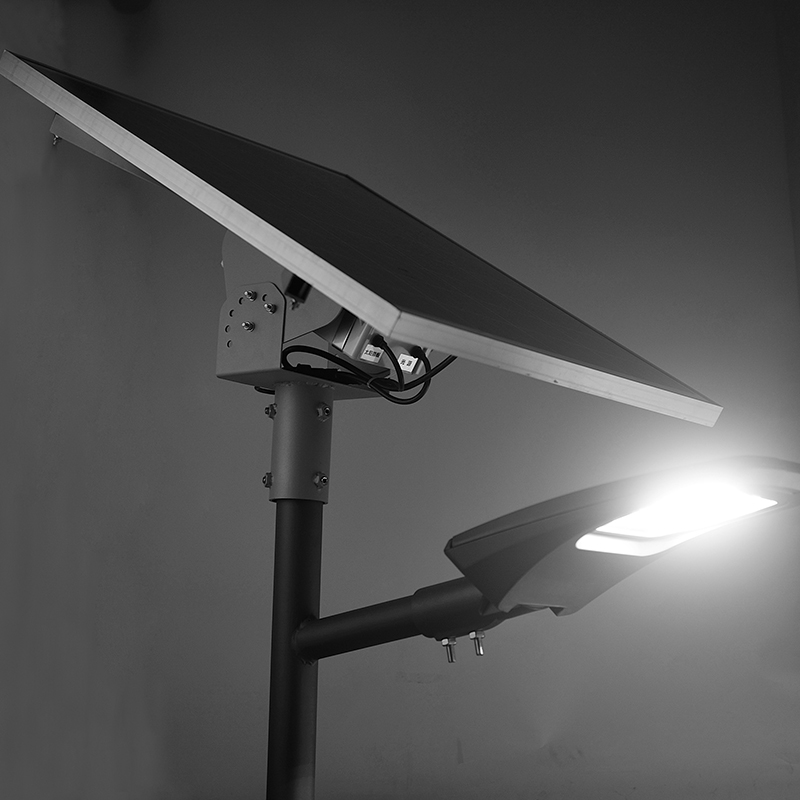 YMLED-6801 Ningbo Supplier's Smart Control System LED Solar Street LightThe YMLED-6801 is a solar-powered LED street light with an integrated intelligent control system, manufactured by a company in Ningbo. Designed for outdoor application...View Product →
Two rules cover most layouts. Spacing between path or bollard lights should be about two to three times the mounting height, which produces even pools of light along a route. Floodlight beams should be aimed no more than about 30 degrees below horizontal, which reaches the far edge of an area without throwing light at the sky or at a neighbour's bedroom window.
Glare control is a design decision, not an accessory. Shielding, louvres, asymmetric optics and a recessed LED module all keep light on the task and out of the eyes of people at a distance. On sites where the fixture must be visible from a road, a shielded bollard or a downward angled wall light reads as a boundary marker without becoming a hazard for drivers.
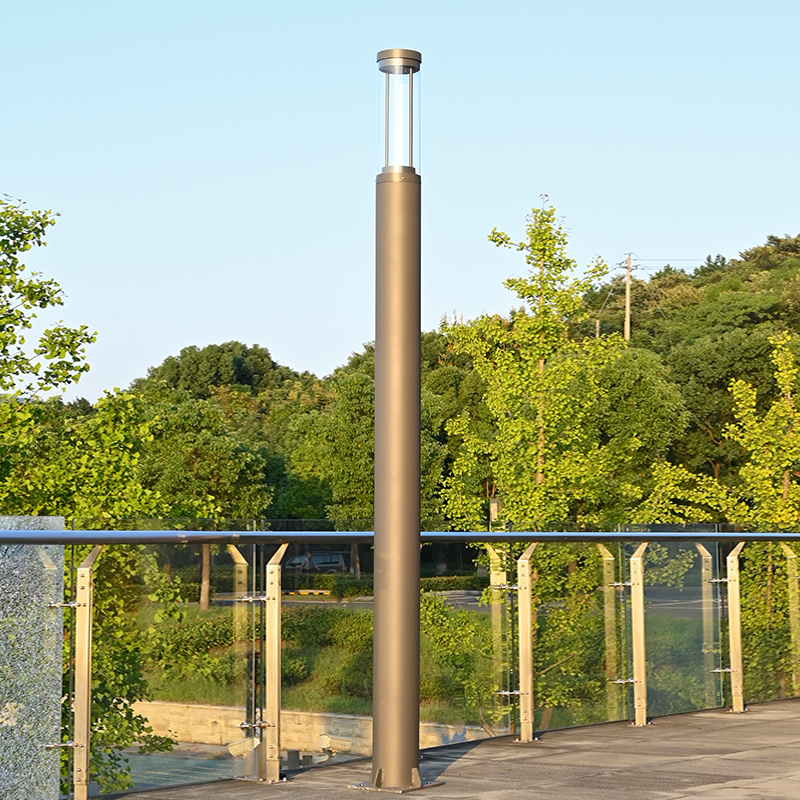 YMLED-6308 Customizable Outdoor LED Lighting Aluminum IP66 Pathway LightsThe YMLED-6308 is a professional fixture specifically designed for outdoor pathways. The structure utilizes a combination of a die-cast aluminum head and a 6063-T5 dra...View Product →
Working with a manufacturer that controls the housing, the LED module and the pole in one factory shortens the approval loop and makes spare parts easier to obtain later. Yuyao Yangming Lighting, based in Zhejiang, China, produces more than 200 outdoor models across footpath, lawn, garden, street, wall and solar categories, and its production and quality process is documented for buyers who need to audit a supplier before a first order. Projects with non standard wattages, finishes, beam angles or control interfaces can be discussed through the contact channel.
A doorway usually needs 500 to 1500 delivered lumens. A residential driveway works well with 3000 to 5000 lumens per fixture, and larger or commercial yards may need 8000 lumens or more. The deciding factor is illuminance at the target surface, not the rating on the label.
They suit wide open ground, but they are a poor fit for doorways and paths, where they cause glare and deep shadows. A mix of wall lights, bollards and one or two floodlights covers a property better than floodlights alone.
One to three minutes suits most homes. Longer hold times are better for car parks and loading areas, where people need light while they walk to a vehicle. Confirm that the sensor allows adjustment across the range you need before ordering.
Security lighting rewards planning more than spending. Start with the entry points that worry occupants most, place a modest fixture where it lights the person rather than the ground, add a photocell or sensor so the light is on when it matters, and choose housings rated for the weather on that site. That sequence produces better results than a single high powered floodlight, and it keeps working through the years when a property is most likely to be targeted.
Related Products
 Private Industrial Park, Liangnong Town, Yuyao City, Ningbo City, Zhejiang Province, China
 +86-13486062091
 +86-574-2222 2345
 +86-574-2267 2345
 info@ym-lighting.com


 English
 中文简体
中文简体