Nov, 26, 2026
A dark side gate is a better starting point than a front lawn that already has a porch light. Security lighting for homes works best as a small, layered system: entry lights for identity, path lights for safe movement, motion fixtures for driveways and rear access, and low-level fixtures for steps. The aim is to remove hiding spots and guide residents after dark, not to flood every wall with white light.
Choose fixtures by zone, then match output, color, detection, and weather rating to that zone. One large floodlight over the garage rarely covers a side gate, a patio, and a garden path well. Three or four well-aimed fixtures usually outperform one oversized unit.
Content
Walk the property at dusk and note where people approach, where keys are used, where steps are hard to see, and where a gate or shed sits in shadow. Give each fixture one job. The table is a starting point; mounting height, beam angle, and wall color change the result.
| Zone | Main job | Typical fixture | Starting spec |
|---|---|---|---|
| Front entry | Identify the door and help with keys | Wall or porch light | 300 to 800 lm, 2700 K to 3000 K, IP65 |
| Walkway and steps | Guide safe foot placement without glare | Bollard or step light | 100 to 300 lm, shielded head |
| Driveway | Cover vehicle and approach areas | Motion floodlight | 1,000 to 2,000 lm, wide beam |
| Side gate or rear access | Detect movement and reduce hiding spots | Motion wall light | 800 to 1,500 lm, dual-zone sensor |
| Shed or outbuilding | Check the perimeter on demand | Motion flood or wall light | 500 to 1,000 lm, IP65 or IP66 |
No single type is best everywhere. Start with the job, then choose the housing style.
Use motion units for driveways, side yards, and rear access where full light is needed only when someone is present. Mount them 2.4 m to 3 m high and aim the beam across the approach rather than straight out from the wall. A 180-degree sensor with adjustable sensitivity and dual detection zones is more useful than a wide-angle unit that triggers on passing cars or swaying branches. Keep the sensor away from heat sources and direct sun.
Entrances and long walkways benefit from steady low-level light. A photocell or astronomical timer switches on at dusk and off at dawn without daily adjustment. Use dimming or lower output where full brightness would glare into bedrooms.
Smart switches add schedules, geofencing, dimming, and notifications. They are helpful at entries and rear doors, but the lighting should still work if the app, hub, or Wi-Fi fails. Camera-integrated fixtures can be useful at a front door, yet lighting performance should be judged on beam control and output first.
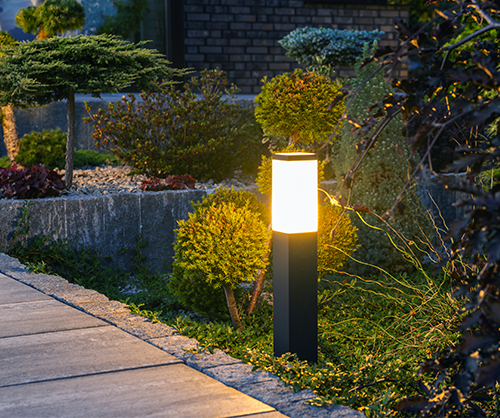
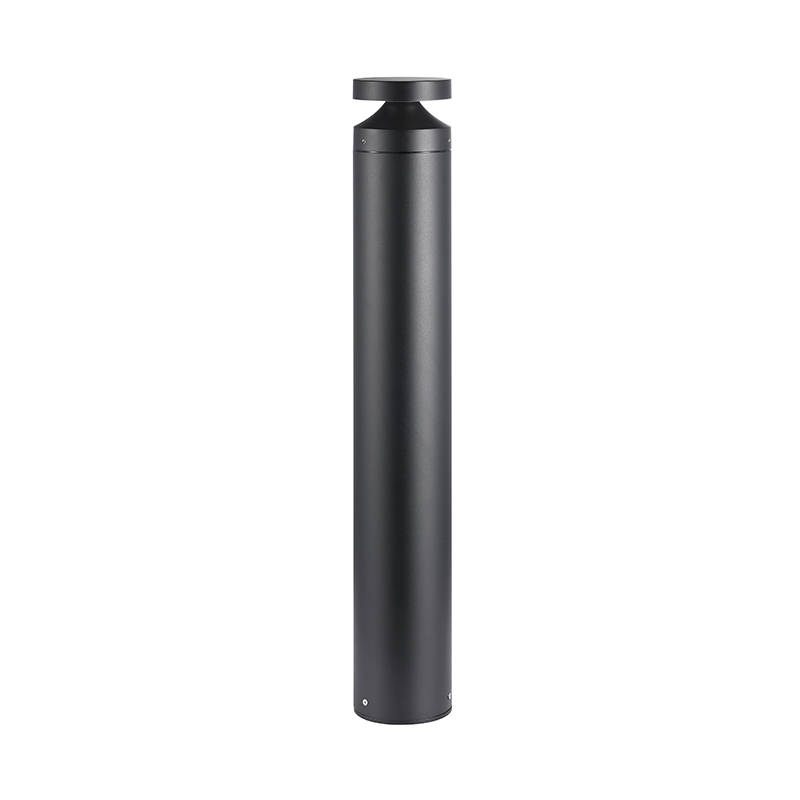
Path fixtures should mark the route without shining into eyes. Bollards from 0.6 m to 1 m high with shielded heads or downward lenses work well along garden edges and steps. Keep them out of the lawn-mower line and away from irrigation heads. For exposed paths, an IP65 or IP66 die-cast aluminum body is a sensible baseline.
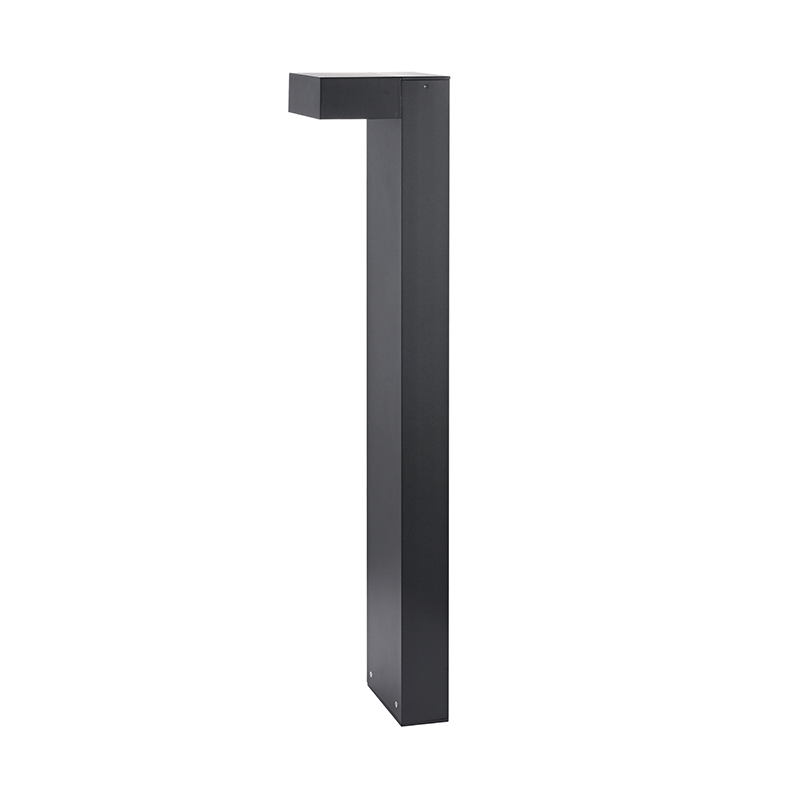
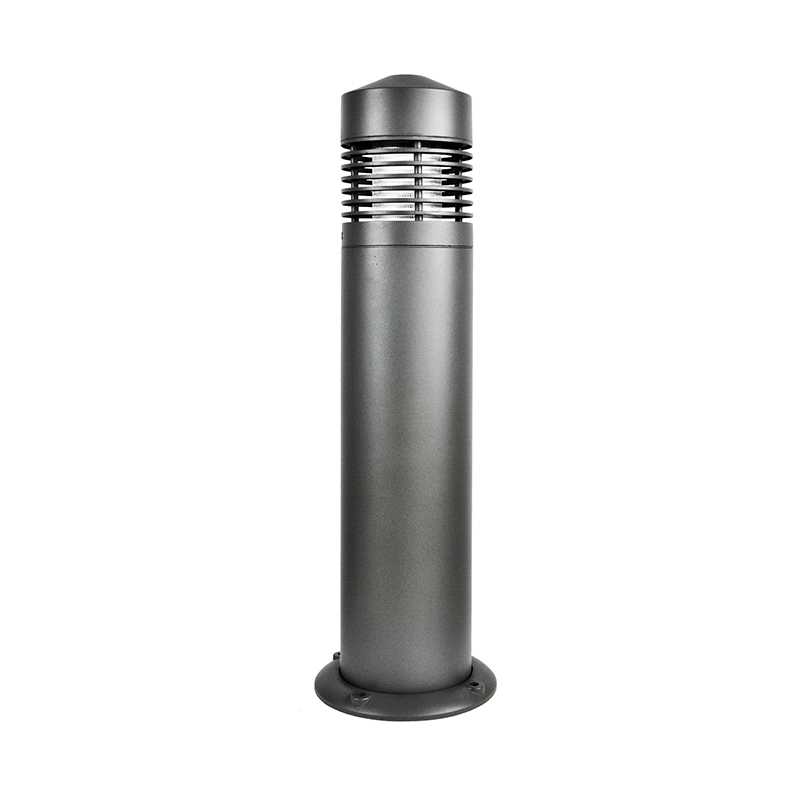 IP65 Die-Cast Aluminum LED Bollard LightA minimalist 600–1000 mm outdoor bollard in die-cast aluminum, IP65/IK08, with configurable LED and DALI options for paths, gardens, and plazas.View Product →
Use a wall light at the front door and rear door to identify the entrance and help with keys, deliveries, and safe passage. A downward or semi-shielded rectangular wall fixture in die-cast aluminum is easy to integrate with most house styles. Avoid mounting it so the lamp is visible from the street; glare makes visitors harder to see, not easier.
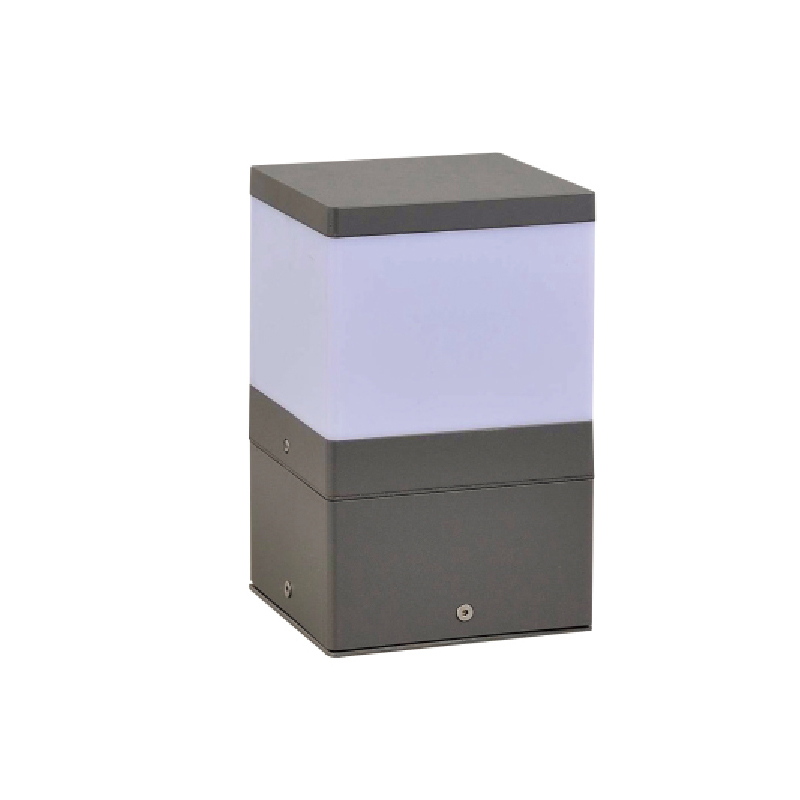 Rectangular Die-Cast Aluminum Outdoor LED Wall LightA 600–1000 mm rectangular wall fixture with IP65/IK08 die-cast aluminum body, adjustable CCT and DALI-2 dimming for entrances and facades.View Product →
Solar fixtures suit gates, sheds, and garden paths where a cable run is expensive. Panel placement matters more than the marketing wattage: the panel needs several hours of direct sun, and the battery must tolerate local winter temperatures. Use solar for lower-output path and accent duties, and keep critical entry lighting on mains power where possible.
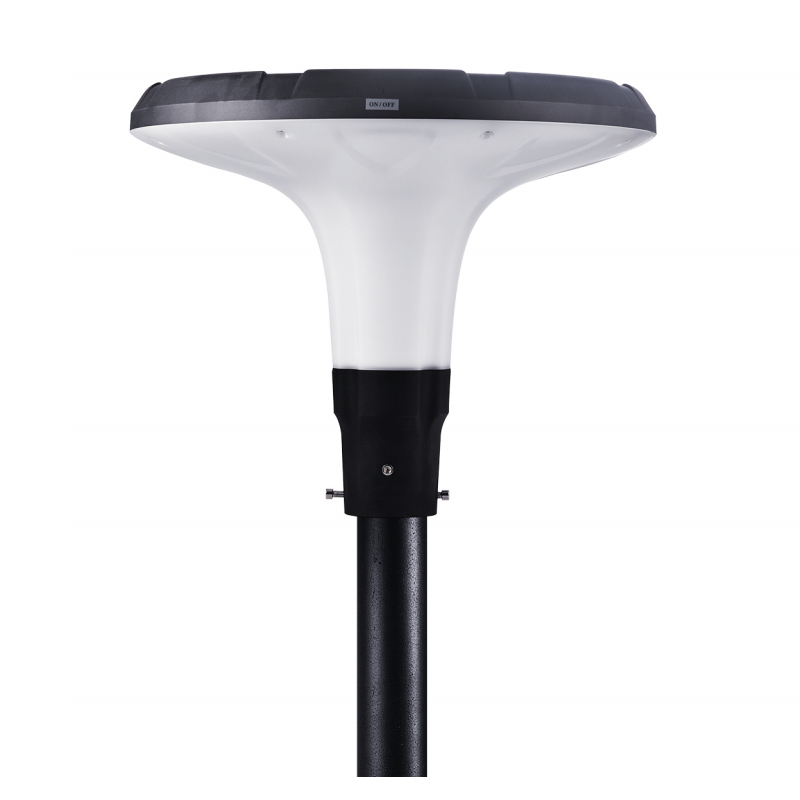 Solar LED Garden Light with Die-Cast Aluminum BodyAn IP65 solar garden fixture with die-cast aluminum housing, selectable LEDs, mains backup, and smart dimming for courtyards and landscape pathways.View Product →
For a broader explanation of panel, battery, and controller basics, see what is solar lighting.
More lumens is not more security. A 3,000-lumen flood aimed at a white wall can create glare that hides the person you want to see. A 1,200-lumen fixture with a controlled beam often reads better at the same distance. Entry lights around 300 to 800 lumens are usually enough for door identification; driveway floods often start at 1,000 to 2,000 lumens. Verify with a site mock-up or lighting calculation.
Warm white at 2700 K to 3000 K suits porches and paths. Neutral 3000 K to 4000 K is easier to work under at driveways. Very blue 6000 K light looks harsh and can flatten camera images. Use shields and adjustable heads to keep light off windows.
PIR sensors react to heat in motion, so keep them away from dryer vents, air-conditioning units, and surfaces that heat up in the sun. A dual-zone sensor with adjustable sensitivity covers a path without triggering on the road. Set the delay to one to five minutes and provide a manual override.
Smart schedules suit dusk-to-dawn porch lights, but motion response should stay local. If Wi-Fi drops, the light must still switch on.
An IP rating describes the fixture, not the junction box. Water often enters through a poor cable gland or a box mounted with the drain hole facing up. Keep cable entries below the body where possible, use the supplied gasket, and seal outdoor connections. Mains lighting should be on an RCD or GFCI protected circuit and installed by a licensed electrician.
Low-voltage systems still need correct transformers and waterproof connectors. Solar avoids cable runs but depends on panel angle, shade, and battery health. Expect shorter runtime in cold months unless the battery is rated for local temperatures.
Yuyao Yangming Lighting Co., Ltd. is a China-based outdoor lighting manufacturer founded in 2001. Its range covers garden, lawn, footpath, wall, street, solar, light pole, and LED module products, which is relevant when a residential project needs fixtures that share a finish and lighting language across several zones. The company reports more than 200 products, in-house production, and export experience to over 30 countries. Buyers should still verify samples, certifications, and test reports for the exact model. More background is available on the about page.
The best security lighting plan for a home is usually modest: a well-shielded entry light, a few path bollards, and two motion fixtures covering the driveway and rear access. Spend the budget on correct aiming, weather protection, and reliable controls rather than maximum wattage. If a fixture cannot be aimed away from windows, disabled when needed, and serviced without risk, it is the wrong choice even if its lumen number looks impressive.
Related Products
 Private Industrial Park, Liangnong Town, Yuyao City, Ningbo City, Zhejiang Province, China
 +86-13486062091
 +86-574-2222 2345
 +86-574-2267 2345
 info@ym-lighting.com


 English
 中文简体