Oct, 08, 2026
Most commercial LED outdoor lighting failures have nothing to do with the LED chip. A row of bollards along a coastal hotel car park can look perfect on handover day and still end up with cloudy lenses and standing water behind the diffuser after two winters, because the housing was rated IP44 for a site with salt air and wind driven rain.
That single mistake is why you should settle four specifications before comparing prices: the IP and IK rating, the housing material, the light distribution and the control interface. Wattage, color temperature and even the finish can be adjusted later at low cost. Water ingress and impact damage cannot.
Content
IP ratings come first because they are the cheapest thing to get wrong. IP65 protects against water jets from any direction and is enough for most lawn and garden fixtures. IP66 protects against powerful water jets and is the safer target for footpath lights, road luminaires and any site where cleaning crews use pressure washers. IP67 or IP68 sounds better but is rarely needed outdoors, and the sealed housings that achieve it often trap heat and shorten driver life.
Housing material decides the second five years. Die-cast aluminum in ADC12 or A360 alloy with a polyester powder coat holds up in coastal air and desert sun. Sheet steel rusts at cut edges and welded seams, which is exactly where fixtures fail first. Plastic bodies can survive a few seasons in mild climates, but they distort, fade and lose gasket compression over time.
The diffuser matters more than many buyers expect. Tempered glass keeps its light transmission for a decade and resists scratching, while polycarbonate is lighter and cheaper but yellows under UV unless a UV stabilized grade is used. If light output and color rendering have to hold steady, glass is the lower risk choice.
Two more numbers are worth checking. IK08 covers a 5 joule impact, roughly a stone thrown from a passing vehicle, and is a reasonable minimum for street furniture. Driver access matters too: a driver that can be replaced from the top of the pole, without lowering the whole luminaire, saves lift rental on every service call.
Once the basics are settled, selection becomes a matter of geometry. Height, spacing and beam angle decide whether a scheme looks even or patchy, and every fixture family has a natural range.
| Fixture family | Typical mounting height | Where it works | Specification to insist on |
|---|---|---|---|
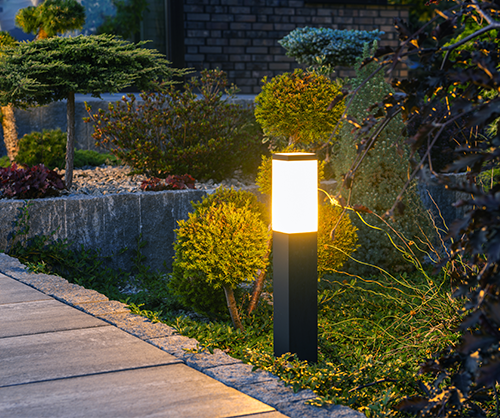
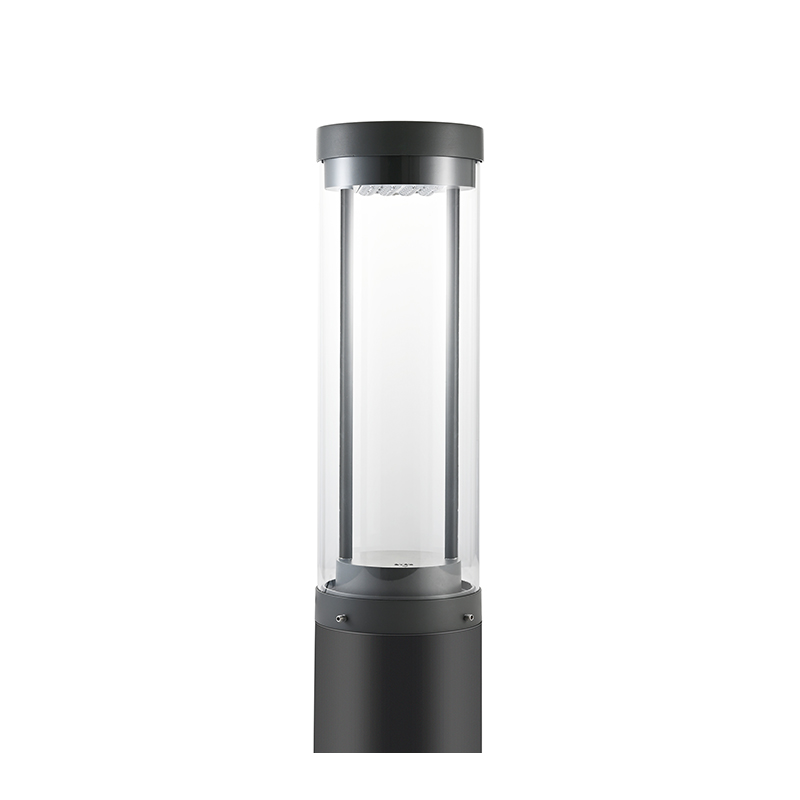
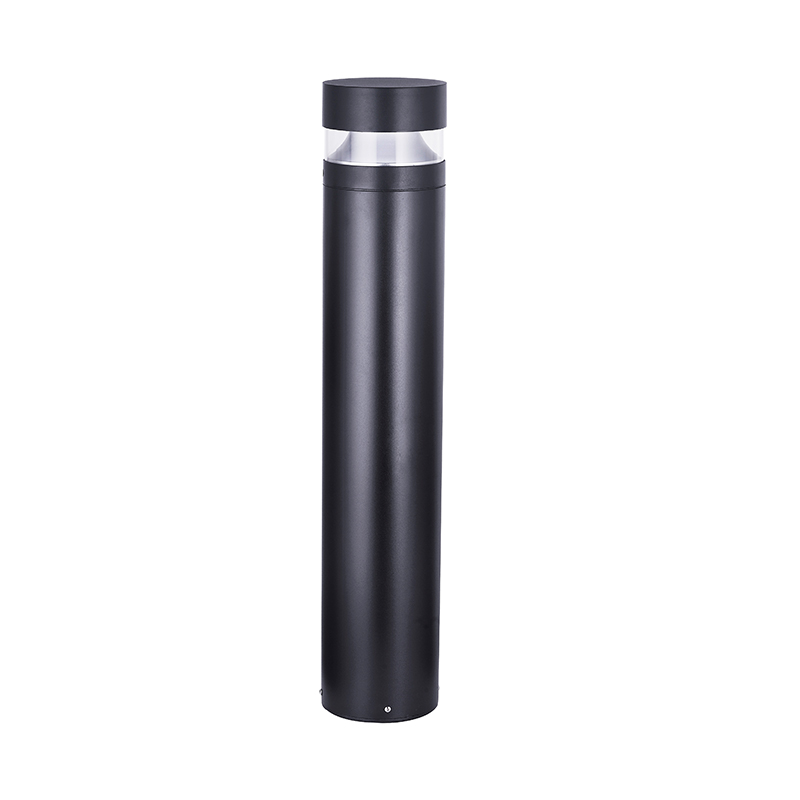
| Lawn and bollard lights | 0.6 to 1.2 m | Garden beds, borders, hotel grounds, landscape zones | IP65, die-cast aluminum, 180 or 360 degree beam |
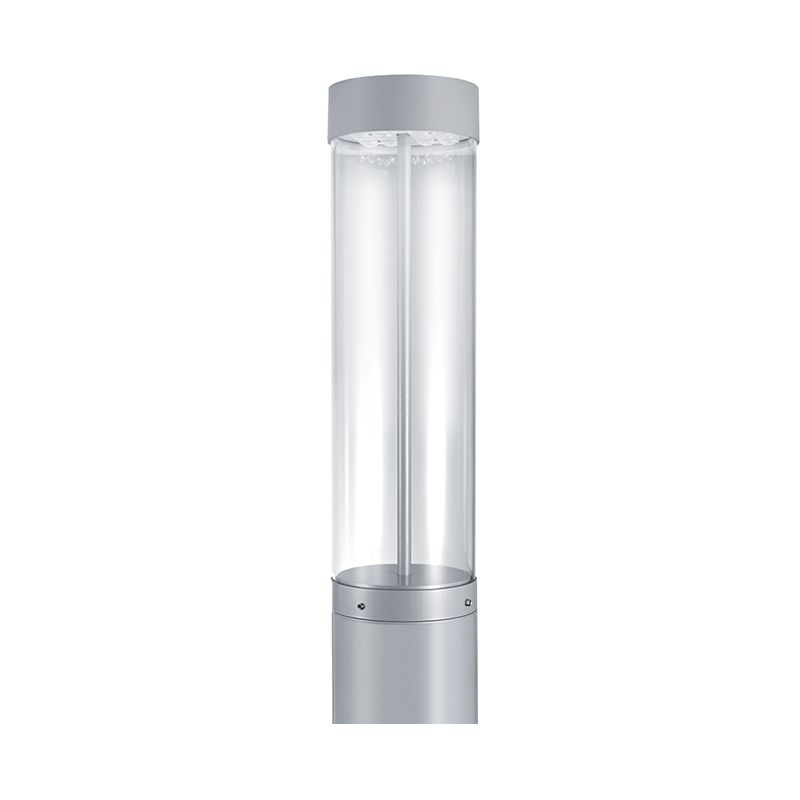
| Footpath and pathway lights | 0.8 to 1.2 m | Pedestrian routes, park trails, campus walkways | IP66, IK08, glare shield or louvre |
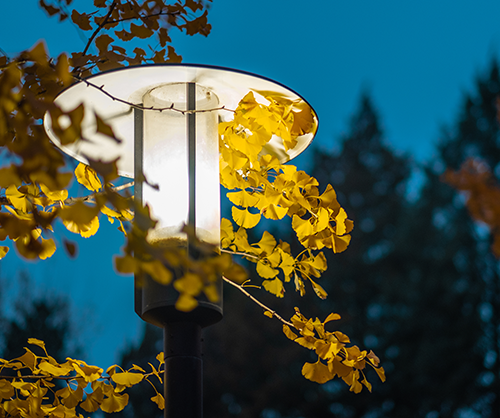
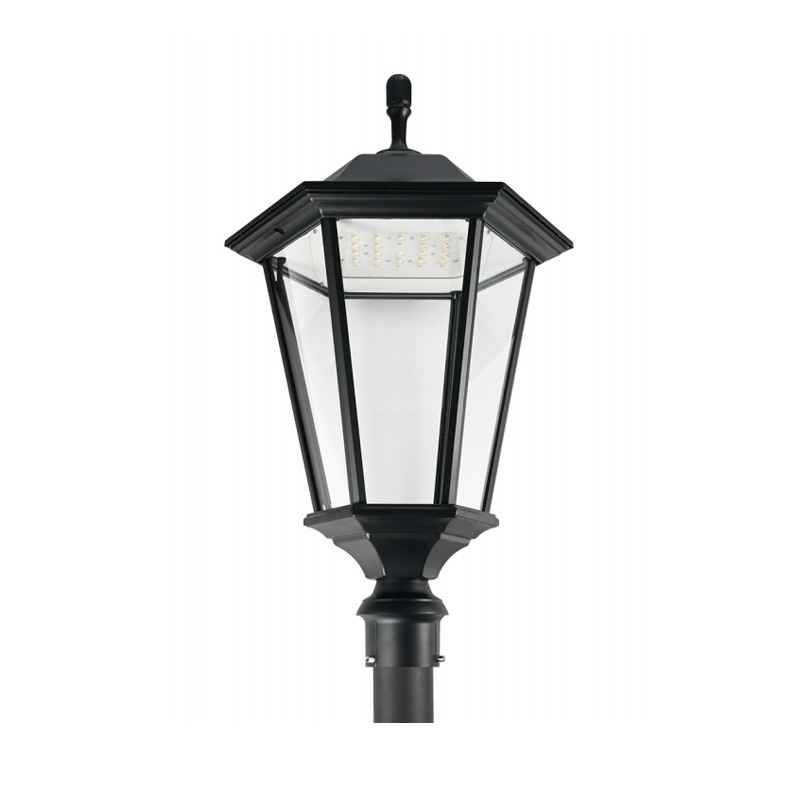
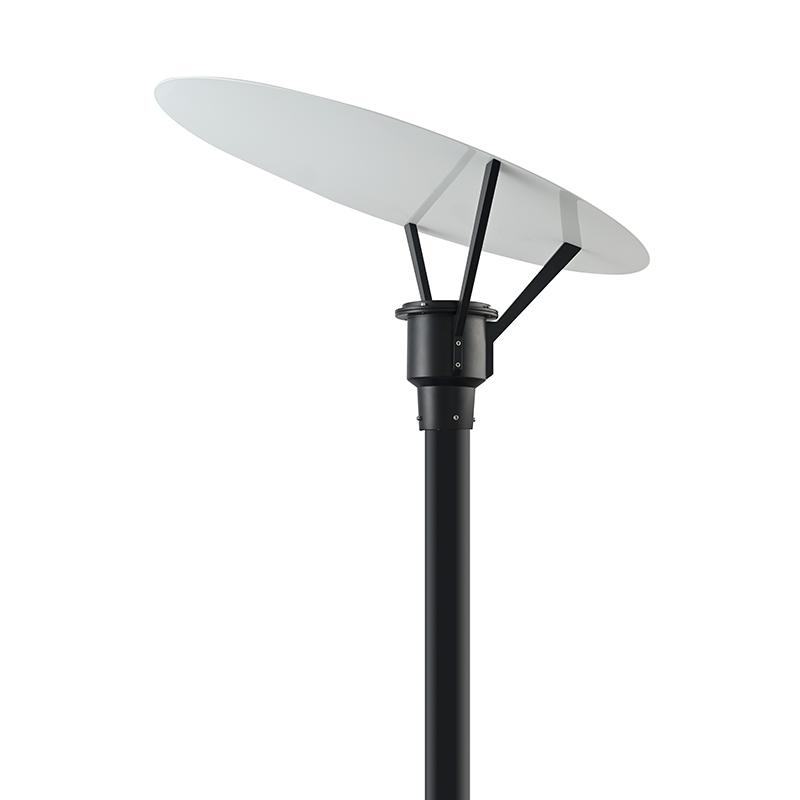
| Post-top garden lights | 3 to 5 m | Parks, plazas, parking lots, residential internal roads | IP65 to IP66, tempered glass, replaceable driver |
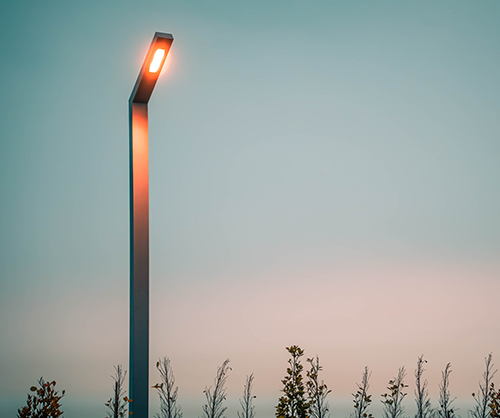
| Street and road luminaires | 6 to 12 m | Community roads, municipal roads, industrial parks | IP66, 10 kV surge protection, NEMA or Zhaga socket |
| Wall lights | 2.5 to 4 m | Facades, entrances, corridors, perimeter walls | IP65, upward light control, even wall wash |
| Solar lights | 3 to 6 m | Sites with no trenching or grid supply, remote paths | LiFePO4 battery, 3 to 5 days autonomy, MPPT controller |
| Light poles | 3 to 12 m | Roads, squares, sports and park areas | Hot-dip galvanized, wall thickness tolerance, wind load data |
| LED modules | Inside the luminaire | Assembly and retrofit of post-top and street housings | Lens optics, LM-80 data, thermal pad and IP gasket |
The pattern is simple. Low fixtures wash a surface, mid height fixtures light a route, and tall fixtures light a space. A common and expensive error is using 3 m post-top garden lights along a route that needs wider spacing, which produces dark gaps and glare complaints that no wattage increase will fix.
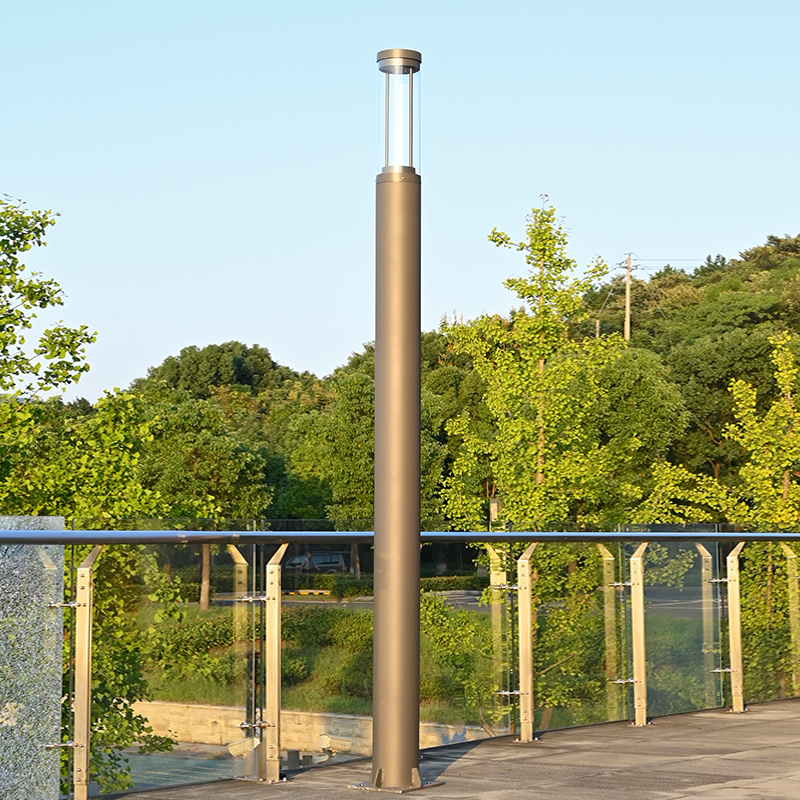 YMLED-6308 Customizable Outdoor LED Pathway Light with Die-Cast Aluminum PoleRated for pathways and parks, it uses secondary PMMA optics to direct light onto the route, with DALI/sensor options and 20–55 W models.View Product →
Light output per watt is the easiest number to compare and the least useful on its own. A 100 W luminaire at 130 lm/W delivers roughly 13,000 lumens, while the same power draw at 160 lm/W delivers 16,000 lumens. What matters more is where those lumens go.
A symmetrical beam spreads light in all directions. An asymmetric Type II or Type III distribution pushes it along the road. On a 6 m pole with 8 m spacing, a proper road optic can cut the required wattage by 20 to 30 percent compared with a general purpose lens, and it reduces light trespass into bedrooms, which is often the real constraint in residential approvals.
Control is the other half of the operating cost. A NEMA 7 pin receptacle or a Zhaga Book 18 socket lets you add a photocell, a motion sensor or a networked dimming node later without changing the luminaire. Projects that skip the socket usually pay for new fixtures when the client asks for scheduled dimming or remote fault reporting two years later. Field selectable switches work the same way: a fixture with three CCT and three wattage options can be set on site, which reduces the number of SKUs a distributor has to stock.
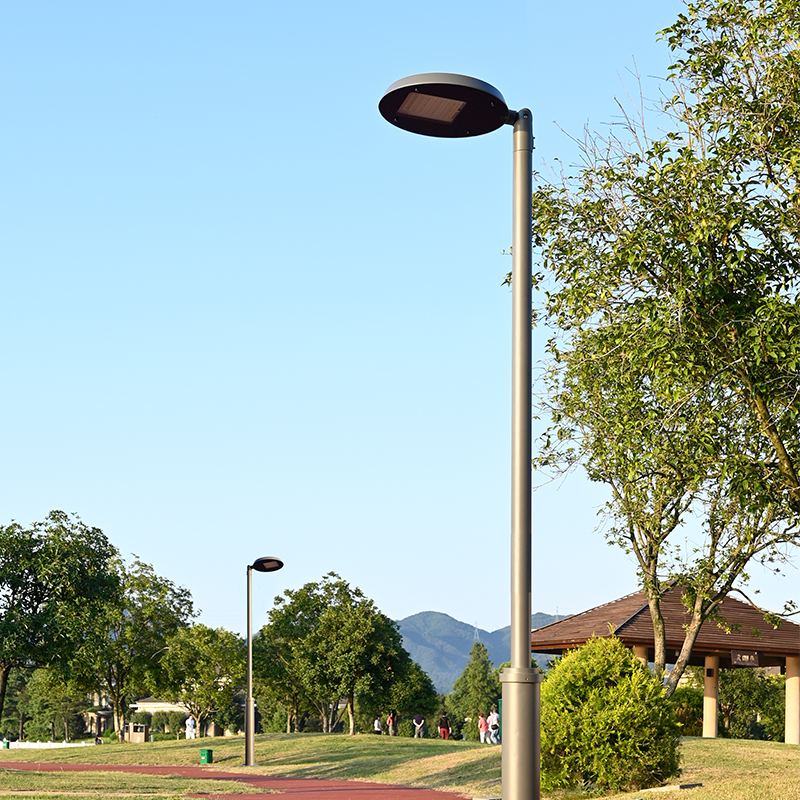 YMLED-6409 Smart Aluminum LED Street Light with NEMA SocketNEMA-ready smart street light for outdoor projects, with IP66/IK10 die-cast aluminum body, optional DALI/Zhaga sensors, and 30–105 W models.View Product →
Solar outdoor lighting is usually sold as a green choice and bought as a trenching avoidance measure, and that is the right way to judge it. Where a mains supply already exists a few meters away, a grid connected LED luminaire will deliver more light for less money over ten years. Where the nearest supply sits behind 40 m of asphalt, solar becomes the cheaper option immediately.
Two numbers decide whether a solar fixture works. The first is autonomy, the number of consecutive dark days the battery must cover, and three to five days is normal for commercial installations. The second is battery chemistry. Lithium iron phosphate packs tolerate deep discharge and high ambient heat far better than older gel types, which is why modern integrated solar street lights can carry a five year warranty instead of a two year one.
Check how the panel and controller are rated as well. A 100 W panel label means little if the controller is undersized or the panel is shaded for part of the day. For remote paths, gardens and car parks without a grid connection, a well specified all in one unit is dependable. The same product with a cheap controller is a maintenance call waiting to happen.
Customization is where a direct factory relationship earns its place, but it helps to know the boundaries. Housing color, mounting brackets, pole adaptors, beam angles, CCT and wattage settings, logo engraving and retail packaging are all routine changes for a manufacturer with its own tooling and assembly line.
What cannot be changed cheaply is the die. A new pressure die for a housing costs thousands of dollars, and unless volume justifies it, the sensible route is to modify an existing platform with a different lens, bracket or finish. This is why experienced buyers ask for a proven model with a customization note rather than a brand new design.
Certification is the other boundary. CE and RoHS documentation is standard for European orders, while North American projects need UL or ETL listing for the complete luminaire, not just the driver. Ask for the IP test report from a third party laboratory and LM-80 or TM-21 data for the LED package, because those two documents answer most of the technical questions a consultant will raise during approval.
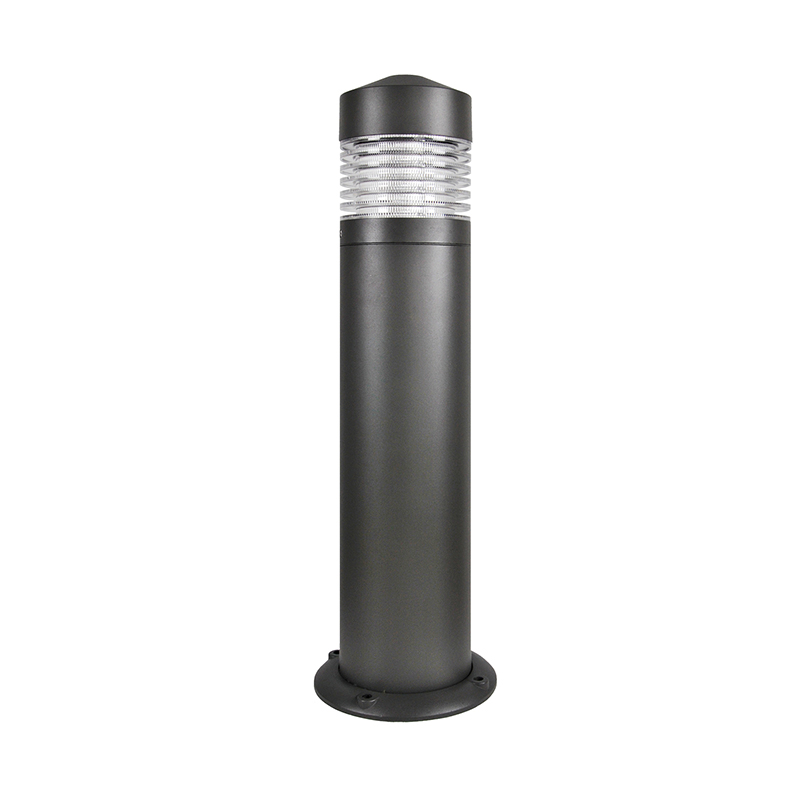 YMLED-6205A Die-Cast Aluminum LED Lawn Light for Landscape AreasClassic cylindrical lawn light for low-level landscape and flower-bed lighting, available in three heights with DALI dimming, E27/COB options, and CE certification.View Product →
Use this list before releasing a purchase order. Every item represents a failure mode that is far cheaper to prevent than to repair on site.
A trading company can quote a competitive unit price, but technical answers travel slowly through a middle layer. Working with the manufacturer usually means faster samples, direct control over the driver choice, and the ability to amend a lens or bracket before production rather than after delivery.
Yangming Lighting, based in Yuyao in Ningbo, has produced outdoor lighting since 2001 and describes a catalog of more than 200 models across garden, street, lawn, footpath and wall lighting, plus LED modules and poles. The company reports a 5,500 square meter facility with its own workshop and warehouse and exports to more than 30 countries, which matters mainly because that experience covers port documentation, IP requirements and market specific certification. Further detail sits on the about page, and the current range is published in the product catalogue.
Whoever you buy from, judge the offer by documents rather than datasheet headlines. A verified IP66 rating, a replaceable driver, a socket you can use later and a beam pattern drawn for your site will outlast any argument about price per watt. That is the line between commercial grade outdoor lighting and decorative lighting that simply happens to be installed outside.
Related Products
 Private Industrial Park, Liangnong Town, Yuyao City, Ningbo City, Zhejiang Province, China
 +86-13486062091
 +86-574-2222 2345
 +86-574-2267 2345
 info@ym-lighting.com


 English
 中文简体
中文简体