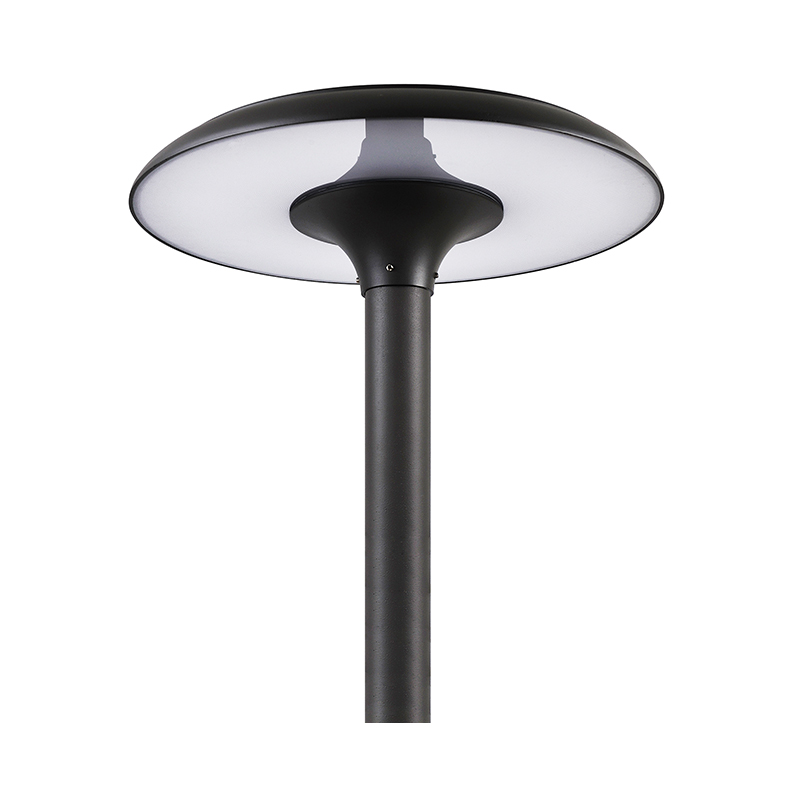
Nov, 13, 2026
A wall light that looks bright at the factory gate can still leave the side door, meter cabinet, or loading bay in shadow. The common mistake with outdoor LED security lights is choosing by wattage alone. For most sites, the better choice is a fixture with the right beam pattern, mounting height, ingress protection, control, and service access. Get those five points right, and a modest LED fixture will often outperform a much larger one that throws light where it is not needed.
This guide is written for buyers, electrical contractors, landscape teams, and project managers who need dependable exterior lighting rather than decorative fill light. It explains what to compare, where specifications often drift, and how to reduce callbacks after installation.
Content
Outdoor LED security lights usually serve one or more of four jobs: identify a doorway, support safe movement along a path, light a yard or parking area, or provide usable images for a camera. Each job has a different optical requirement. A narrow, bright beam on a wall may create glare for a camera and leave the approach path dark. A wide, low-glare distribution may feel less dramatic at night but works better for circulation and CCTV.
Use the table below as a starting point for the brief. Final levels should follow local electrical and lighting requirements, insurer advice, and a site night survey.
| Application | Typical mounting | Optical priority | Key specification |
|---|---|---|---|
| Doorway or building perimeter | Wall mounted at 2.5 m to 4 m | Asymmetric down and outward beam with controlled glare | IP65 or better, impact-resistant diffuser, optional motion sensor |
| Garden path or staff walkway | Bollard at 0.8 m to 1.2 m, or low wall light | Low glare, smooth overlap, no dark gaps between fittings | IP65 or IP66, vandal-resistant body, 3000 K to 4000 K |
| Yard, car park, or service area | Pole at 4 m to 8 m, or high wall position | Wide asymmetric distribution with useful vertical illuminance | IP66, surge protection, photocell or schedule control |
| Road, gatehouse, or main entrance | Pole at 6 m to 10 m | Street optic with backlight control and uniform spacing | IP66, NEMA or Zhaga socket option, serviceable driver |
An IP65 rating means the housing is dust tight and protected against water jets. IP66 adds a higher water-jet test level. For exposed outdoor LED security lights, IP65 should be the minimum, and IP66 is sensible for coastal sites, open car parks, wash-down areas, and places with driving rain. The rating applies to the complete assembly, so the cable gland, gasket compression, breather, and cover seal all matter as much as the label.
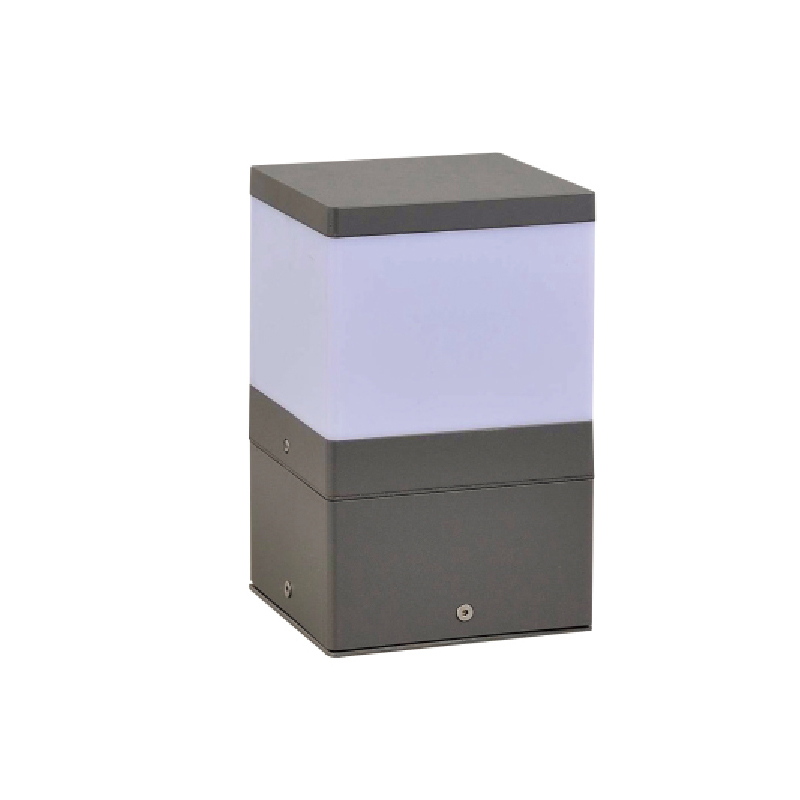 YM-6607 Rectangular Aluminum Outdoor LED Wall LightDie-cast aluminum wall light with IP65/IK08 protection, multiple LED or E27 options, three sizes, and optional DALI-2 dimming.View Product →
Impact resistance is the second specification to check. A polycarbonate diffuser may be the right choice for a sports hall or public underpass where ball impact and vandalism are credible risks. Tempered glass gives strong optical clarity and scratch resistance, but it must be matched to a rigid die-cast aluminum frame and a protected edge. Die-cast aluminum with a tested finish is preferable to thin sheet metal on coastal or industrial sites. Stainless fasteners and a drainage path for condensation are practical details that show up years later.
Color temperature also affects perceived security. Around 3000 K to 4000 K is usually comfortable in residential and hospitality settings, while 4000 K to 5000 K can help camera images look neutral. Higher Kelvin values are not automatically better and may look harsh or reduce visual detail in fog and rain. The real test is a night sample on site, not a catalog image.
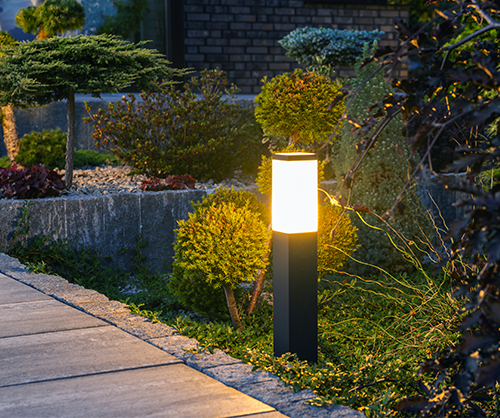
A security light mounted too high loses useful vertical illuminance on faces and doors. Mounted too low, it creates glare and hard shadows. The beam must also be aimed away from bedroom windows, adjacent property, and driver sight lines. For a pathway, a bollard or low wall fixture with a 180-degree or 360-degree distribution can give better overlap than a floodlight aimed down from eaves. For a parking bay, a pole-mounted asymmetric optic distributes light across the surface without throwing the same intensity into the night sky.
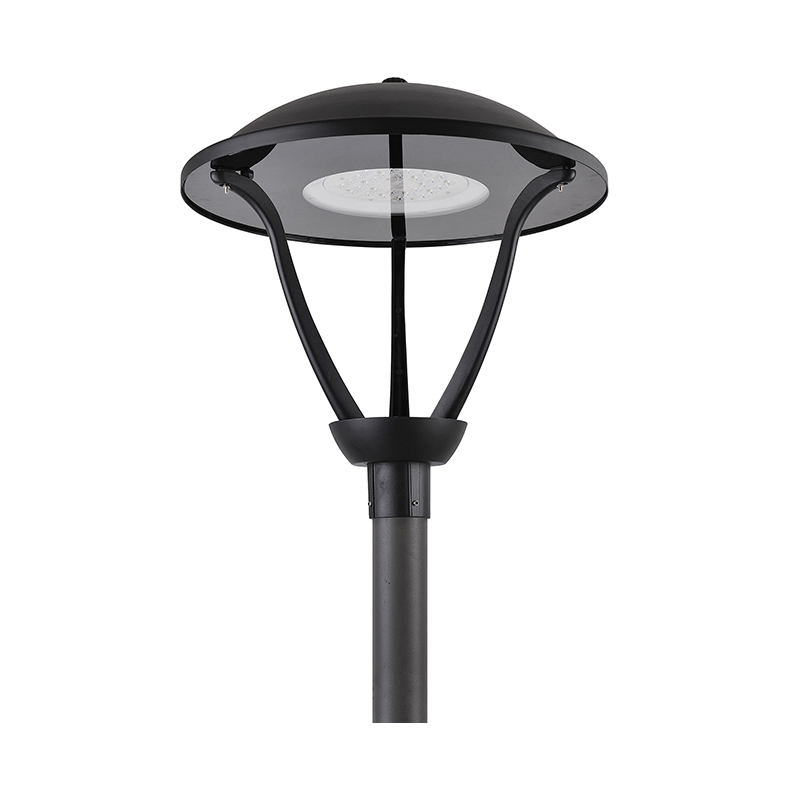
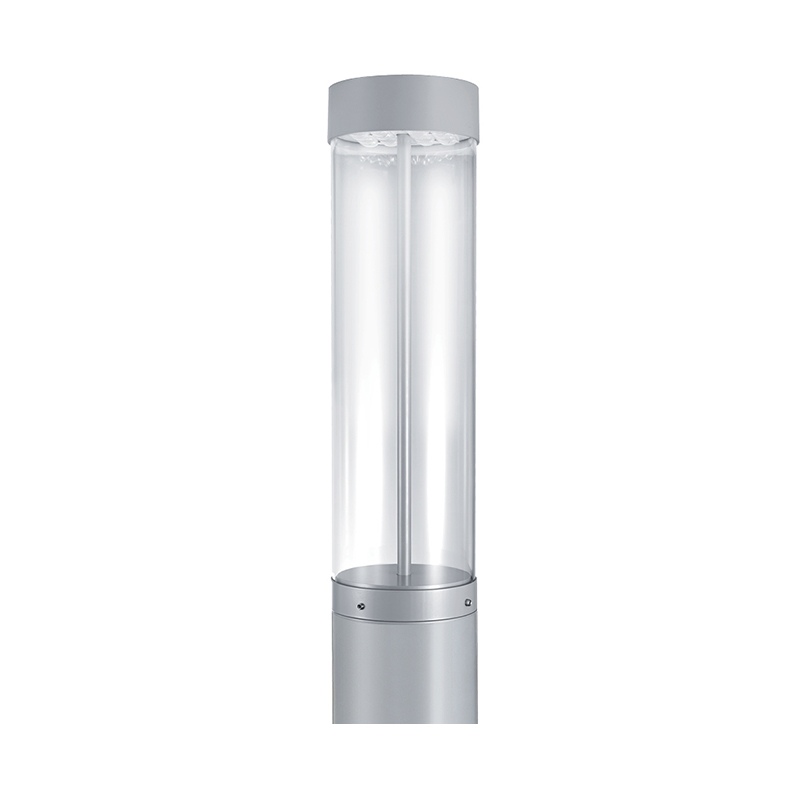
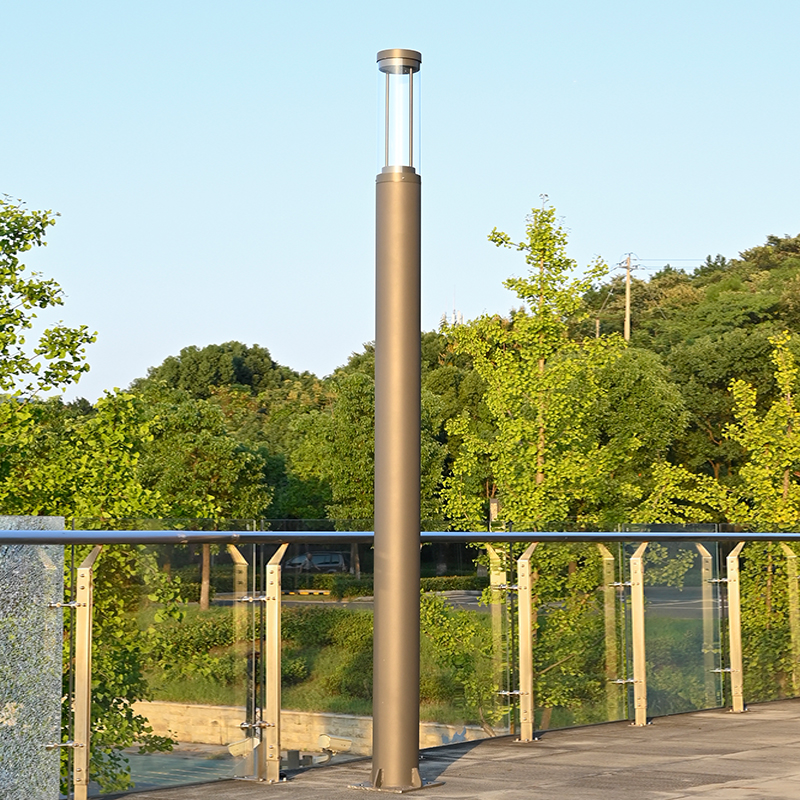 YMLED-6308 Outdoor LED Pathway LightPole-mounted pathway luminaire with die-cast head, PMMA optics, IP66/IK08 sealing, and 20W to 55W models for uniform low-level illumination.View Product →
Ask for a photometric file and check the spacing at the real mounting height. Two fittings spaced by guesswork can leave a dark band at the gate, and a third fitting added later may overload the circuit or ruin the visual rhythm. A simple commissioning check after dark is worth more than a spreadsheet: stand at the approach, look toward the light, then look at the gate or door. If you see the LED source directly, glare control needs attention.
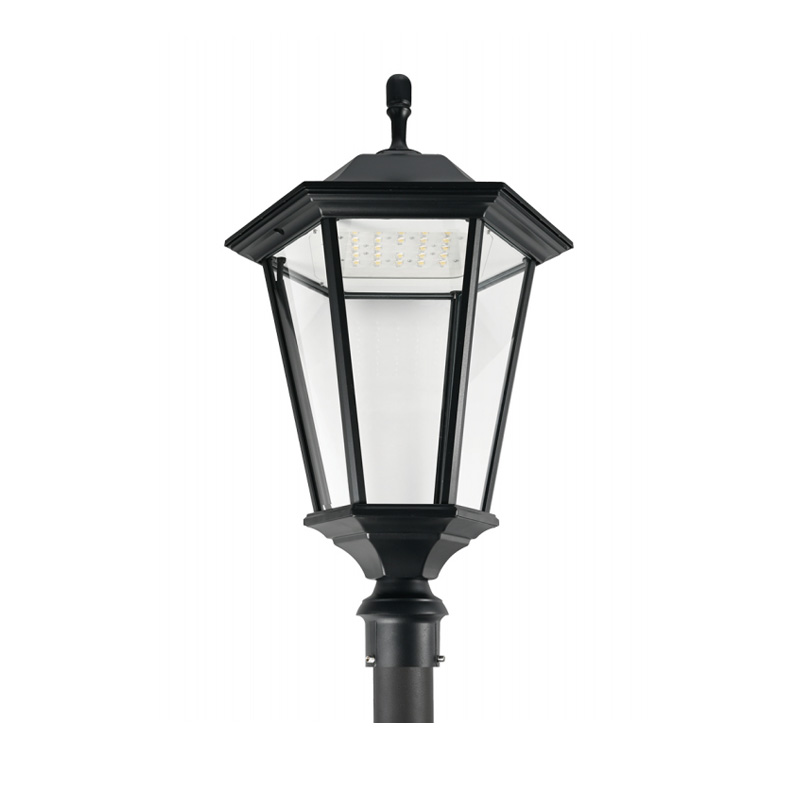
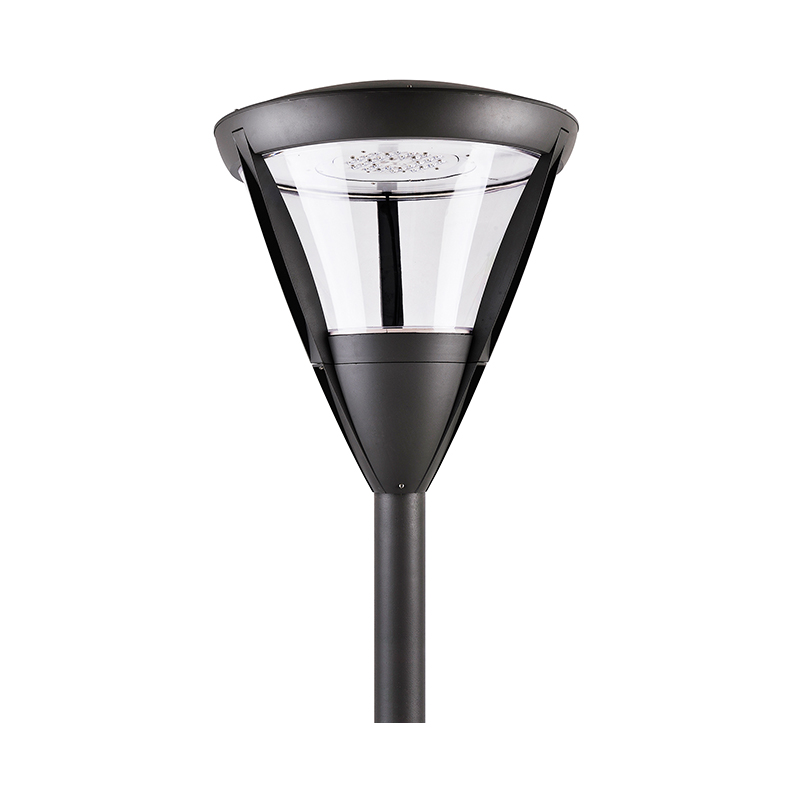
Baffles, shields, and rear-facing optics are useful where light trespass is a concern. On heritage or residential projects, the fitting should also look appropriate in daylight. A well-designed wall light or post-top fixture can provide security without turning a facade into a row of industrial floodlights.
Security lighting is often left on for long hours, so control strategy matters. A photocell with a time schedule is simple and predictable. Motion sensors can save energy, but poorly set sensitivity causes false triggers from trees, cats, or passing traffic. For camera support, constant background light may be more useful than sudden switching. Dimming can provide a low overnight level and raise output when a sensor is triggered, but the driver and sensor must be designed to work together.
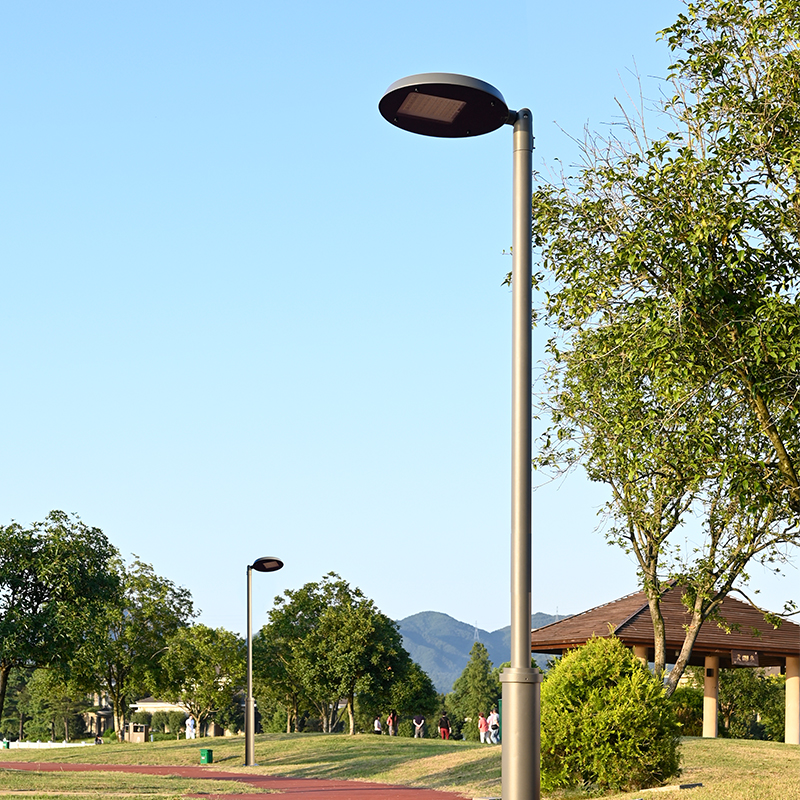 YMLED-6409 Smart LED Street Light with NEMA SocketDie-cast street luminaire with NEMA/Zhaga options, IP66/IK10, dimming and sensor readiness, and 30W to 105W models for smart outdoor lighting.View Product →
NEMA and Zhaga sockets are useful where the project may add smart control, photocells, or communication modules later. They do not replace a clear control specification, but they protect the investment. Surge protection is another under-specified item. Outdoor circuits are exposed to switching transients and lightning-induced surges, especially on long cable runs. Specify a driver and SPD approach suited to the site exposure rather than assuming the LED module alone determines reliability.
Solar security lights can work well at gates, remote stores, and temporary sites, but their performance depends on daily solar hours, panel angle, battery chemistry, and overnight load. A solar fixture sized for summer may dim or fail in a cloudy winter week. Ask for the guaranteed operating profile, not only the peak lumen figure. For areas with mains power, a well-controlled LED fixture with a quality driver is usually the more predictable long-term choice.
Before releasing a purchase order, compare the items below. They are the points that most often separate a smooth installation from a maintenance visit.
The lowest unit price can become expensive if the finish chalks within a year, the gasket hardens, or the driver is sealed into a housing that cannot be reopened. A clear specification and a sample approval step reduce that risk.
Yangming Lighting is a manufacturer based in Yuyao, Zhejiang, producing outdoor lighting for gardens, paths, streets, walls, and solar applications. The product range includes wall lights, bollards, post-top garden lights, street lights, light poles, LED modules, and solar fixtures. Many models use die-cast aluminum, tempered glass or PC covers, and IP65 or IP66 protection, which are relevant foundations for outdoor LED security lights. The company reports more than 200 outdoor models and exports to markets including the UK, US, Chile, Dubai, Brazil, and Mexico.
For project buyers, the useful starting point is not a single catalog page but the application brief: mounting height, beam requirement, control method, finish, and expected maintenance access. Custom options such as wattage, color temperature, sensor type, and branding can then be matched to the site. You can review the manufacturing and quality process before requesting samples, and send drawings, quantities, and target performance to the team through the contact page.
Good security lighting is deliberately unspectacular in daily use. Doors are easy to see, paths are comfortable to walk, cameras have usable images, and neighbors are not disturbed by spill light. That result comes from matching the fixture to the task and checking the installation after dark, not from choosing the largest wattage on the list.
To discuss a specific layout or request a quote, send your project requirements with site photos, mounting details, and the required delivery schedule.
Related Products
 Private Industrial Park, Liangnong Town, Yuyao City, Ningbo City, Zhejiang Province, China
 +86-13486062091
 +86-574-2222 2345
 +86-574-2267 2345
 info@ym-lighting.com


 English
 中文简体