Nov, 12, 2026
A project manager sends out an RFQ for 40 mast lights. One supplier quotes compact marine masthead lamps with 12 V wiring. Another quotes 8 m galvanized poles with 60 W LED street lanterns. Both replies are technically correct, but only one fits a park road. The first step is not to compare prices. It is to define the lighting task and the mounting height.
Content
The term is used in two distinct ways, and mixing them up wastes time on both sides.
On boats and yachts, mast lights are navigation fixtures fixed to the mast. Their job is to make the vessel visible and indicate direction at night. They are low-voltage, sealed against spray, and chosen against marine visibility rules. They are not area lights for roads or parks.
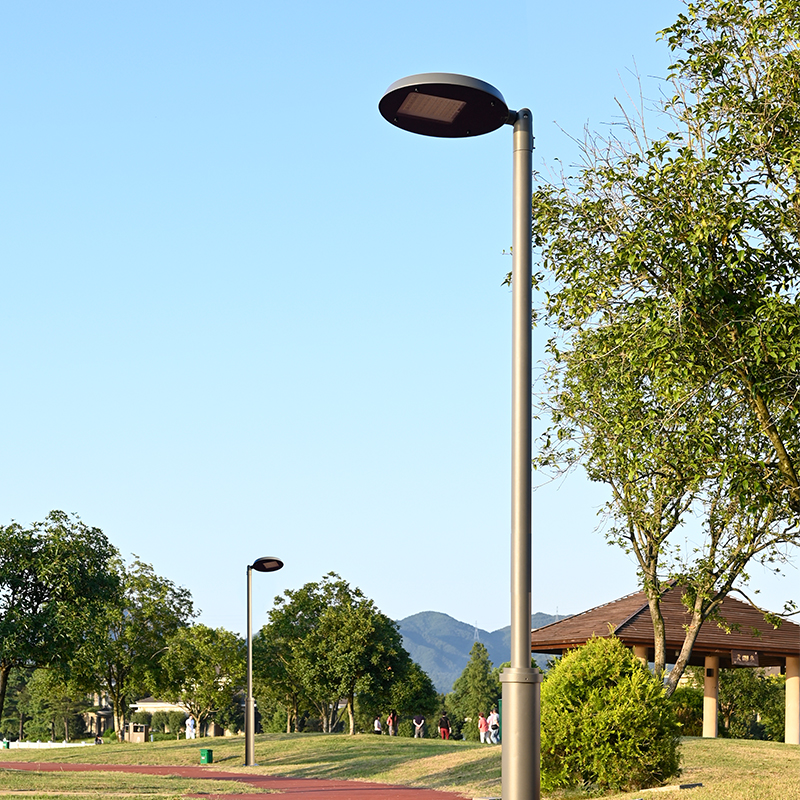
In outdoor lighting, mast lights describe luminaires mounted on a mast or pole to cover a broad area: community roads, parking lots, parks, plazas, ports, and sports grounds. Low mast lighting generally uses poles around 4.5 m to 12 m and serves paths, streets, and medium areas. High mast lighting uses poles of roughly 20 m or more, often with a lowering device, and serves ports, stadiums, and freight yards.
For a landscape or street project, the low mast band is usually the practical choice. It gives enough height for uniform light, keeps glare away from windows, and allows service from a lift rather than a specialist high mast crew.
| Factor | Low mast, about 4.5 m to 12 m | High mast, about 20 m and above |
|---|---|---|
| Typical application | Park roads, pathways, parking, residential streets | Ports, stadiums, rail yards, large logistics areas |
| Luminaire type | Street lantern, post-top, area flood | High-output floodlight arrays |
| Beam control | Type II or III optic, asymmetric distribution | Narrow to medium flood beams, aiming plan |
| Maintenance access | Ladder, lift, or tiltable head | Lowering device, winch, safety inspection |
| Pole and base | Hot-dip galvanized steel, anchor bolts, local wind load | Engineered mast, higher wind load, foundation design |
A common error is to buy the luminaire and treat the pole as a commodity. On an 8 m mast, a 60 W LED with a wide optic can look efficient on paper, but the wrong bracket angle can push light onto a nearby facade or leave dark gaps between poles. Ask for the IES or LDT photometric file and check the layout at the real mounting height, spacing, and tilt.
Pole quality matters too. For coastal or industrial sites, specify hot-dip galvanized steel rather than painted mild steel, confirm the base plate and anchor bolt dimensions, and check wall thickness against local wind load. IP65 is a sensible baseline for outdoor masts; IP66 is common where driven rain or washdown is expected. Surge protection of 10 kV or 20 kV is worth confirming on exposed poles.
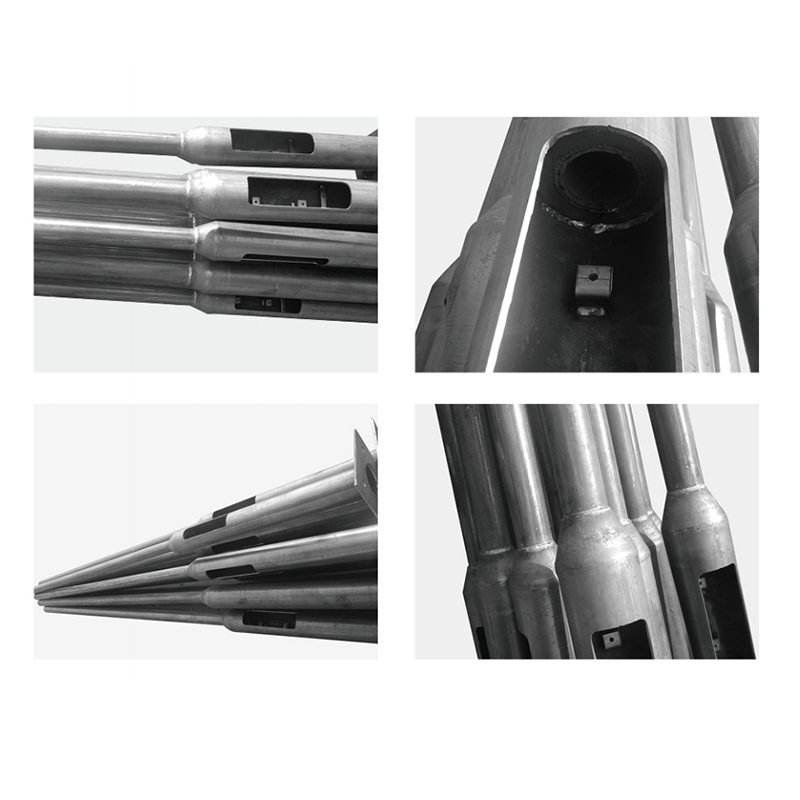 Pola PA Series Hot-Dip Galvanized Round Light PolesHot-dip galvanized round poles in 3–4 m heights with IP65/IK08 options, suited to road and street lighting where corrosion and wind resistance matter.View Product →
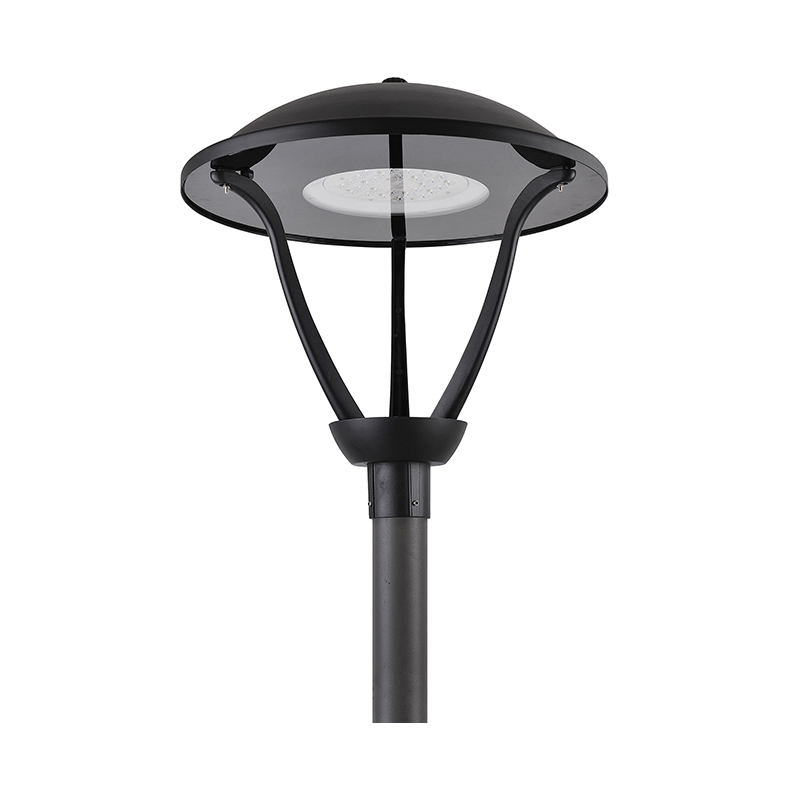
On optics, 3000 K to 4000 K is the usual range for streets and parks. A 60 W to 80 W LED lantern at 6 m to 8 m often suits a community road, while 100 W to 150 W may suit a wider parking area. These are starting points, not a substitute for a lighting layout.
The right specification changes with the scene.
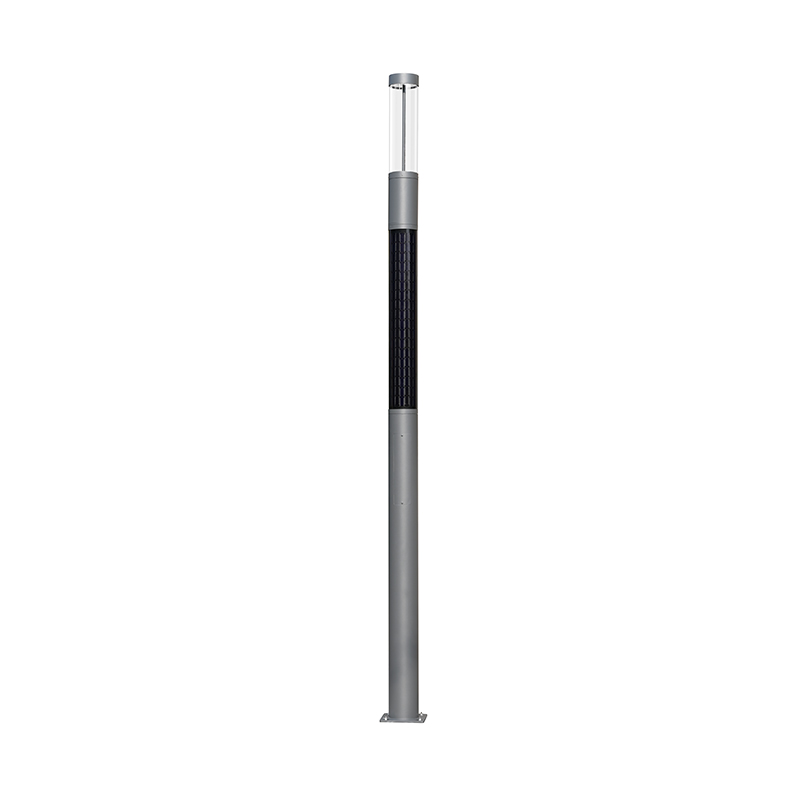
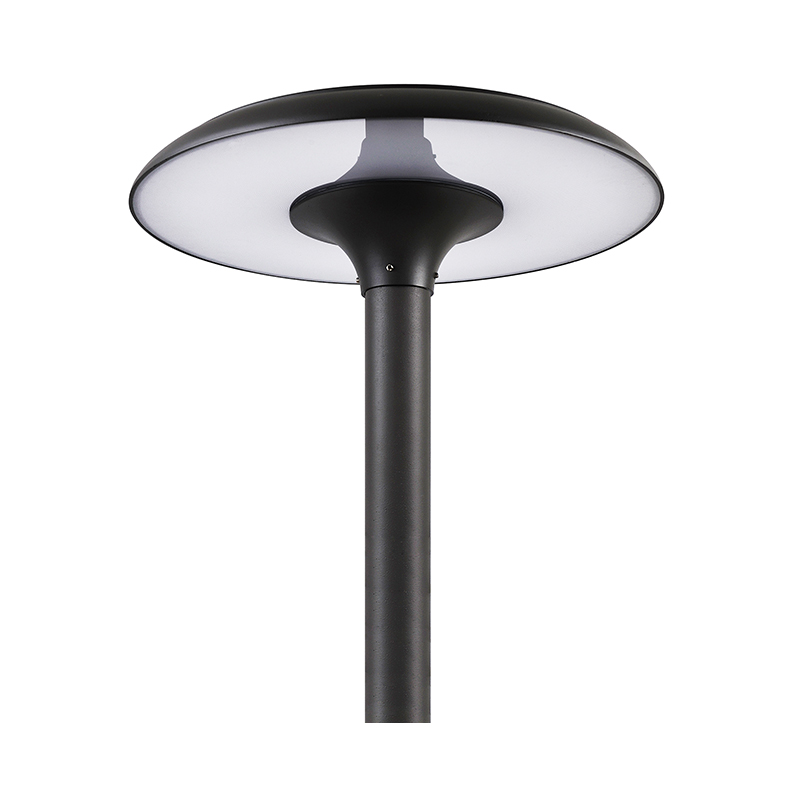
 YMLED-6811B Off-Grid Vertical Solar Mast LightExpanded-diameter off-grid solar mast luminaire with integrated PV, LiFePO4 battery and MPPT control, offering a zero-wiring option with flexible structural choices.View Product →
Solar mast lights are not a direct swap for grid-powered units. A 6 m solar mast with a 60 W LED may need a panel and battery sized for local winter irradiance, not the annual average. Ask for autonomy figures and the dimming profile.
 YMLED-6409 Smart-Ready LED Street Light with NEMA SocketIP66/IK10 aluminum LED street light with NEMA/Zhaga connector options and dimming/sensor integration for projects planning controls or later retrofits.View Product →
If the project may add controls later, a NEMA or Zhaga socket can avoid a second round of procurement. It also makes dimming, photocell control, and remote monitoring easier to retrofit.
Take a 200 m community road in a residential development. A workable starting point is 8 m hot-dip galvanized poles at 30 m spacing, 60 W LED street lanterns, 4000 K, Type II distribution, IP66, 20 kV surge protection, and a 0.9 power factor. Ask for a layout showing average illuminance, uniformity, and glare values. A 10 percent change in pole spacing can affect uniformity more than a 10 W change in lamp power.
Use the same sequence for a park, car park, or industrial yard. The numbers change, but the checks do not: application, mounting height, optic, pole interface, ingress protection, maintenance, and warranty.
Yangming Lighting manufactures outdoor luminaires and poles for landscape, street, and solar projects. The catalog includes garden lights, lawn lights, footpath lights, wall lights, street lights, light poles, and solar mast lights, so a buyer can coordinate the luminaire and pole in one inquiry. The about page outlines the manufacturing and export background, and the contact page is the place to send a layout, pole drawing, or sample request.
The short version: do not buy mast lights from a title alone. Confirm whether the project needs marine navigation lamps or land-based pole lighting, then lock the mounting height, optic, pole interface, and maintenance plan before comparing quotations. That one sequence prevents most of the expensive mismatches.
Related Products
 Private Industrial Park, Liangnong Town, Yuyao City, Ningbo City, Zhejiang Province, China
 +86-13486062091
 +86-574-2222 2345
 +86-574-2267 2345
 info@ym-lighting.com


 English
 中文简体