Oct, 15, 2026
Twenty bollard lights line a residential walkway and run from dusk to dawn. Eighteen months later, eight of them flicker and three are dark. Inside, the LED packages still meet specification; the constant current drivers have drifted or failed. The same pattern turns up on car park post tops, school pathways and hotel facade wall lights, and it supports one practical conclusion: when an outdoor LED light is specified, the driver deserves as much attention as the lumen output and the housing finish.
A driver is an active power supply, not a passive transformer. It rectifies mains AC and delivers a regulated DC output to the LEDs. Regulation matters because an LED forward voltage falls as its junction temperature rises. A fixed voltage supply therefore pushes more current into the chips as they warm up, and the loop continues until the junction overheats. A driver holds the current steady instead, which is why flicker, colour shift and short service life are so often traced back to the power supply rather than to the LED itself.
Content
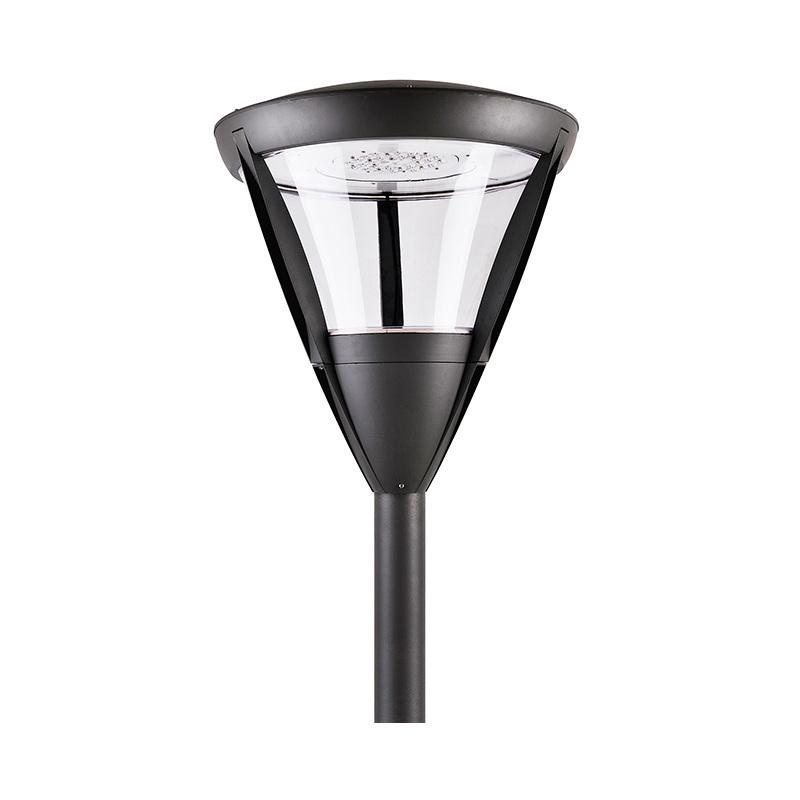
Not every LED light has a visible driver. Replacement bulbs and many integrated lamps carry driver circuitry on a board inside the product. Outdoor luminaires are different: the driver is normally a separate module, mounted behind a sealed cover inside the housing or in a remote box at the pole base. The question for a specifier is not whether a driver exists, but where it sits, how hot it runs and whether it can be replaced on site without scrapping the whole fixture.
Two power chains also look similar but behave differently. Mains powered luminaires use an AC to DC driver. Solar fixtures use a charge controller for the panel and battery, then a DC to DC constant current stage for the LEDs. Low voltage landscape systems run a constant voltage supply at the transformer and place a small driver in each fitting. Treating these as interchangeable is a common specification error.
For a luminaire built around a fixed LED module, constant current is the normal answer. The label quotes a current in milliamps and an output voltage window, for example 500 mA over 30 to 42 V DC. The module rated current must equal the driver output current, and the module forward voltage, both cold and at full operating temperature, must fall inside that window. Constant voltage drivers suit loads defined by voltage instead, such as 12 V or 24 V strip and low voltage garden runs.
| Item | Constant current driver | Constant voltage driver |
|---|---|---|
| Output characteristic | Fixed current such as 350, 500, 700 or 1050 mA, with a voltage window | Fixed output such as 12 V or 24 V DC, with a current limit |
| Typical application | Garden post tops, street lights, wall lights and bollards with an internal module | LED strip, low voltage landscape runs, signage and linear lighting |
| How to match it | Current equals the module rating, module forward voltage sits inside the driver window | Total load current stays below the supply rating, with about 20% headroom |
| Mismatch symptoms | Overcurrent causes rapid lumen depreciation and dark chips, undercurrent causes dim output | Voltage drop along long cable runs makes the far end noticeably dimmer |
| Dimming interface | Usually 0 to 10 V, DALI or PWM on the DC side | Usually triac or PWM on the mains side |
Many outdoor luminaires are designed around a replaceable LED module rather than a sealed light engine, and that choice changes how a project is bought and maintained. A module rated at 500 mA over a 30 to 42 V window pairs with a driver of the same current, and the driver window must span the module full operating range. When a project needs two output levels from the same housing, keeping the module identical and changing only the driver current is far cheaper than stocking two light engines and two sets of spare parts.
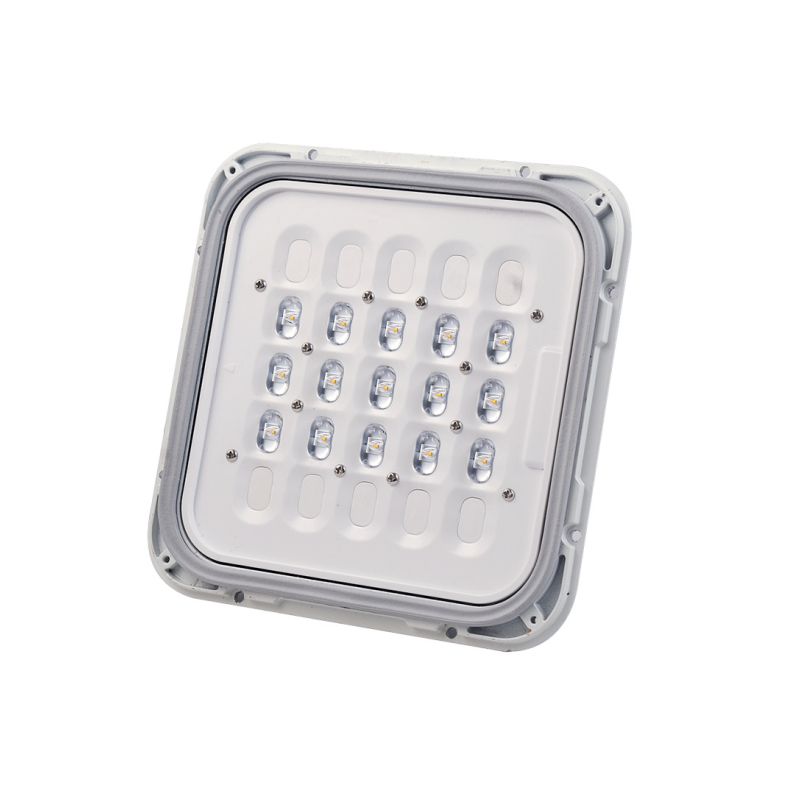 YM6701 Customizable Outdoor LED Module With Secondary LensA replaceable outdoor LED module with die-cast aluminum housing, IP65/IK08 ratings, and optional DALI-2 dimming, suited to fixture upgrades where module and driver must match.View Product →
Module and driver also have to agree on optics and mechanics. A lensed module that spreads light at 120 degrees will not perform as intended if the driver current is raised without recalculating the resulting flux and junction temperature.
Three conditions account for most field failures. Heat comes first. Electrolytic capacitors are the weakest parts of any driver, and their service life roughly halves for every 10 degrees Celsius above the rated operating temperature. A driver pressed against the top of a dark housing in full sun can sit 20 degrees hotter than the surrounding air. Separating the driver compartment from the optical chamber is a mechanical decision with an electrical consequence.
Water comes second. A driver sealed to IP67 inside an IP65 luminaire is the correct way round. What fails more often is the path the water takes: a cable gland tightened onto soft cable, a gasket compressed twice during assembly, or condensation that forms as a sealed housing cools overnight. Drainage and a controlled breathing path matter as much as the gasket itself.
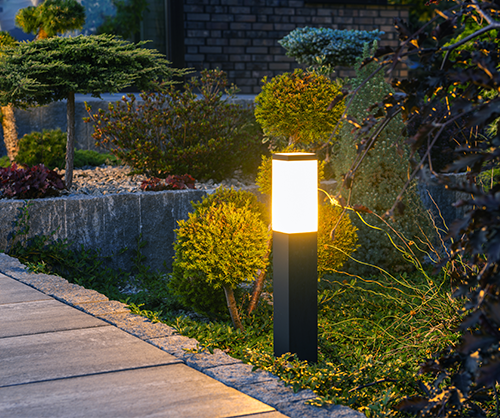
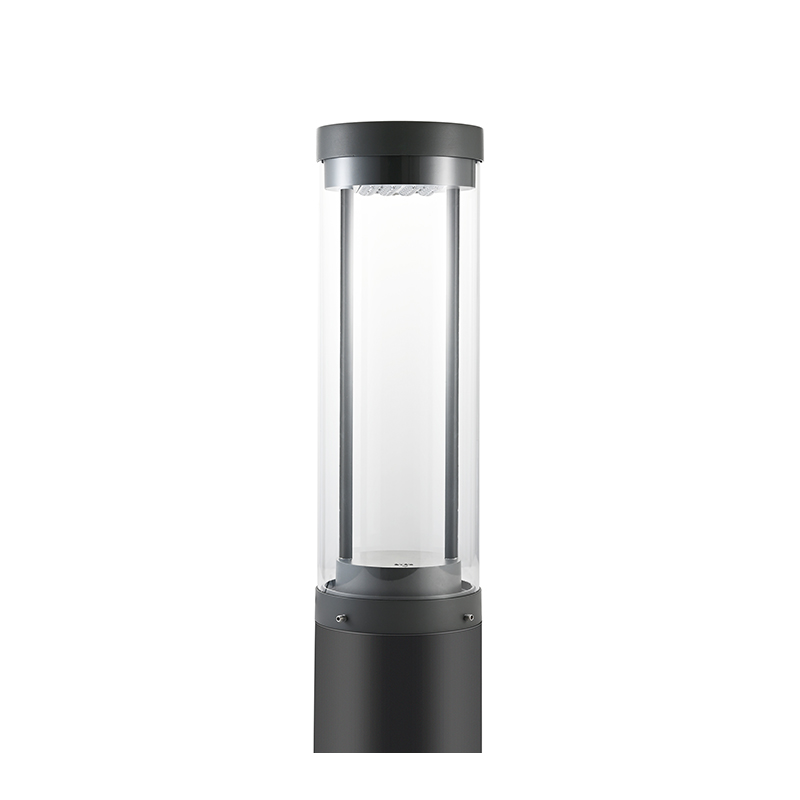
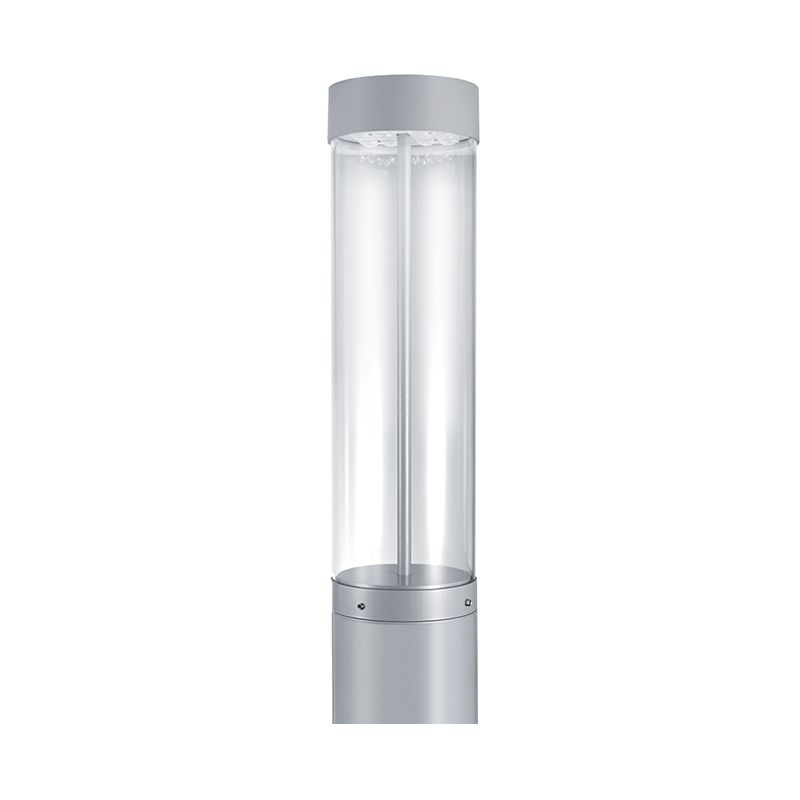
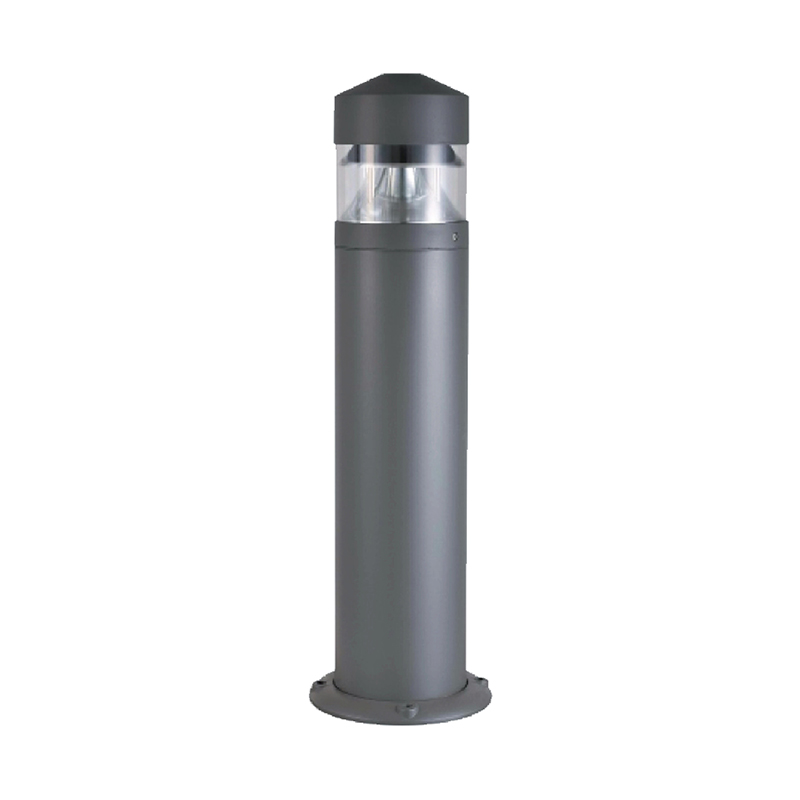 YMLED-6201A IP65 Garden Bollard Light for PathwaysA cylindrical garden bollard with die-cast aluminum body, IP65/IK08 protection, and adjustable CCT, intended for pathways and landscapes needing durable outdoor illumination.View Product →
Surge comes third. Long cable runs on exposed sites pick up lightning induced transients, and a 10 kV rating is a common street lighting requirement in storm prone regions. Surge protection that can be replaced without opening the driver compartment is worth paying for on any project above a few dozen poles.
Dimming compatibility is decided by the driver, not by the controller. A DALI controller cannot dim a driver that only accepts 0 to 10 V, and a triac dimmer will not work with a driver built for a DC control signal. Decide the control strategy first, then specify the driver to match it. The same rule applies to sensors: a microwave or photocell module that switches the mains supply is a different device from one that sends a dimming signal to the driver.
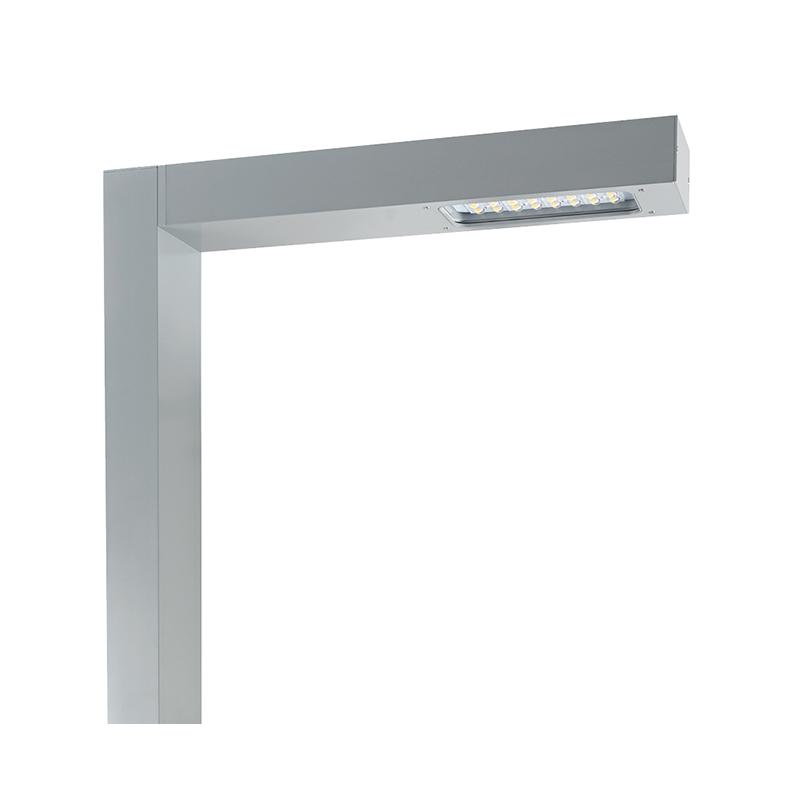
For street and area lighting, the driver also decides whether the luminaire can be upgraded later. A driver with a dimming input can accept a Zhaga or NEMA socket node on top of the housing, turning a fixed output fixture into one that can be scheduled, monitored and dimmed at 2 a.m. without changing the hardware.
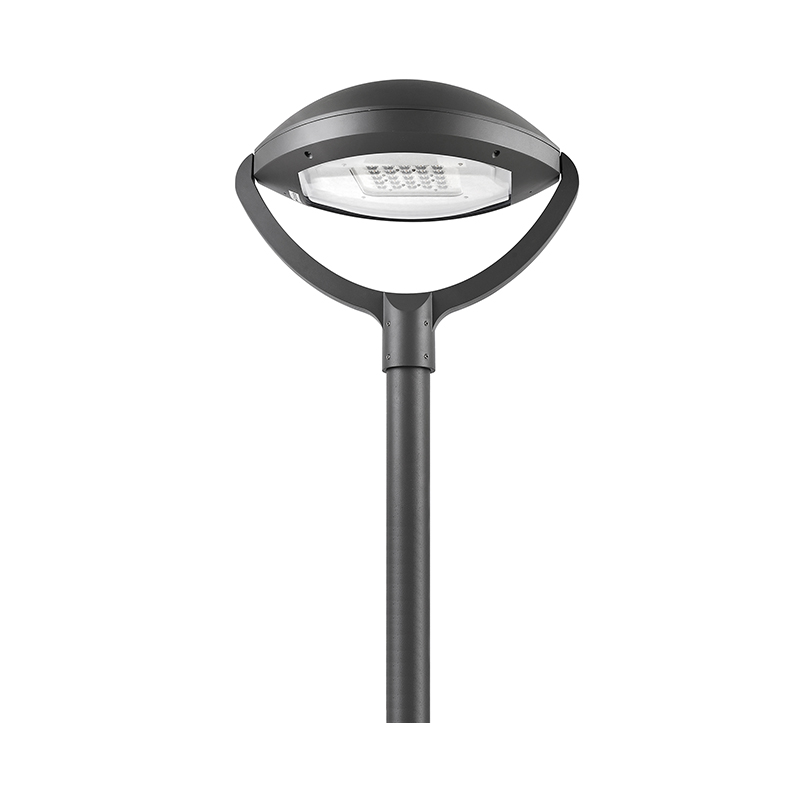
 YMLED-6409 NEMA Socket Smart LED Street LightAn aluminum street light with NEMA/Zhaga connectivity, optional dimming and surge protection, suited to smart outdoor lighting projects that may add sensors or controls later.View Product →
Solar powered lights do not remove the driver, they relocate it. The chain runs from panel to battery to charge controller, then to a DC to DC constant current stage. Because a nominal 12 V battery can swing from about 10 V when discharged to nearly 14 V while charging, that final stage needs a wide input range. In most solar luminaires the dimming profile, motion sensing and battery protection sit on the same board, so the fixture should be specified as one system rather than as a lamp plus a power supply.
A supplier who can answer these questions from its own production records is easier to work with than one who forwards a third party datasheet. Yangming Lighting builds outdoor luminaires, LED modules and poles in its own workshop in Zhejiang, and the about page describes the factory and quality process behind those answers.
For a specific project, send the module current, the required voltage window, the dimming method and the site conditions together. The contact page is the right place to start that conversation, and it avoids the usual round of questions that delays a quotation.
An outdoor LED luminaire is a housing, an optical module and a power supply, and usually only one of those three decides whether the installation still works in year five. Check the output current, the voltage window, the thermal headroom, the ingress protection and the surge rating before the order is placed. Those five checks take half an hour at the specification stage and save the cost of a maintenance visit for every pole, bollard and wall light on the site.
Related Products
 Private Industrial Park, Liangnong Town, Yuyao City, Ningbo City, Zhejiang Province, China
 +86-13486062091
 +86-574-2222 2345
 +86-574-2267 2345
 info@ym-lighting.com


 English
 中文简体
中文简体