Apr, 10, 2026
The primary difference between LED lights and LED modules is that LED lights are complete, ready-to-use lighting fixtures, while LED modules are component-level light sources that require additional parts such as drivers, housings, and thermal management systems to function. LED modules serve as the core light-emitting component for various LED fixtures, widely used in assembly, maintenance, and replacement of courtyard lights, street lights, wall lights, advertising light boxes, and decorative lighting.
Content
LED lights refer to complete, integrated lighting systems ready for immediate installation and use. These fixtures incorporate LED arrays or modules, integrated drivers, thermal management components, optical elements, and electrical interfaces within a finished housing. LED lights include products such as LED bulbs, downlights, panel lights, streetlights, and troffers that require only connection to a power source to operate. They represent the final consumer or commercial product that delivers illumination.
An LED module is a self-contained unit that integrates multiple light-emitting diodes along with supporting components such as lenses, heat sinks, and circuit boards onto a printed circuit board or substrate. These modules are designed for ease of installation and consistent light output, eliminating the need for users to handle bare LED chips. LED modules typically include LEDs, PCB, integrated circuits, frames, connectors, and resistors—but exclude power sources and standard bases, meaning they cannot connect directly to branch circuits without additional components.
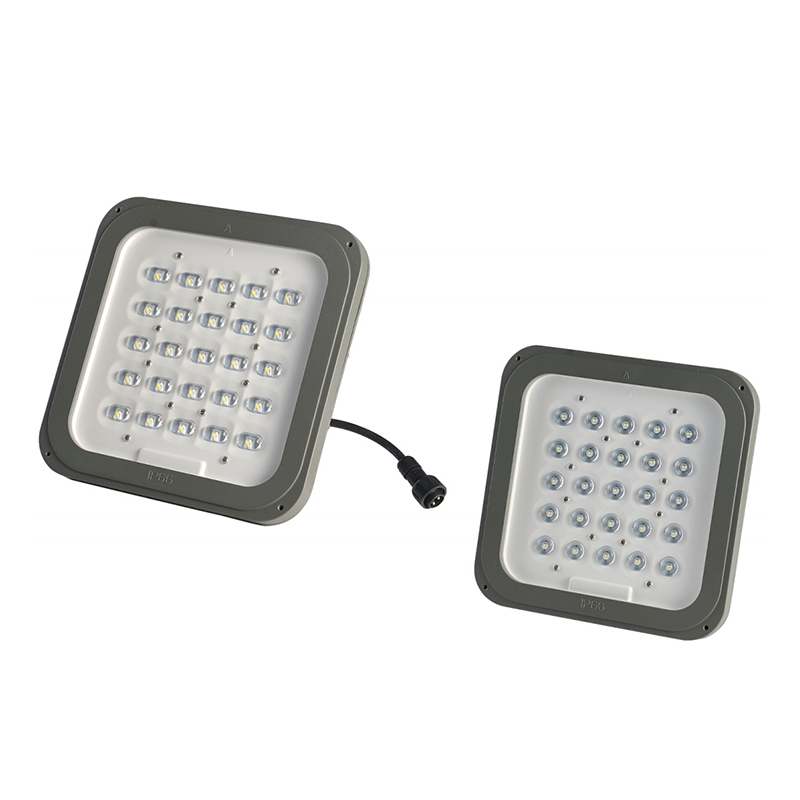
The main distinction is that LED lights are complete, integrated systems ready for use, while LED modules are components that require additional parts for full functionality. LED modules need external LED drivers to regulate current, thermal management systems to dissipate heat, and housings or fixtures for physical protection and mounting. LED lights contain all these elements pre-integrated, making them plug-and-play solutions for end users.
LED modules are typically built on rigid printed circuit boards with multiple LEDs arranged in specific configurations. The rigid structure makes them more durable than flexible alternatives but limits bending capability. LED lights encompass the module within protective housings, often incorporating aluminum profiles, plastic covers, and mounting hardware. LED strip lights, by contrast, use flexible printed circuit boards that can bend around corners, though they represent a different category from rigid LED modules.
The following table summarizes the core differences:
| Feature | LED Lights (Fixtures) | LED Modules |
|---|---|---|
| System Status | Complete, ready-to-use | Component requiring assembly |
| Driver Integration | Built-in driver included | External driver required |
| Thermal Management | Integrated heat sinks/housing | Requires external heat dissipation |
| Installation Complexity | Simple installation | Requires technical assembly |
| Replacement Method | Replace entire fixture | Replace module only |
LED modules often use higher-power LEDs mounted on rigid PCBs, allowing them to produce stronger light output per unit length. Typical LED linear modules generate 800-2000 lumens per meter with power consumption of 10-20 watts per meter. LED lights vary widely in output depending on their intended application, from small bulbs producing a few hundred lumens to high-bay fixtures generating tens of thousands of lumens. LED modules generally achieve higher efficiency ratings of 100-140 lumens per watt compared to basic LED strips at 80-120 lumens per watt.
LED modules typically operate at 45-65°C when properly mounted on aluminum profiles, while LED strips without adequate heat dissipation may reach 55-75°C. This temperature difference significantly impacts lifespan—LED modules last 3-5 years in commercial installations, while LED strips typically last 2-4 years depending on conditions. LED lights with integrated thermal management systems can achieve lifespans of 50,000-100,000 hours in quality designs.
LED modules are ideal for commercial lighting systems, signage, advertising light boxes, street lighting, and architectural applications where precise LED spacing and mechanical stability are required. Their rigid construction and compatibility with aluminum mounting profiles make them suitable for demanding environments. LED lights serve broader consumer and commercial applications including residential lighting, office illumination, and general-purpose replacement of traditional fixtures. LED modules excel in outdoor applications and harsh environments due to their durability, while LED lights offer convenience for standard indoor installations.
LED modules typically operate with constant current drivers that supply a fixed current—usually between 100mA and 1000mA—while the voltage adjusts automatically depending on the number of LEDs connected in series. This precise current control provides more consistent brightness, improved electrical efficiency, and better long-term stability. LED lights may use either constant current or constant voltage systems depending on design, with integrated drivers handling power regulation internally.
Installing LED modules requires mechanical mounting systems such as screws, brackets, or aluminum extrusion profiles. These additional steps increase installation time compared with adhesive-backed LED strips, but provide superior structural stability. LED lights offer the simplest installation—many are designed for direct retrofit into existing fixtures using standard bases such as E26, E27, GU10, or MR16. However, purpose-built LED fixtures require proper mounting but deliver optimized performance through tailored thermal management and optical design.
LED modules offer modular replacement capability—if one module fails, it can usually be replaced without removing the entire lighting system. This design simplifies maintenance in commercial installations where downtime would otherwise increase costs. LED lights often require complete fixture replacement when they fail, though some advanced fixtures feature modular designs allowing driver or LED module replacement. The modular nature of LED modules reduces long-term maintenance costs in large-scale commercial applications.
LED modules utilize high-quality LED chips featuring core performance attributes such as high luminous efficacy, low lumen depreciation, and high stability. These characteristics ensure uniform light output and excellent color consistency across the installation. The products support multiple voltage specifications and sizes to flexibly adapt to different lighting products.
A core highlight of LED modules is their strong versatility. Installation is convenient, using SMD or plug-in designs for easy mass assembly and subsequent replacement. The modules possess excellent heat dissipation performance, effectively extending their service life. Select products support customization services, allowing parameters such as beam angle, light color, and power to be adjusted according to customer needs to meet diverse production requirements.
LED modules support longer continuous runs than flexible alternatives—typically 5-10 meters compared to 3-5 meters for LED strips. This extended run length is possible because rigid PCB structures and thicker copper traces reduce voltage drop. Lower power injection frequency simplifies large-scale installations and reduces wiring complexity.
Choose LED modules when your project requires high-intensity, durable lighting for commercial, outdoor, or architectural applications where mechanical stability and precise light placement are essential. Opt for LED lights when seeking simple installation, immediate functionality, or retrofit solutions for existing fixtures. LED modules are preferred for structured commercial lighting systems, while LED lights serve general illumination needs across residential and commercial environments.
For signage, advertising light boxes, street lighting, and large-scale architectural installations, LED modules provide the durability, brightness, and customization flexibility required. For home lighting, office retrofits, and applications prioritizing ease of installation, LED lights offer the most practical solution. Understanding these differences enables informed decisions that match lighting technology to specific project requirements.
Related Products
 Private Industrial Park, Liangnong Town, Yuyao City, Ningbo City, Zhejiang Province, China
 +86-13486062091
 +86-574-2222 2345
 +86-574-2267 2345
 info@ym-lighting.com


 English
 中文简体
中文简体 русский
 Français
 বাংলা
বাংলা 한국어
한국어 日本語
日本語 Latine
 ไทย
ไทย عربى
عربى Hrvatski
 čeština
 dansk
dansk Nederlands
 Pilipino
 Deutsch
 Suomalainen
 Magyar
 Indonesia
 italiano
 فارسی
فارسی Gaeilge
 Bahasa Melayu
 norsk
norsk Português
 Polskie
 Español
 Română
 Slovák
 svenska
 Türk
Türk