Jun, 12, 2026
The advantages of LED garden lighting are substantial and measurable: LED fixtures consume up to 80% less energy than halogen or incandescent equivalents, last 25,000–50,000 hours on average, require minimal maintenance, and deliver superior light quality across every outdoor application. Compared to older lighting technologies, LEDs are safer, more versatile, more environmentally responsible, and better suited to the demands of outdoor use — from harsh weather to long unattended operating hours.
Whether you are lighting a garden path, illuminating a specimen tree, or securing a property perimeter, LED technology outperforms every alternative on the metrics that matter most: efficiency, longevity, controllability, and total cost of ownership. The sections below explore each of these advantages in depth, with specific data and real-world comparisons to illustrate the difference LED makes.
Content
Energy efficiency is the defining advantage of LED technology. LEDs convert approximately 80–90% of electrical input into visible light, with only 10–20% lost as heat. Traditional incandescent bulbs reverse this ratio — around 90% of their energy is wasted as heat, with just 10% producing usable light.
In practical terms, this means a 10W LED spotlight delivers the same usable brightness as a 50W halogen PAR lamp. For a garden with 20 spotlights running 6 hours per night, this translates to a reduction from 6,000 watt-hours (6 kWh) per night with halogen down to just 1,200 watt-hours (1.2 kWh) with LEDs — a saving of 4.8 kWh every single night.
| Light Source | Power Consumption | Approximate Output | Efficacy (lm/W) |
|---|---|---|---|
| Incandescent | 60W | ~800 lm | ~13 lm/W |
| Halogen | 50W | ~800 lm | ~16 lm/W |
| Compact Fluorescent (CFL) | 15W | ~800 lm | ~50–70 lm/W |
| Standard LED | 9–10W | ~800 lm | ~80–100 lm/W |
| High-Efficacy LED | 7–8W | ~800 lm | ~100–160 lm/W |
High-efficacy LED garden fixtures now routinely achieve 120–160 lumens per watt — more than ten times the efficiency of incandescent bulbs. This efficiency advantage becomes especially significant in garden settings where lights operate for long hours every evening throughout the year.
The lifespan advantage of LED garden lighting is transformative for outdoor applications. Replacing bulbs in garden fixtures is often inconvenient — fixtures are weatherproofed and sometimes in hard-to-access locations. LEDs eliminate most of this maintenance burden.
At 6 hours of use per night, a halogen bulb rated at 2,000 hours needs replacing roughly every 11 months. An equivalent LED fixture rated at 30,000 hours would last approximately 13–14 years before requiring attention. For a garden with 30 fixtures, that difference represents decades of saved replacement time and effort.
It is also worth noting that LEDs do not fail suddenly the way filament bulbs do. Instead, they experience gradual lumen depreciation — slowly dimming over time. The standard benchmark is L70, which indicates the point at which output has dropped to 70% of original brightness. Quality LED garden fixtures reach L70 at 30,000–50,000 hours, meaning they remain perfectly functional and visually acceptable for the vast majority of their operational life.
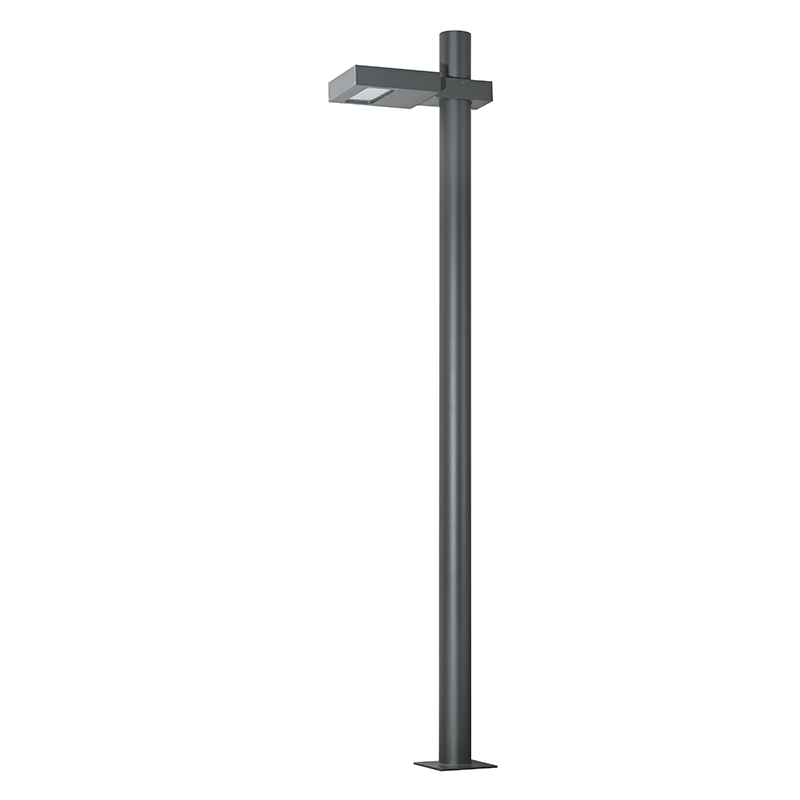
Garden lighting faces conditions that indoor lighting never encounters — rain, frost, UV exposure, temperature swings, insects, and physical impacts from garden tools, falling branches, or wildlife. LED technology is inherently better suited to these conditions than older alternatives.
Incandescent and halogen bulbs rely on a thin tungsten filament suspended inside a glass envelope. Vibration, physical impact, or rapid temperature changes can break the filament or crack the glass. LEDs have no moving parts, no filaments, and increasingly use polycarbonate or resin-encapsulated designs that resist impact and moisture ingress far better than glass.
Cold weather is actually beneficial for LED performance. Unlike fluorescent lamps — which struggle to start and reach full brightness below 0°C (32°F) and can fail entirely below -10°C (14°F) — LEDs perform better in cold temperatures. The lower ambient temperature helps dissipate heat from the LED junction, extending lifespan and maintaining brightness. Quality outdoor LED garden lights are rated to operate reliably from -40°C to +50°C (-40°F to 122°F), covering virtually every residential climate on earth.
Garden lighting controlled by motion sensors can switch on and off dozens or hundreds of times per night. Frequent switching dramatically shortens the life of fluorescent lamps and stresses halogen bulbs. LED lifespan is unaffected by switching frequency — an LED rated at 25,000 hours will achieve that lifespan whether it is switched once a day or fifty times, making it ideal for motion-activated security lighting.
LEDs reach 100% of their rated brightness instantly the moment power is applied — with no warm-up period whatsoever. This is a significant practical advantage for garden lighting, particularly for security and motion-activated applications.
Compact fluorescent lamps (CFLs) — which were widely promoted as energy-efficient replacements for incandescent bulbs — require a warm-up period of 30 seconds to 3 minutes to reach full brightness, depending on temperature. At 0°C, many CFLs operate at only 50–60% of rated output. In a security context, a light that reaches full brightness 2 minutes after a motion trigger provides essentially no deterrent value.
High-pressure sodium (HPS) and metal halide lamps — previously common in commercial garden and landscape lighting — require warm-up times of 2–5 minutes before reaching usable output, and require a cool-down period before they can be restarted after being switched off. LEDs have none of these limitations.
One of the most underappreciated advantages of LEDs in garden applications is their inherently directional light output. LEDs emit light from a flat surface in one direction, unlike traditional sources that radiate light in all directions and require reflectors to redirect it — with significant optical losses in the process.
A halogen PAR spotlight uses a parabolic reflector to redirect light from an omnidirectional source — but even well-designed reflectors lose 20–40% of the lamp's output in the process. An LED spotlight produces directional light from the chip itself, delivering a higher proportion of its lumen output precisely where it is aimed.
This directional efficiency enables:
LEDs are available across a broad spectrum of color temperatures — from ultra-warm amber (1,800K) to cool daylight (6,500K) — allowing precise control over the mood and aesthetic of a garden at night. Traditional halogen lamps were fixed at approximately 2,800–3,000K with no flexibility, while high-pressure sodium lamps produced a monochromatic orange-yellow output that distorted all other colors.
Beyond fixed color temperatures, tunable white LED systems allow the color temperature of garden lights to be adjusted dynamically — warmer during evening entertaining hours, cooler for late-night security, and gradually dimming to near-off as the night progresses. This level of control was simply not possible with any previous outdoor lighting technology.
Color Rendering Index (CRI) measures how accurately a light source reproduces colors compared to natural daylight, on a scale of 0–100. This matters enormously in garden lighting, where the whole point is often to enjoy the colors of foliage, flowers, bark, stone, and water after dark.
High-pressure sodium (HPS) lamps — historically the dominant technology in landscape and streetlighting — have a CRI of just 20–25. Under HPS light, all colors in a garden appear in shades of orange and brown; the rich greens of foliage, the reds of Japanese maples, and the whites of stone paths all become indistinguishable. Low-pressure sodium lamps are even worse, with a CRI of essentially zero.
Quality LED garden fixtures achieve CRI 80–95+ as standard, with specialist horticultural and high-fidelity landscape lighting reaching CRI 97–98. At CRI 90+, the difference in visual quality compared to high-pressure sodium or even basic LED alternatives is dramatic — greens look genuinely green, red foliage glows vividly, and the textures of stone and bark become rich and three-dimensional.
| Light Source | Typical CRI | Color Perception in Garden |
|---|---|---|
| Low-pressure sodium | ~0 | Monochromatic; all colors lost |
| High-pressure sodium | 20–25 | Strongly orange; greens appear brown |
| Metal halide | 65–90 | Reasonable; blue-white bias |
| Halogen | 95–100 | Excellent; warm bias |
| Standard LED (CRI 80) | 80–85 | Good; suitable for most garden use |
| High-CRI LED (CRI 90+) | 90–98 | Excellent; true color rendering |
LED garden lights are fully dimmable and compatible with a wide range of smart control systems — an advantage that extends both the functionality and the efficiency of any outdoor lighting scheme.
Quality dimmable LED drivers maintain smooth, flicker-free dimming from 100% down to 1–5% of rated output without color shift or buzzing. This allows a garden spotlight to serve as dramatic accent lighting at full brightness during an outdoor dinner party and then dim to a soft, barely-there glow overnight — all without changing a single fixture.
Dimming LEDs also delivers real energy savings: running a dimmable LED at 50% brightness reduces energy consumption by approximately 40–45%, and significantly extends driver and chip lifespan by reducing thermal stress.
Modern LED garden lighting systems are designed to integrate with Wi-Fi, Zigbee, Z-Wave, and Bluetooth-based smart home platforms. This enables capabilities that were impossible with previous outdoor lighting technology:
Beyond white light, RGB and RGBW LED garden fixtures allow full color control — enabling festive colored lighting for seasonal events, dynamic color-changing effects for water features and entertainment areas, or simply the ability to change the mood of an outdoor space at will. These capabilities are unique to LED technology and have no equivalent in any previous outdoor lighting source.
The environmental advantages of LED garden lighting extend beyond energy efficiency to encompass reduced carbon emissions, the absence of hazardous materials, and lower overall resource consumption across the product lifecycle.
Because LEDs consume dramatically less electricity, they generate proportionally less carbon dioxide through power generation. A single 10W LED replacing a 50W halogen spotlight saves approximately 40W × 6 hours × 365 days = 87.6 kWh per year. At the UK grid carbon intensity of approximately 200g CO₂/kWh, that is a saving of around 17.5 kg of CO₂ per fixture per year. A garden with 20 fixtures saves the equivalent of approximately 350 kg of CO₂ annually — simply by switching to LED.
Fluorescent and compact fluorescent (CFL) lamps contain mercury — a highly toxic heavy metal that poses disposal hazards and contamination risks if lamps are broken in the garden. Each CFL contains approximately 3–5 mg of mercury, requiring specialist recycling. LEDs contain no mercury, no lead in the semiconductor material, and no other substances classified as hazardous under RoHS (Restriction of Hazardous Substances) regulations, making them safe to handle, install, and ultimately dispose of.
The directional nature of LEDs, combined with the ability to precisely control beam angles and output levels, enables garden lighting schemes that put light exactly where it is needed and nowhere else. Properly designed LED garden lighting produces significantly less upward light spill and sky glow than omnidirectional halogen or HPS equivalents — a meaningful environmental benefit for astronomy, biodiversity, and human circadian health.
The availability of ultra-warm (1,800K–2,200K) amber LED options is a genuine ecological advantage. Research shows that insects are attracted to blue-rich white light at 5–10 times the rate of warm amber alternatives. Switching garden security and path lights to amber LEDs dramatically reduces insect mortality and disruption to bat feeding routes — with no sacrifice in visibility or safety for humans.
Traditional garden lighting — particularly halogen and incandescent — generates substantial heat. A 50W halogen PAR lamp reaches surface temperatures of 250–300°C (480–570°F). This creates three problems specific to garden environments: fire risk from dry vegetation, burn risk to anyone who touches a fixture, and heat damage to plants placed close to accent lights.
LED fixtures, by converting most of their input energy into light rather than heat, remain cool enough to touch during operation in most applications. A 10W LED spotlight that replaces a 50W halogen reaches surface temperatures of just 40–60°C (104–140°F) — warm, but not a fire or burn hazard. This makes LED fixtures significantly safer in gardens where dry summer vegetation, wooden decking, and mulched beds are in close proximity to lighting.
For in-ground uplights positioned directly beneath planting, the reduction in radiant heat also eliminates the risk of root zone heating or scorching of low-hanging foliage — a real concern with buried halogen uplights that sometimes caused visible damage to specimen plants over summer months.
LED chips are extraordinarily small — a high-power LED capable of producing 1,000 lumens fits on a chip measuring just a few millimeters across. This miniaturization advantage has enabled a generation of garden lighting fixtures that are far more discreet and design-forward than was possible with older light sources.
Good garden lighting should be experienced but not seen — the effect should be visible, the source invisible. The compact form factor of LED technology makes this design principle far more achievable than with the bulkier housings required by halogen, fluorescent, or HPS sources.
The energy efficiency of LEDs has enabled a category of product that simply could not exist with any previous technology: solar-powered garden lights that are practical and genuinely useful. A solar panel capable of powering a halogen lamp would need to be enormous and expensive; a solar panel capable of powering a modern LED fixture can be integrated discreetly into the fixture head itself.
Solar LED garden lights offer specific advantages in certain applications:
It bears repeating that solar LED garden lighting performs best in decorative and pathway applications with adequate solar exposure. The combination of LED efficiency and modern lithium-ion battery technology has made solar garden lights significantly more capable than they were even five years ago — though they remain best suited to supplementary rather than primary garden lighting roles in temperate or overcast climates.
The advantages of LED garden lighting are consistent and compelling across every dimension of performance. The table below summarizes how LED compares to the main alternatives across the criteria that matter most for outdoor garden applications.
| Criterion | LED | Halogen | CFL | HPS |
|---|---|---|---|---|
| Efficacy (lm/W) | 80–160+ | 14–20 | 45–70 | 80–130 |
| Rated Lifespan | 25,000–50,000 hrs | 2,000–4,000 hrs | 8,000–15,000 hrs | 10,000–24,000 hrs |
| Color Rendering (CRI) | 80–98 | 95–100 | 70–85 | 20–25 |
| Instant Start | Yes | Yes | No (warm-up) | No (2–5 min) |
| Cold Weather Performance | Excellent | Good | Poor | Moderate |
| Dimmable | Yes (1–100%) | Yes | Limited | No |
| Mercury Content | None | None | 3–5 mg | Yes |
| Smart Control Compatible | Yes (wide range) | Limited | Limited | No |
LED is the dominant and recommended technology for all new garden lighting installations. The convergence of superior efficiency, exceptional lifespan, excellent light quality, design flexibility, and environmental responsibility makes it the clear choice across every application — from a simple solar path light to a sophisticated professionally designed landscape lighting scheme.
Related Products
 Private Industrial Park, Liangnong Town, Yuyao City, Ningbo City, Zhejiang Province, China
 +86-13486062091
 +86-574-2222 2345
 +86-574-2267 2345
 info@ym-lighting.com


 English
 中文简体
中文简体